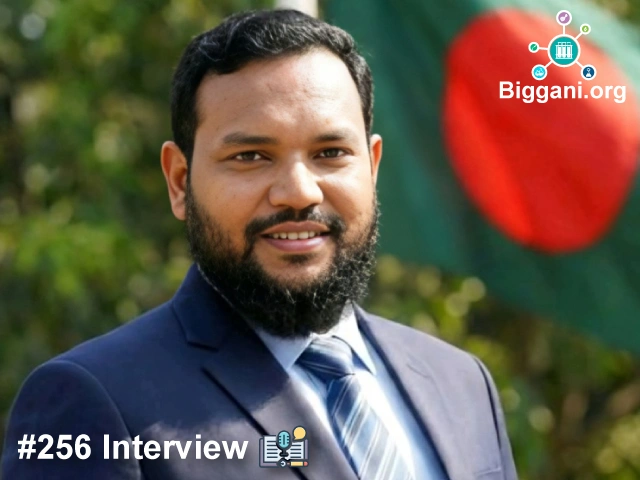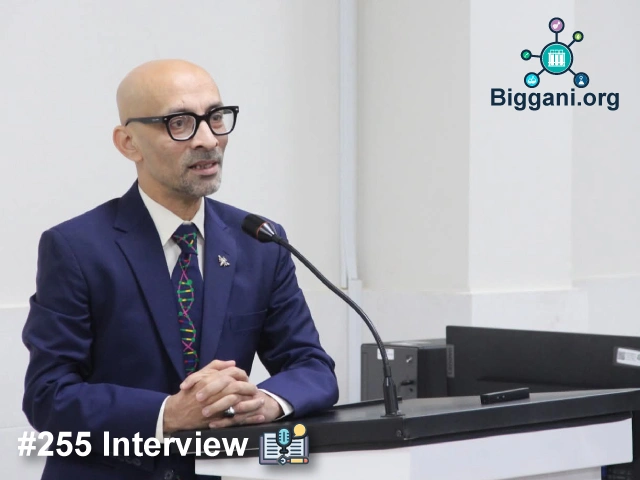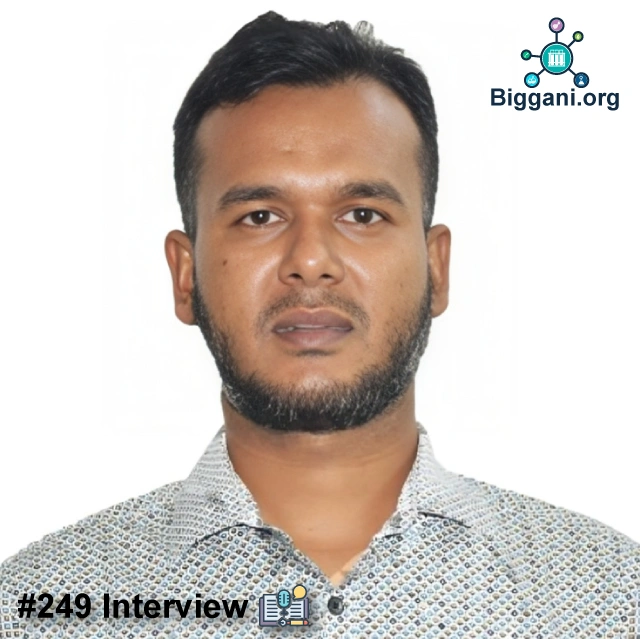
S. M. Alamgir Shafiullah is an officer of the 38th Bangladesh Civil Service Agriculture Cadre with an academic background in agricultural science. He began his professional career at the Directorate General of Health Services as an Entomological Surveillance Expert, commonly known as a mosquito scientist. He later served as a Company Commander in Bangladesh Ansar, where he received military training and developed leadership and crisis-management skills.
He currently serves as an Additional Agriculture Officer under the Department of Agricultural Extension in Madhukhali, Faridpur. Previously, while serving as a Pesticide Regulation Officer in the Plant Protection Wing, he contributed to the formulation of Bangladesh’s pesticide regulations.
His areas of research include botanical control of fruit flies, the preservation of high-quality rice seeds at the farmer level, food security, pest management, and agricultural policy. One of his co-authored studies was conducted under the institutional affiliation of the Department of Entomology at the then Bangabandhu Sheikh Mujibur Rahman Agricultural University. His professional experience combines scientific research, field-level agricultural extension, leadership, public administration, and policy development.
Sources:
Official Department of Agricultural Extension Profile,
Research on High-Quality Rice Seed Preservation
Interview
Question: Please tell us about your profession and area of work.
Answer: My professional career has been diverse and enriched by experiences in several different fields. I have had the opportunity to work in multiple sectors of the Government of Bangladesh, each of which was very different from the others.
I began my career at the Directorate General of Health Services, where I worked as an Entomological Surveillance Expert, commonly known as a mosquito scientist. Our responsibility was to collect mosquitoes from different parts of Bangladesh and study their life cycles, behaviour, and role as vectors of disease. This experience gave me a deep understanding of the importance of research and evidence-based decision-making.
I later joined Bangladesh Ansar as a Company Commander. I received military training there, which played an important role in developing discipline, leadership, and crisis-management skills in both my personal and professional life.
After that, I joined the Bangladesh Civil Service Agriculture Cadre. Since my academic background is in agricultural science, I consider contributing to the development of the country’s agricultural sector and improving the lives of farmers to be my long-term professional goal. I believe that agricultural development is one of the principal foundations of Bangladesh’s overall economic progress.
My journey from scientific research to field-level leadership and then to administrative responsibilities has been highly educational. Every stage has helped me think differently, acquire new knowledge, and continue developing myself professionally.
Question: Please explain the main focus of your work in simple terms.
Answer: I currently work at the Department of Agricultural Extension. In simple terms, our main responsibility is to deliver modern agricultural knowledge and technologies developed by research institutions to farmers and help them increase their productivity.
We train farmers in improved cultivation methods, advise them on the proper use of high-quality seeds, fertilisers, and pesticides, and provide field-level assistance in managing crop diseases and harmful pests. In other words, our primary responsibility is to create an effective bridge between agricultural research institutions and farmers’ fields.
Agriculture represents one of Bangladesh’s most significant development achievements since independence. Despite limited cultivable land and a large population, the country has come close to achieving self-sufficiency in food production. The combined efforts of agricultural researchers, farmers, and agricultural extension services have made it possible to strengthen food and nutritional security for a large proportion of the population.
Question: Would you share a particularly memorable experience from your professional life?
Answer: One of the most memorable experiences of my professional career was participating in the formulation of Bangladesh’s pesticide regulations while working in the Plant Protection Wing of the Department of Agricultural Extension.
Receiving the opportunity to participate in such an important and complex policymaking initiative early in my career was a matter of great pride. Through this assignment, I gained practical experience not only in technical matters but also in policy formulation, stakeholder consultation, legal considerations, and implementation requirements.
I came to understand that developing a regulation is not simply a matter of writing a set of rules on paper. Such regulations directly affect farmers’ interests, public health, environmental protection, and the long-term sustainability of agricultural production. Every decision must therefore be made with a high degree of responsibility.
This experience strengthened my analytical and coordination skills and increased my interest in policy-level work. It also helped me understand how appropriate policies and effective implementation can significantly influence a country’s agricultural development.
Question: What steps should Bangladesh take to improve its agricultural sector?
Answer: In my opinion, Bangladesh should give particular attention to four areas to ensure the sustainable development of its agricultural sector.
First, the country must increase the use of smart agricultural technologies to keep pace with global developments. Technologies such as drones, sensors, Geographic Information Systems, artificial intelligence, and information technology-based agricultural management can make farming more productive, cost-effective, and environmentally sustainable.
Second, greater emphasis must be placed on climate-resilient agriculture. Bangladesh is experiencing increasingly severe floods, droughts, salinity, and irregular weather patterns. To address these challenges, we need climate-tolerant crop varieties, improved water-management systems, and wider implementation of adaptation-based agricultural technologies.
Third, a stronger connection must be established between agricultural research and field-level extension services. The benefits of research can only be fully realised when newly developed technologies reach farmers quickly and are implemented effectively.
Finally, it is essential to ensure fair prices for agricultural products. When farmers receive an appropriate return for their produce, they are more likely to adopt new technologies and view agriculture as a profitable profession. In the long term, this will strengthen both national food security and agricultural development.
Therefore, Bangladesh should prioritise technology-based agriculture, climate adaptation, research-extension collaboration, and fair economic incentives for farmers. I believe focusing on these four areas will enable the country’s agricultural sector to advance further.
Question: How should students prepare themselves for careers in your current sector?
Answer: The government job market in Bangladesh is highly competitive. The most important requirements for success are clarity of purpose, consistency, and hard work.
A student should first decide whether they genuinely want to enter this profession. Sincerely wanting to achieve a goal is the first condition for success. However, desire alone is not enough. It must be supported by a practical plan, regular study, and sustained effort.
Students should remember that while they are wasting time, many of their competitors are studying and improving their abilities. Success in a competitive examination therefore requires dedication and perseverance.
Many people believe that obtaining a government job requires bribery, lobbying, or special connections. My personal experience has been different. I was selected for several government positions without any form of bribery or lobbying. The same is true for many of my friends and colleagues. Instead of developing negative assumptions or making excuses, students should concentrate on improving their knowledge, preparation, competence, and confidence.
My advice to students is to prepare themselves properly, study regularly, remain patient, continue trying, and believe in their abilities. Honest effort and perseverance will eventually produce results.
Question: What advice would you offer to Biggani.com?
Answer: I extend my sincere congratulations and best wishes to Biggani.com. You are playing an important role in inspiring Bangladesh’s scientifically minded younger generation and introducing the public to different professions, research areas, and knowledge-based subjects.
My recommendation is to present science and research in ways that connect more directly with real life. By featuring the experiences of researchers, scientists, government officials, and professionals working in different sectors, you can help students develop a more realistic understanding of potential career paths.
Biggani.com could also produce more content on agriculture, health, the environment, technology, climate change, artificial intelligence, and innovation-driven initiatives. Providing regular information about research, innovation, higher education, and professional opportunities for young researchers and students could make a meaningful contribution to Bangladesh’s human-resource development.
Most importantly, science should not be presented merely as an academic subject found in textbooks. It should be presented as an instrument for solving problems, encouraging innovation, and building the nation. I believe Biggani.org will continue to make an important contribution to developing a knowledge-based society and inspiring future generations.
Question: What valuable advice would you give to today’s students and young people?
Answer: My advice to young people is to set a clear goal, understand the value of time, develop the habit of continuous learning, and become willing to work hard.
Do not pursue shortcuts. Instead, make honesty, competence, and perseverance your constant companions. Do not be afraid of failure; learn from it. I believe that success can be achieved when a person has proper preparation, consistent effort, and a positive mindset.
Contact Information
Email: [email protected]
- Official Department of Agricultural Extension Profile
- Research on Preserving High-Quality Rice Seeds at the Farmer Level
- Research on Botanical Extracts for Controlling Fruit Flies
The professional journey of S. M. Alamgir Shafiullah brings together scientific research, disciplined leadership, field-level agricultural service, and policy development. His experience in agricultural technology transfer, safe pesticide management, and food security offers valuable lessons for young people. His observations remind us that sustainable agricultural development requires equal attention to science, technology, effective policies, environmental protection, and fair returns for farmers. The Biggani.org team appreciates his contribution to public service and wishes him continued success in his professional journey and future initiatives.