Author– Azizul Haque
Assistant Professor,Yeungnam University
Starting research in a resource-limited country like Bangladesh is a significant challenge for new researchers. However, with motivation, patience, and proper guidance, it is possible. Here are some effective methods and advice for those struggling with a lack of funding, lab facilities, or supervision:
What to do at the beginning of your research journey!
The first and most important step in research is identifying your area of interest. Specify exactly which subject you want to work on. For example, if you are interested in biology, data science, bioinformatics, climate change, agriculture, or engineering, start by reading recent research articles to gain initial understanding and knowledge. You can download free and open access papers from platforms like Google Scholar, PubMed, and ResearchGate. Another important recommendation for new researchers is to begin with small, manageable topics. While it’s good to have big ideas, it’s essential to set realistic goals at the start. Begin with small projects to learn research methodologies and techniques, and then gradually engage yourself in larger projects.
What to do if you don’t have funding or a laboratory for research?
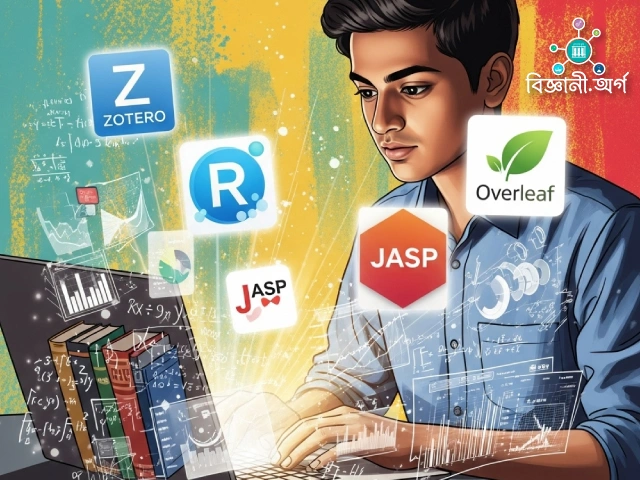
Securing adequate funding for research in countries like Bangladesh can be a challenge, but that doesn’t mean it’s impossible to get started. In the beginning, large-scale financial support isn’t a necessity for research—especially if you focus on data-based or in silico research, which requires only a computer and an internet connection. In particular, those interested in biology or genetics can consider public database analysis as an excellent alternative. For instance, you can collect and analyze genomic or proteomic data from databases such as NCBI, GEO, TCGA, Ensembl, and KEGG to produce new and quality research. In addition, in fields like social science, economics, or public health, essential data is available from public databases such as World Bank, UNICEF, or WHO. You can use free software like R or Python to analyze this data, and there are plenty of free courses on platforms like YouTube and Coursera to help you learn these tools. For mathematical modeling or simulation-based research, you don’t need a lab at all. You can work on climate modeling, economic analysis, or digital signal processing using only software.
What to do in the absence of a supervisor?
There’s no need to be discouraged if you don’t have a supervisor. Read international researchers’ work in your area of interest, and then contact them via email. When writing, be concise, polite, and clear. You can connect with international researchers using LinkedIn and ResearchGate, as many are willing to help newcomers. If one person doesn’t respond, don’t get discouraged—seek help from someone else. Never hesitate to ask for help. If you have a good idea and are eager to implement it, someone will surely come forward to assist you.
Publishing your research findings!
If a lack of funds is preventing you from publishing your research results, don’t worry. Many journals waive publication fees for researchers from developing countries. Among these, Research4Life is a notable global initiative that provides scientific, technical, medical, and social science research articles and information either free or at affordable rates for researchers, teachers, and policymakers in developing countries. However, before publishing, always seek feedback from an experienced person to ensure the quality of your paper.
How to learn research without spending money!
In today’s technology-driven world, countless free resources are available to help you enter the realm of research. Platforms such as Coursera, edX, FutureLearn, and MIT OpenCourseWare offer free courses on research methods. On these platforms, you can learn the basics of research, data analysis, and various research techniques. There are also excellent opportunities to acquire new skills through free seminars, workshops, and podcasts found in different Facebook pages and groups. However, it is not wise to spend money on paid courses on Facebook or any other social media. Most paid courses teach things easily available for free online. Remember, those who run these paid courses also developed their skills by learning from free resources at one time. So, using free resources is more productive. Additionally, YouTube is a major platform for learning research methods, with countless tutorial videos on data analysis, research basics, and almost every subject. Try to participate in international conferences and workshops as well; often, these events offer fee waivers, which can be a major advantage for new researchers. Make the most of these free learning opportunities while maintaining your passion.
Maintain confidence and focus!
Research is a long-term and patient process. It is not just about time; it requires the right mindset, hard work, and concentration. Sometimes you may face a lack of funds or resources, but that is no reason to lose hope. The right planning, timely use of free resources, and continuous effort are enough for research success. Many Bangladeshi students achieve research excellence abroad with little or no prior research experience at the university or entry level. Their experiences show that, despite limited opportunities, with hard work, the right attitude, and relentless determination, you can overcome any obstacle. Advice for new researchers: never be discouraged. Believe in your work and keep striving to achieve your goals. Opportunities can be created in any situation if you have focus and the right perspective.
Note: Collected from Facebook:——–https://www.facebook.com/share/p/19wvhkJU6u/