When a ninth-grade student first sees “Mathematics: 72,” “Physics: 68” scribbled on the last page of an exam paper, a question pops into their mind—can I really become a scientist? The answer to that question, with its many creases like page forty-seven, never comes from textbooks; it comes from a book that opens one’s eyes to reality. That’s exactly where “Fundamental Techniques of Data Collection and Analysis” appears—a book that breaks down the wall of exam scores and brings science to the field of real life, where information is the final word and curiosity is the first requirement.
The author of this book, Dr. Arif Mahmud, is a data scientist and teacher who teaches in university classrooms and solves real-world industrial problems. Looking at his career path, you realize that data is not just numbers on a laptop screen—it tells sweat-soaked stories from the field. From river erosion in Bangladesh to urban air pollution—there’s information everywhere, you just need the right techniques to capture it. The author teaches those techniques in simple language, so that even a talented student from a rural school can feel like part of an international laboratory.
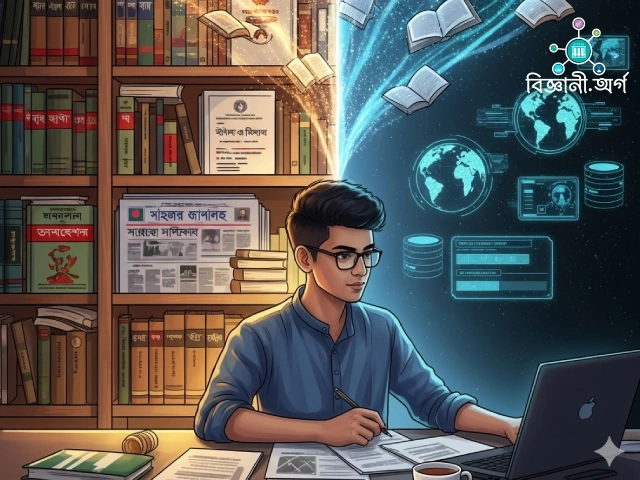
What is the book about? In brief, it teaches us how to formulate questions, what kinds of data are needed to answer them, where to find the data, how to verify it, and, ultimately, how to uncover the meaning hidden within the information. But the book doesn’t present these points like classroom notes. Instead, the author illustrates in a storytelling style—why did a river’s water suddenly turn murky, why did a school’s average suddenly drop, or why are diseases increasing in a certain area—the path to answers for these questions is data. And to show that data isn’t just a table on an exam sheet, he takes us to the wards of a hospital, the screens of meteorological centers, and even the statistics of social media.
This book is especially important for students in Bangladesh because we often see science as a mountain of difficult formulas that require an oxygen mask before we climb. This book opens a simpler path up that mountain. The author makes it clear—you’re taking photos with your mobile phone, that’s data; you keep track of how many hours you study each day, that’s data; even the fluctuations in your surroundings’ temperature are data. Science then is no longer a source of fear, but becomes a part of your everyday life. When you learn that a good question is half the answer, science becomes your friend—even while standing outside the classroom.
The scientific mindset that shines on every page of this book is learning how to doubt, keeping curiosity alive, and not accepting easy answers. The author says, “Data never lies, it’s our rushed interpretations that deceive us.” Upon reading this line, a young person realizes—one must respect information and have patience in making decisions. The world’s greatest discoveries have come from such patience, and from the courage to make mistakes again and again. This book teaches that very courage.
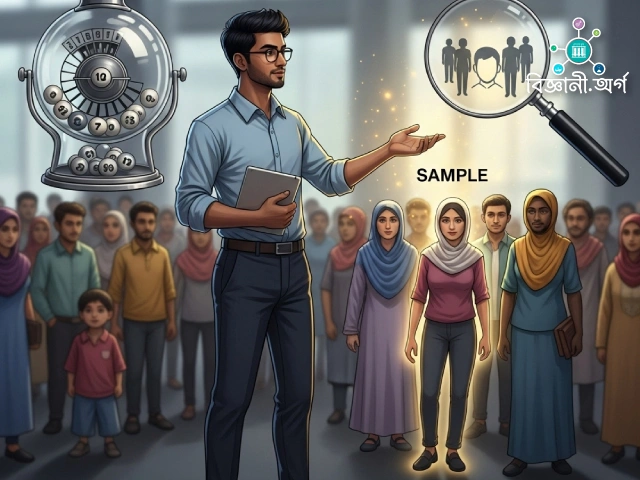
The scientific concepts within the book are arranged in a very simple manner. The author explains how to break a question down into smaller parts, making it easier to find answers. He introduces us to the concept of sampling, showing that by examining just a few representative pieces, we can grasp the whole picture without seeing everything. Next comes the idea of data cleaning, emphasizing that if incorrect data is not removed, decisions will also be flawed. Through graphs, charts, simple averages, and percentages, the author demonstrates that numbers truly tell a story—you just need to learn their language.
This book builds confidence in young readers. They begin to understand that making mistakes in science isn’t shameful—it’s a part of learning. After reading the book, a student might for the first time feel that they themselves can become a researcher. There’s no need to wait for approval from a foreign lab—their own notebook can be their laboratory, and the people around them can be their research subjects. This feeling fosters self-confidence, which is invaluable for students in countries like Bangladesh.
In our reality, science education often means pressure—good colleges, good coaching, chasing good grades. But this book stands against that pressure, saying—the biggest lesson is to ask good questions. If you ever wonder about the clarity of water on a rainy day, or feel curious about the changing color of a leaf, then you’re already on the path to becoming a scientist. The book brings the world outside of school exams into the classroom, so learning is never trapped only within the syllabus.
The author’s voice is credible because he speaks from real experience. From his tone you can tell—he is not just a teacher, but a researcher who works out in the field. When he says that data analysis can improve our country’s agriculture, help diagnose diseases, or make traffic management smarter—his words don’t stay on the page, but become hard-earned truths under the sun. This sense of reality sets the book apart.
Reading this book may change the way a student approaches learning. They will no longer want to just memorize—they will want to know why things happen. Eventually, they’ll realize that being able to ask questions is real strength. And that strength can take them to a distant university abroad or to their own village school’s science club. The paths may differ, but the direction is the same—the joy of discovery.
In conclusion, “Fundamental Techniques of Data Collection and Analysis” is not an ordinary book. It is a mental doorway that opens up a new world. In this world, numbers aren’t just numbers—they are human stories; graphs aren’t just lines—they signify the future. If a Bangladeshi school student, after reading this book, decides one day to research rivers or improve healthcare, then the book will truly have fulfilled its purpose.
So next time you pack a new book into your schoolbag, make a little space for this one. Because on some afternoon, as the sun sets outside the window, a single line from this book could change your outlook. Perhaps you’ll slowly realize—science isn’t just about grades, it’s about opening your eyes to the world. And once those eyes are opened, nothing feels impossible anymore.