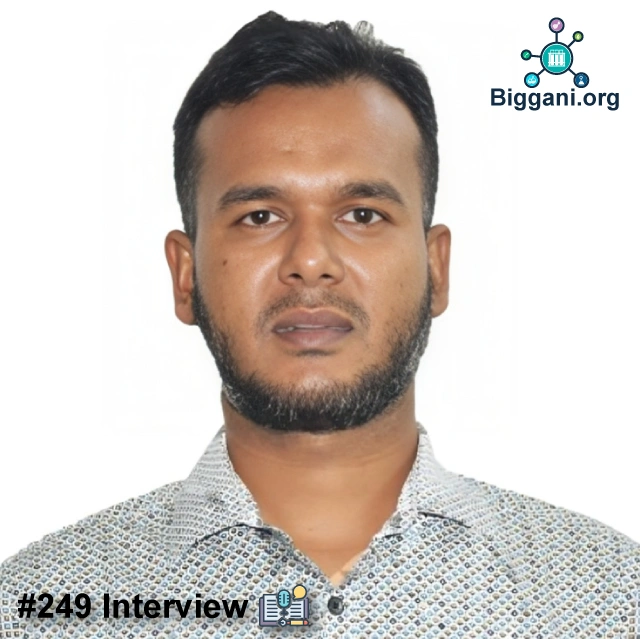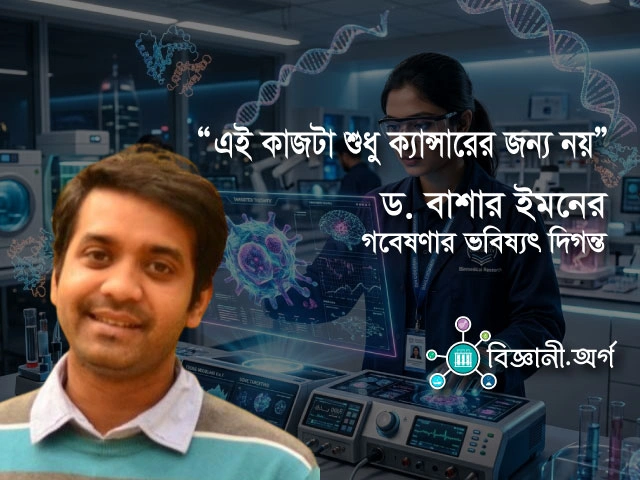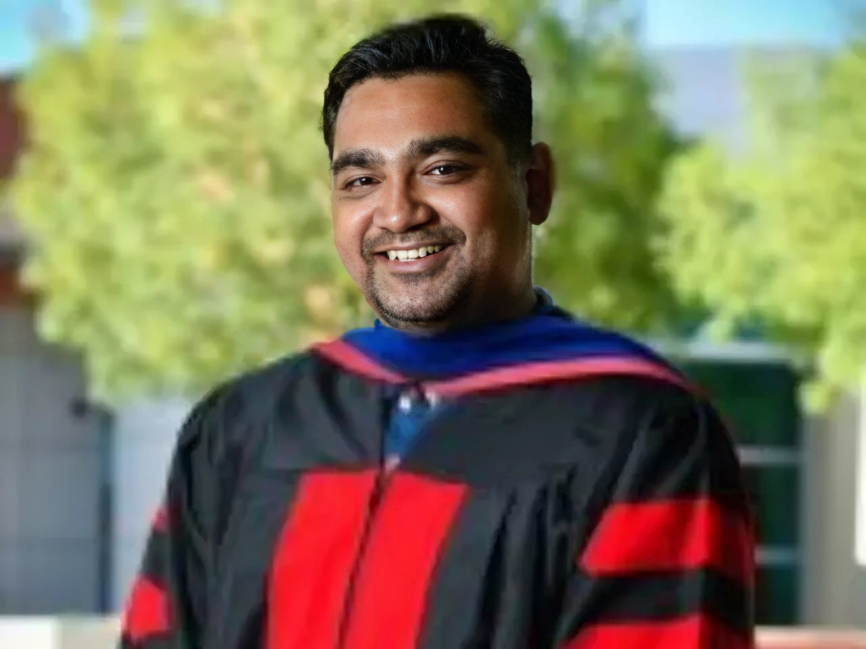
Ishtiaque Rashid, a process development scientist, is working on the role of DNA repair mechanisms in cancer treatment. His research has introduced a new perspective on the coordination of proteins responsible for repairing damaged DNA, which could pave new paths in cancer therapy.
An Unconventional Journey in Research
“Science is constantly evolving, and adapting to those changes is the main goal of any scientist.” So says Ishtiaque Rashid, a Process Development Scientist currently working on gene therapy in the biotech industry. His main research area was the role of DNA repair mechanisms in cancer treatment, which can open new doors of possibility in cancer research.
A New Perspective in the World of DNA Repair
The DNA in our bodies—the fundamental carrier of life—is constantly being damaged, whether by internal biological and chemical processes or by various external environmental forces and chemical agents. If damaged DNA is not repaired, it can contribute to the development of cancer. To repair this damage, our bodies, and specifically our cells, have mechanisms that strive to fix the damage and maintain normal cellular and bodily functions.
Simply put, the main objective of my research was to find innovative solutions for cancer treatment by utilizing one such repair process. This work began by understanding a specific DNA repair mechanism, which involves various proteins and biomolecules working together. The focal point of my research was to uncover how these proteins collaborate and to precisely identify the ways they operate.
“For the first time, our research team mapped the coordinated interaction between two proteins involved in the DNA repair process. This could unveil a new horizon in cancer treatment,” he mentioned.
Overcoming Barriers to Succeed in Scientific Research
Ishtiaque’s journey through research was never an easy one, especially when venturing into areas no one had explored before. “Doing anything for the first time is never easy. Scientific research comes with many obstacles. Experiments may not always work as planned,” Ishtiaque says. The limitations of Bangladesh’s education system also made his journey difficult. He notes, “Bangladesh’s education system doesn’t teach students to question their teachers.”
While pursuing his PhD, Ishtiaque faced just such a significant obstacle. When he presented a new idea to his supervisor, it was immediately dismissed. But Ishtiaque didn’t give up. He presented data and evidence to convince his supervisor and requested to at least test the idea once. His persistence paid off. “My idea worked in the experiment, and the result completely changed the direction of our research,” he says.
This experience taught Ishtiaque that science is about relying on data and logic. He realized, “There’s no guarantee that every decision or analysis made by a PhD supervisor or senior researcher is always right.”
Ishtiaque also says, “When a PhD researcher works on a topic for 4-5 years, their insight on that subject may be clearer than anyone else in the lab. One must believe in oneself and always proceed based on data and experimental results.”
This experience strengthened his resilience and problem-solving skills, which have helped him move forward not only in research but also in his professional life.
Essential Qualities for a Scientist
According to Ishtiaque, patience is the most important quality for a scientist. The willingness to dig deep into problems, proper time management, and staying updated with contemporary research are crucial in scientific work. When a problem cannot be solved, it’s important to pause and look back to reassess and make the best use of one’s time. One must stay informed about the latest information and ongoing research related to their field.
A Message for the Youth
“What is popular today may become irrelevant tomorrow. It’s important to analyze the future prospects of a subject before building a career or pursuing research,” Ishtiaque advises the new generation.
A New Horizon for Cancer Treatment in DNA Repair Research
The results of Ishtiaque Rashid’s research could contribute to new methods of cancer treatment in the future. His work isn’t just limited to research; it stands as a significant contribution to the greater good of humanity.
The work and philosophy of Dr. Ishtiaque Rashid will remain a source of inspiration for scientists and researchers in Bangladesh.
Contact:
Email: [email protected]
Research Links: Google Scholar, ResearchGate
Pioneering Cancer Research: The Inspiring Journey of Dr. Ishtiaque Rashid!
Ishtiaq Rashid, a process development scientist, is working on the role of DNA repair mechanisms in cancer treatment. His research has revealed new insights into the coordination of proteins to repair damaged DNA, which could open up new avenues of potential in cancer treatment.
From DNA Damage to Life-Saving Discoveries
“Science is constantly evolving, and adapting to these changes is the core responsibility of any scientist,” says Dr. Ishtiaque Rashid, a Process Development Scientist currently working in the biotech industry, specializing in gene therapy. His groundbreaking research focuses on understanding the role of DNA repair mechanisms in cancer treatment, opening new doors for innovation in oncology.
Turning Challenges into Breakthroughs in Scientific Research
Our DNA, the carrier and sustainer of life, is constantly under attack—sometimes from the biochemical and chemical processes within our body and at other times from various external environmental factors and chemical agents. If damaged DNA is not repaired, it can contribute to the development of cancer. To counteract this, our cells have built-in mechanisms that repair the damage, ensuring the normal functioning of both the cells and the body.
In simple terms, my research aimed to explore how such a repair process could be harnessed to develop innovative solutions for cancer treatment. The work began with a deep dive into understanding a specific DNA repair mechanism, which involves a coordinated effort by various proteins and biomolecules. My research primarily focused on deciphering how certain proteins work together in this process and identifying the specific mechanisms by which they operate.
“Our research team, for the first time, mapped the coordinated interaction between two proteins involved in the DNA repair process. This discovery has the potential to open new horizons in cancer treatment,” he noted.
Overcoming Challenges in Research
Ishtiaque’s journey in research was far from easy, especially as he ventured into unexplored scientific territories. “Doing something for the first time is never easy. In research, challenges are inevitable. Experiments may fail to work as expected,” Ishtiaque explains. He also reflects on the limitations of the Bangladeshi education system, saying, “Our system doesn’t teach students to question their teachers.”
During his Ph.D., Ishtiaque encountered a significant obstacle. He proposed a new idea to his supervisor, only to have it rejected outright. However, he didn’t give up. Armed with data and evidence, he convinced his supervisor to give the idea a chance. The experiment was conducted, and to everyone’s surprise, it worked. “My idea delivered results, and it completely changed the direction of our research,” he recalls.
This pivotal experience taught him the true essence of science: relying on data and logic above all else. He reflects, “Just because a supervisor or a senior researcher says something doesn’t mean it’s always correct. When a Ph.D. researcher spends 4-5 years focused on a single topic, their understanding of it can often surpass others in the lab.”
Ishtiaque emphasizes the importance of self-belief and the courage to challenge ideas, provided one has solid data and test results to back it up. “You must trust yourself and let the data guide you forward,” he advises.
This lesson not only shaped his approach to research but also strengthened his resilience and problem-solving skills, qualities that have significantly contributed to his professional growth.
The Qualities of a Scientist
Patience, according to Dr. Rashid, is the most essential quality for any researcher. A good scientist must also possess the curiosity to dive deep into problems, the ability to revisit and reevaluate approaches, and an awareness of contemporary developments in their field.
A Message for Aspiring Scientists
“Science is ever-changing. What’s in demand today may become obsolete tomorrow. Before committing to a research topic or career path, analyze where that field might be 15-20 years down the line,” he advises.
A New Horizon in Cancer Treatment through DNA Repair Research
Dr. Rashid’s research holds immense promise for future cancer therapies. By uncovering the intricate workings of DNA repair processes, his findings could pave the way for groundbreaking advancements in oncology, benefiting countless lives.
Dr. Ishtiaque Rashid’s dedication and insights serve as an inspiration to scientists and researchers worldwide, especially those aspiring to make a meaningful impact in biomedical sciences.
Contact Information:
Email: [email protected]
Research Profiles: Google Scholar, ResearchGate