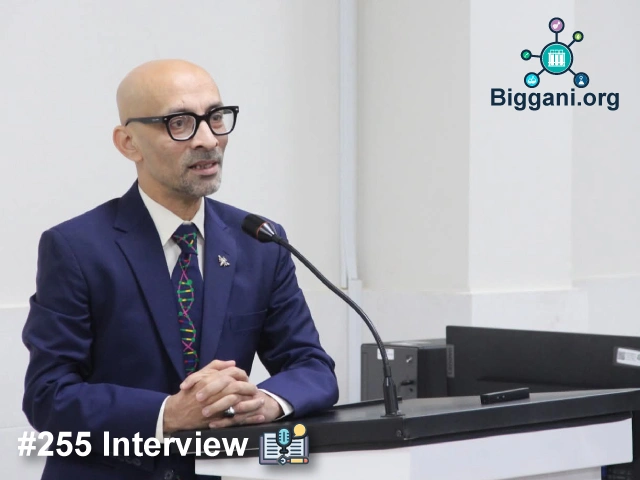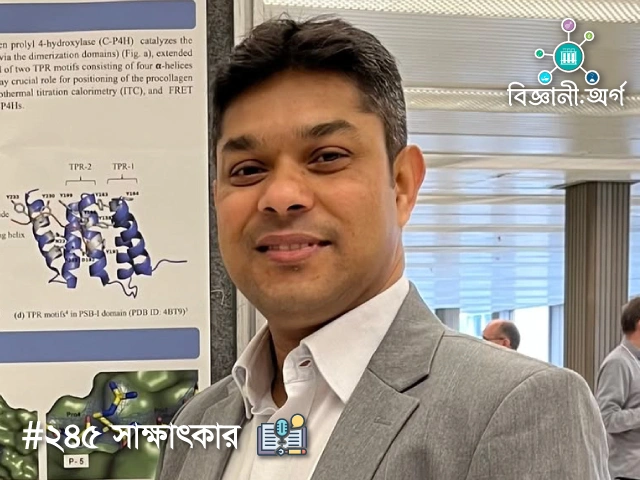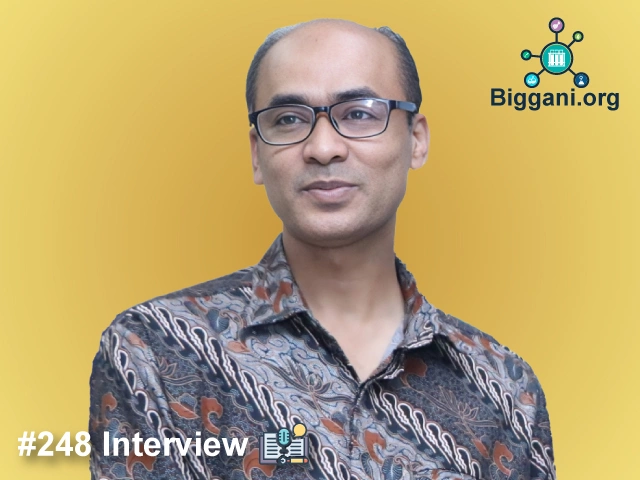
Being recognized among the world’s top one percent of scientists while working from Bangladesh may sound impossible, but it is a reality. Professor Dr. Mirza Hasanuzzaman of the Department of Agronomy at Sher-e-Bangla Agricultural University is the name behind this remarkable achievement. His research has been cited more than 25,000 times in the Web of Science database. He has published more than 300 research papers, and his h-index has reached 83. In 2021 and 2022, he was included in Clarivate’s list of Highly Cited Researchers. He is the first and, so far, the only scientist of Bangladeshi origin to receive this recognition.
Yet, this remarkable journey began at an ordinary village school.
From the Soil to the World
A boy grew up in a village somewhere in Bangladesh. Because of his father’s job, he attended different schools at different times—sometimes in villages and sometimes in cities. However, most of his childhood was spent in the village, studying at a village school. There was no prestigious educational institution or any special advantage—just an ordinary life. Yet, the boy had a simple dream: he wanted to become a teacher.
Research was not even on his mind at that time. He had an attraction toward plants—plant science, forestry, and the world of greenery seemed to call him constantly. That interest led him to enroll at Sher-e-Bangla Agricultural University. And this was where the first major turning point in his life came.
Like many students in Bangladesh, he knew that many people do not get the opportunity to study the subject they actually want. But he was fortunate that after entering the agricultural sciences, he gradually developed a deep passion for the subject. As he continued studying, he began to feel, “No, this is meant for me.” His academic results started improving. His old dream of becoming a teacher took a new form—he would teach at an agricultural university and conduct research. Gradually, this determination became stronger.
After completing his undergraduate and postgraduate degrees, he traveled to Japan on a Japanese Government Monbukagakusho (MEXT) scholarship. His PhD journey began there.
How Do Plants Survive? In Search of an Extraordinary Answer
In a laboratory in Japan, Mirza Hasanuzzaman began searching for the answer to a question that, when considered carefully, reveals how profound and important it really is.
Plants cannot move. When humans feel hot, they can move into the shade. During a flood, people can move to higher ground. Nobody willingly bathes in salty water. But what about plants?
They remain exactly where they are.
Whether drought, flood, or soil salinity arrives, plants cannot escape. So how do some plants survive? What enables certain plants to continue living for hundreds of years even in saline environments?
The answer to this question lies at the heart of Mirza Hasanuzzaman’s research.
In scientific terms, when plants face adverse conditions such as flooding, drought, high temperatures, or salinity, certain toxic substances are produced inside their cells. These are scientifically known as free radicals or reactive oxygen species. Many people may be familiar with hydrogen peroxide, one such reactive substance.
These toxic substances can damage a plant’s DNA, cell membranes, and proteins. As a result, plant growth slows down and crop yields decline.
The same phenomenon can occur in humans. When the human body is affected by disease or excessive stress, free radicals can also be produced, contributing to aging and weakening the immune system. But humans can receive medicines or nutritional support from outside. Who will provide such support to a plant?
This is where Mirza Hasanuzzaman’s research becomes important.
He has identified two natural defense mechanisms within plants themselves. One is the antioxidant defense system, and the other is the glyoxalase system. When these two systems remain active, toxic substances are transformed through chemical reactions into water or harmless compounds that do not damage the plant.
This is how plants survive under stressful environmental conditions.
However, these systems are not equally effective in all plants. This raises another question: What external substances could strengthen these natural defense mechanisms?
Mirza Hasanuzzaman has demonstrated that applying selenium, a mineral element, and nitric oxide, a signaling molecule, can significantly strengthen these two defense systems.
The importance of this research is enormous.
Imagine that agricultural scientists could use this knowledge in the future to develop crop varieties capable of surviving floods, droughts, and salinity. A farmer in coastal Bangladesh whose farmland has been flooded with saline water after a cyclone could eventually benefit from the outcomes of this research.
Agricultural Science in the Face of Climate Change
Climate change is now one of the greatest threats to agriculture in Bangladesh.
Over the past 50–60 years, agricultural scientists have increased crop production by two to three times. But climate change is continuously challenging these achievements. Over the past 40 years, drought-prone areas in Bangladesh have doubled. The amount of saline-affected land has increased by 30–40 percent.
Alongside floods and excessive rainfall, another crisis has emerged: unbearable heat waves that can directly damage crops.
It is within this context that Mirza Hasanuzzaman’s research takes on a new dimension.
He describes his work as “climate-resilient agriculture.” His goal is to understand exactly how plants respond to hostile environmental conditions and how they activate their internal defense mechanisms. This knowledge can then be passed on to the next generation of agricultural scientists, who can use it to develop new crop varieties.
He emphasizes that agricultural research is never the work of one person alone.
As a plant physiologist, he explains what happens inside plants and which characteristics can be activated to help plants survive. Based on this information, plant breeders develop new varieties. Through this collective effort, a crop variety eventually becomes mature enough to reach farmers’ fields.
Limitations in Resources, Unlimited Possibilities: World-Class Research from Bangladesh
After completing his PhD in Japan in 2003 and later conducting postdoctoral research in Japan and Australia, Mirza Hasanuzzaman returned to his own country.
He had no desire to remain abroad.
“My place of happiness is my country”—this belief has always remained with him.
After returning to Sher-e-Bangla Agricultural University, he established an internationally recognized research laboratory. But the journey was not easy.
There were limited budgets, inadequate equipment, and various environmental challenges. Something that a researcher in a developed country might accomplish relatively easily could require twice as much effort in Bangladesh.
Yet he did not give up.
His belief was that Bangladesh’s greatest resource is its human talent. If this talent is utilized with hard work and dedication, even limited resources do not have to become an obstacle.
In today’s globalized world, the gap between countries has narrowed considerably. From his laboratory at Sher-e-Bangla Agricultural University, he collaborates with scientists in the United States and works with researchers in Europe.
There are even projects in which professors from 20 countries work together because different parts of a research project require different areas of expertise.
“I might have been able to do very good work while living in America. But what benefit would that have brought to a Bangladeshi student?”
This question has repeatedly given him the strength to remain in Bangladesh.
His laboratory continues to operate even on Fridays. His students conduct research in the field. This dedication has helped place his laboratory on the global scientific map.
The Day Bangladesh Appeared in the Dropdown Menu
It was an email in 2021.
The message came from Clarivate, formerly known as Thomson Reuters, an organization widely associated with the Web of Science in the scientific community.
The email stated that Mirza Hasanuzzaman had been identified as a Highly Cited Researcher.
He could hardly believe it.
What does Highly Cited Researcher mean?
It refers to researchers who are among the top one percent in their respective fields worldwide. Across all fields, approximately 6,000 scientists are included in the list globally.
However, the recognition is not based simply on one recent research paper. The list is based on consistent performance over the previous ten years. Researchers must consistently publish high-quality research, and their work must be cited by scientists around the world.
But there was another moment associated with this recognition that affected him even more deeply.
Several years earlier, around 2015–2017, he would occasionally visit the Clarivate website and search for “Bangladesh” to see whether any Bangladeshi scientist appeared on the list.
Every time, he was disappointed.
Bangladesh did not even appear in the dropdown menu because there was no Bangladeshi scientist on the list.
Then, in November 2021, on the day the list was published, Mirza Hasanuzzaman typed “Bangladesh” into that menu.
This time, the country’s name appeared.
“I cannot express that feeling in words. I have received many awards and recognitions, but that moment was completely different.”
In 2022, he was included in the list again.
Alongside being recognized as a Highly Cited Researcher twice, his achievements also include the Young Scientist Award from The World Academy of Sciences and the Gold Medal from the Bangladesh Academy of Sciences.
Three Lessons Learned from Japan
His PhD and postdoctoral experiences in Japan had a profound influence on Mirza Hasanuzzaman’s scientific career.
However, he considers his most valuable lessons to be not technological, but human.
Hard work, honesty, and punctuality—these are the three qualities he believes he learned most deeply from Japan.
Japanese researchers arrive at the laboratory on time, do not compromise on their work, and maintain complete honesty in both words and actions.
He has continued to uphold these three values even while working in Bangladesh and has tried to pass them on to his students.
The research environment in his Japanese laboratory was highly independent. Researchers had considerable freedom to think for themselves and pursue their own ideas.
This freedom broadened his scientific thinking.
He later conducted postdoctoral research in Australia and traveled to various countries. Yet, the three fundamental lessons he learned in Japan remain the most valuable to him.
For Young Researchers: Patience, Not Frustration
In an interview with Biggani.org, young researchers asked him a variety of questions. His answers reflected the lessons accumulated through his long scientific career.
Choosing a Research Topic
He said researchers should choose a topic within their field that they genuinely enjoy.
Without genuine interest, it is difficult to sustain the long-term effort required for research.
A good teacher or mentor also plays an extremely important role—someone who understands a student’s interests and can guide them in the right direction.
Publishing the First Research Paper
He directly stated that expecting to publish in a Q1 journal immediately is a mistake.
He himself published his first Q1 paper during the final year of his PhD. Meanwhile, some of his students have published Q1 papers during their master’s programs.
Everyone’s circumstances are different.
The goal should be to learn the entire research process: how to design research, how to conduct it, how to write a paper, where to submit it, and how to respond to reviewers’ comments.
Mastering this complete process can take two to two and a half years.
Dealing with Failure
His message about failure is clear: failure is an integral part of science.
Paper rejection and experiments producing unexpected results are normal parts of research.
Many papers from his team have been rejected by one journal and eventually published in an even better journal.
Learning from failure and continuing forward is the path of a true scientist.
Building a Research Network
He strongly emphasized that working alone is almost impossible in modern science.
A research sample may need to be sent to another country for analysis. If a researcher cannot analyze certain data independently, they may need assistance from a collaborator.
This is how modern science advances.
He has projects involving scientists from 20 countries working together.
Young researchers should begin building networks with peers and lab mates from the very beginning of their careers. These connections can grow into valuable professional collaborations over time.
When Studying Abroad Is Not the Goal, but the Path
Many young people dream of pursuing higher education in Japan, Australia, or other countries.
But Mirza Hasanuzzaman’s advice is that “going abroad” should not be the goal.
The goal should be to conduct research and learn.
Going abroad is simply one possible path toward achieving that goal.
And when following that path, he believes going abroad on a scholarship is the best option.
If someone studies abroad through self-financing, financial concerns can prevent them from focusing properly on research.
Therefore, students should first learn research skills while remaining in Bangladesh, produce some publications, achieve a good score on an English-language proficiency test, and then pursue a scholarship to work in a good laboratory.
Regarding Japan specifically, he advises that anyone considering going there should be prepared for hard work, punctuality, and honesty.
Japanese researchers are highly dedicated and specialized. They place great importance on developing deep expertise in a specific field.
Therefore, students who want to go to Japan should first identify their field, contact Japanese scientists working in that area, and demonstrate their interest and willingness to work hard.
A New Era of Agriculture Through AI and Technology
Mirza Hasanuzzaman is highly optimistic about the future of agricultural science.
He believes we are now approaching the Fourth Agricultural Revolution.
Artificial intelligence (AI) and data science are beginning to bring revolutionary changes to agriculture.
For example, farmers previously relied on their experience and judgment to decide when to irrigate their fields.
Today, different sensors and devices can measure soil moisture and the water requirements of plants and determine exactly how much water is needed.
This is precision agriculture—agriculture with less waste and fewer shortages.
Going even further, AI can now analyze images of crops to identify pest attacks and diseases and determine what fertilizer or pesticide may be required.
It is also becoming possible to analyze soil and water to understand the actual condition of farmland.
He believes that as these technologies mature over the next 10–20 years, they could bring major changes to the lives of farmers in Bangladesh.
A Message to Policymakers
His message to the government and policymakers is clear.
Bangladesh has invested significantly in agricultural development. Farmers’ capabilities have been strengthened, and many projects have been implemented.
However, funding and attention for basic science research remain insufficient.
In Japan and Australia, universities are developing new technologies, patenting them, and transferring them to industry.
Bangladesh is also developing many technologies, but the ecosystem for patenting and commercialization has not yet become sufficiently strong.
Building this ecosystem is now one of the most important priorities.
Investment in fundamental research must increase, particularly at universities.
A Name That Inspires
The story of Professor Dr. Mirza Hasanuzzaman is not merely the story of a successful scientist.
It is a story of belief.
A belief that it is possible to establish a place on the global stage while remaining in one’s own country.
A belief that someone who begins their education at an ordinary village school can eventually become one of the world’s top one percent of scientists.
A belief that limited resources do not necessarily have to be a barrier—and that hard work, dedication, and patience are the real capital.
He says that the joy of practicing science continues to grow every day rather than diminish.
There have been failures and obstacles, but he has never once considered abandoning science.
For Bangladesh’s younger generation, his journey is living proof that if a dream is genuine, if hard work remains unwavering, and if love for one’s country remains strong, then any level of recognition in the world can be achieved from this soil.
Just as a plant survives by fighting against adverse conditions, this scientist has also fought against challenges—and won.
That victory belongs not only to him, but to all of Bangladesh.
Watch the Interview
Watch the interview video of Professor Dr. Mirza Hasanuzzaman on YouTube at the link below: 👇👇👇
Biggani.org (www.biggani.org) is a Bangla-language science communication platform focused on interviews with Bangladeshi scientists and researchers. This nonprofit initiative has been operating since 2006 and has published more than 245 interviews to date.