Professor Dr. Mohammad Yamin Hossain
Department of Fisheries, University of Rajshahi.
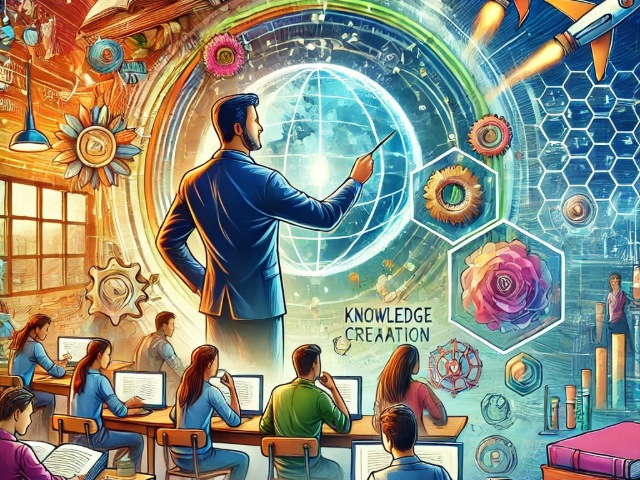
Teachers are generally perceived as classroom instructors whose main task is to present existing knowledge to students. However, in reality, a teacher’s role is much deeper and broader than this. An ideal teacher is not confined simply to distributing existing knowledge; rather, they create new knowledge, enriching the education system and enabling students to solve real societal problems.
“A teacher is not just a distributor of knowledge, but a creator of knowledge”—if this concept is realized, the education system can reach a new height. This discussion explores the significance, impact, and strategies for implementing this idea in detail.
Why is the Teacher’s Role in Knowledge Creation Important?
1. Innovation of New Ideas:
If a teacher discovers new theories or methods through research, it becomes beneficial for both the academic and real world.
Example: Einstein was not just a teacher; through his research, he developed the Theory of Relativity, which revolutionized the history of science.
2. Problem Solver:
Teachers can solve real societal problems through research.
Example: Agricultural scientists have developed technologies to increase crop yields, which have helped address food shortages.
3. Inspiration for Students:
If teachers themselves are actively engaged in research, they can inspire students to learn and innovate.
Example: Former President of India, A.P.J. Abdul Kalam, inspired countless young people through his own research and inventions as a teacher.
The Role of Knowledge Creation in Improving the Education System:
1. Enhancing Student Creativity:
When teachers are involved in knowledge creation, students also develop a desire to innovate. This boosts students’ creativity and thinking skills.
Example: Finland’s education system is research-based, where students are given opportunities for hands-on research.
2. Inclusion of Contemporary Topics:
Through research, teachers become aware of the latest technologies, knowledge, and scientific advancements and teach these to students.
Example: If computer science teachers conduct research on AI and machine learning, they will be able to teach those subjects effectively to students.
3. Improving University Rankings:
Universities are ranked internationally based on the quality of their research.
– Example: At universities like Harvard, Oxford, and MIT, both teachers and students actively participate in research. This is a key reason for their global reputation.
How Can Teachers Become Creators of Knowledge?
1. Participating in Research Activities:
Teachers must stay regularly involved in research. They should work to find solutions to various theories or problems.
2. Arranging Funding:
It is necessary to arrange funds to support teachers in their research.
– Example: In developed countries, research grants and funding for teachers are easily accessible.
3. Sharing Knowledge with Others:
Teachers should participate in seminars, workshops, and conferences to exchange new knowledge.
4. Involving Students in Research:
If students are included in research activities, they not only learn but also develop research skills.
Examples: Success Stories
1. IIT (India):
Teachers at the Indian Institutes of Technology (IIT) in India do not just teach but also innovate various technologies. Their research is recognized worldwide.
2. MIT (USA):
MIT’s teachers have enriched the fields of science, technology, and engineering through continual research.
3. Possibilities for Bangladesh:
In the context of Bangladesh, encouraging teachers to solve new problems through research can help address local issues such as climate change, food shortages, and accelerate technological advancement.
Challenges and Solutions
Challenges:
1. Lack of sufficient time for research.
2. Insufficient funding.
3. Lack of proper research environment.
Solutions:
1. Allocating time for research.
2. Increasing funding for research.
3. Creating a supportive research environment.
Conclusion
“A teacher is not just a distributor of knowledge, but a creator of knowledge”—if this concept is embraced, true progress in education is possible. If teachers are active in research and foster new knowledge, students will become more innovative. As a result, the education system will not only improve students but also contribute to building a better society.
Teachers should see themselves not just as “information providers,” but as “guides to innovation.” If this concept is implemented, the education system will be timely and effective.
Source: Collected from Facebook —————–https://www.facebook.com/share/p/17zoWf2KpQ/