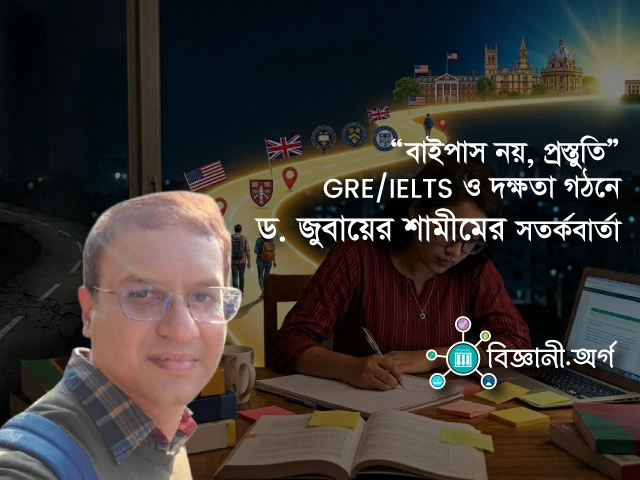
A few days ago, a student from Bangladesh University of Engineering and Technology (BUET), who is about to complete his bachelor’s degree, approached me for advice regarding higher studies. I’m writing this article based on that conversation, as I often receive similar requests for guidance.
After meeting me, the student seemed somewhat hesitant. He said, “Sir, I have a good CGPA, but it feels like that’s not enough for higher studies. What do you think?“
I smiled a little and replied, “You’re right. Good grades alone aren’t enough. When international universities assess applicants, many other factors become important in their eyes. Do you know what they look for?“
He shook his head and said, “Not really. But I’ve heard that research publications are very important.“
I replied, “You’re correct! Not just research, but industry exposure, leadership skills, and even your online profile are equally important. Let’s take a look at the areas where you can improve.“
First, let’s go over some of his background so it’ll be easier for you to understand why I gave him these suggestions.
His goal is to pursue a master’s in Australia, as he isn’t particularly interested in the United States. Currently, he’s writing his thesis and hasn’t published any research papers yet. In terms of industry experience, he’s only completed a five-day internship at DESCO. He has created a LinkedIn account, but it contains little information. He also doesn’t have a Google Scholar or ResearchGate profile, since he hasn’t published any research.
After reviewing his profile, I noted that he isn’t particularly active on professional online platforms. Facebook or TikTok presence won’t contribute positively here. Especially, his LinkedIn profile is very weak, and he lacks any notable online presence. In today’s competitive world, a good academic record alone won’t open the doors to higher studies; rather, additional skills are necessary. So, I explained to him some crucial points that will not only smooth his path to higher studies but also benefit his career.
What’s Needed for Higher Studies
I told him at the outset, having just a good CGPA is not enough for higher studies. International universities assess various aspects of a student in addition to academic results. At the top of the list are—
1. Research Publications
According to university rankings, more than 75% of applicants admitted to the top 100 universities have at least one or two research publications. For higher studies at any reputable university, publishing at least two research papers is extremely important. Since he’s nearing the end of his research work, he should now focus on getting his research published. But how?
- Scientific Journal: It’s important to publish research findings in an international scientific journal.
- Review Paper: A 2023 study showed that about 65% of students selected for higher studies had published research in the form of review papers. If there’s a delay in publishing the main findings, a strong review paper related to the research can be written. This highlights recent studies and future directions in the field.
- Book Chapter or Newspaper Article: Besides journals, publishing a book chapter or summarizing research in the media can be important as well. This allows the research to reach a broader audience and enhances a researcher’s impact. Biggani Org ( https://biggani.com ) is one such engaging platform.
2. Internships or Industry Exposure
Globally, 85% of higher education institutions consider internships a major criterion for assessing applicants.
For higher studies, academic skills alone aren’t sufficient—practical experience in industry or the real world matters too. However, gaining hands-on industry experience at the undergraduate level can be challenging. In that case—
- Internships: A two or three-month internship plays a significant role in applications for higher studies. But it shouldn’t be just for the certificate; gaining real skills is important. Some places for internships might be:
- Government power and energy organizations (such as DESCO, BPDB, PGCB).
- Private tech companies or startups (where you can gain real-world project experience).
- Research institutes or university labs.
- Project or Practical Experience: Research thesis or personal projects should be aligned with industry relevance.
3. Importance of Online Presence
In my observation, most students have a weak online presence. Yet tools like LinkedIn, Google Scholar, ResearchGate, and personal websites are key platforms to showcase a student’s skills. Research has shown that over 70% of students are not active on LinkedIn, limiting their job and higher education opportunities.
- Keep your LinkedIn profile updated. Mention your education, experience, research, and skills there.
- Create profiles on Google Scholar and ResearchGate.
- Having your own blog or website can be even more effective.
How to Get Started?
I told him he needs to start planning right away.
1. Start working toward publishing research.
2. Look for opportunities to do internships or work on projects.
3. Get involved in co-curricular activities.
4. Update your LinkedIn profile.
5. Start writing about science and technology.
Final Thoughts: Moving Forward Toward the Future
My advice to this student was— good results alone are not enough for higher studies; building a complete profile is essential.
I asked him to read my book “Personal Branding” https://www.rokomari.com/book/author/32297/dr-mashiur-rahman and recommended he get involved with biggani.org, where we help students develop research, writing, and science communication skills.
This story is not just about one student—it reflects the reality for countless Bangladeshi students. So, start preparing now, because for higher studies it’s not just the degree—a blend of diverse skills and experiences is needed.