The operating theater lights are on. Every moment for the doctors is filled with intense anxiety. To reach the lesion deep within the patient’s hippocampus, a small piece of healthy temporal cortex at the front must be removed. Hidden within that tiny piece lies the key to one of the most important revelations in the history of science.
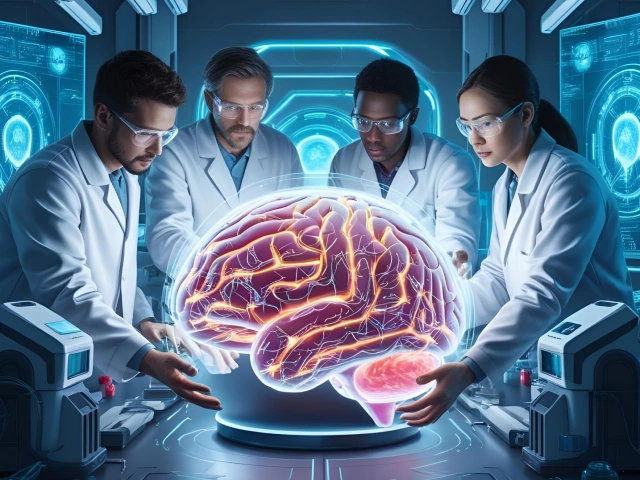
This tiny part of the human brain is usually discarded after surgery. But this time, scientists in the United States have transformed such discarded tissue into groundbreaking research material. Using advanced electron microscopy, Harvard University scientist Jeff W. Lichtman and his colleagues have created a detailed three-dimensional map of one cubic millimeter of the human brain, amounting to 1.4 petabytes of data. For the first time, this enormous trove of information has made it possible to unravel the internal structure of the human temporal cortex.
“Research like this has never been possible before,” said lead scientist Alexander Shapson-Coe. “We have now reached a stage where it is possible to visually analyze every neuron and their billions of connections.”
This massive dataset includes nearly 57,000 neurons, 23 centimeters of blood vessels, and about 150 million synaptic connections. Most remarkably, the study has identified a previously unknown type of guiding neuron and rare but extremely powerful multi-synaptic neural links.
Dr. Carolyn Reid, renowned neuroscientist from the University of California, said, “This research marks the beginning of a new era in uncovering the hidden secrets of the brain.”
The scientists did not stop at just collecting data; they have created an open online platform where anyone in the world can analyze this data. It is hoped that this will open up new horizons for neuroscience research.
Sabbir Rahman, a student in the Department of Psychology at the University of Dhaka, said about the research, “What we learn about the brain at university, this kind of research offers knowledge that is even deeper and more practical. It will open new opportunities for researchers in countries like Bangladesh as well.”
The researchers believe that with this high-resolution analysis, revolutionary changes could come in the treatment of neurological diseases such as Alzheimer’s, Parkinson’s, or epilepsy in the future. “The main goal of our research is to understand how brain diseases develop,” said Jeff W. Lichtman. “The more people use this data, the faster we can achieve that goal.”
Indeed, this new map of the human brain can become a new beacon of hope not only for science, but also for all humanity.
Reference:
https://www.science.org/doi/10.1126/science.adk4858