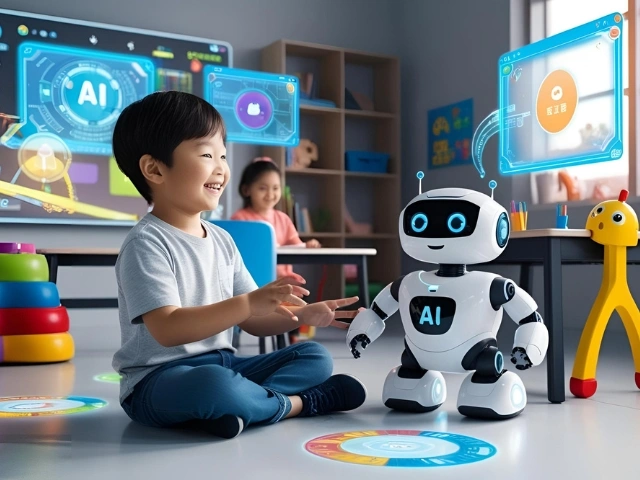
Little Li Zhao’s morning begins with her favorite cartoons. Then comes milk, her school bag, and the daily rush to school—each a part of her regular routine. But now, something new is being added to her day—Artificial Intelligence, or AI. She will learn how robots think, how “intelligence” works in mobile apps, and how this knowledge will help her become an innovator of the future.
According to a declaration from China’s Ministry of Education, starting September 1, 2025, AI education will become mandatory in all primary and secondary schools across the country. Each student will receive at least eight hours of AI education per year. Content will be tailored by age, from grade one through twelve—with fun games, stories, and simple materials for younger children, and basic concepts like algorithms, data analysis, and machine learning for older students.
Why this initiative?
China’s Education Minister Huai Jinpeng stated, “AI is a technology that will shape the society of the future. That’s why it’s imperative we prepare the next generation for it now.”
The Chinese government has already announced the preparation of a National AI Education White Paper, which will set the framework for this policy and provide guidelines for training teachers and developing textbooks.
The trend of AI education is gaining momentum worldwide. Several U.S. states have incorporated AI into their STEM curricula, while Italy has also launched experimental AI education programs. Analysts believe this move will help secure China’s leadership in the global technology race.
Analysis and Reaction
Renowned tech analyst Li Hong says, “There was a time when coding was considered an advanced skill. Now, AI is the new literacy.”
A parent in China, Wei Lan, says, “At first I was scared—can my six-year-old learn AI? But now I see, he’s learning through play. He says, ‘I’m teaching my robot how to think!’”
However, some educators have expressed concerns. They say children should not be put under excessive pressure; rather, their mental development must also be given due consideration.
A Message for Bangladesh
China’s decision compels us to reflect—which path are we preparing for the next generation? AI is no longer science fiction; it’s now an inseparable part of daily life. The time has come to create our own roadmap for technology education in our context.
Dr. Mashiur Rahman, a technology and education analyst, said, “Whichever country introduces AI education earlier will hold the leadership in the future. If Bangladesh starts preparing now, our children too can become the innovators of tomorrow.”
Conclusion
Today, Li Zhao is learning how a smart camera works. In ten years, perhaps she herself will invent a technology that could change the world. This initiative is not just about education policy, but about preparing an entire generation for the future.
The question is: will our children only play games on mobile devices, or will they be the ones to create new technologies someday? The choice is ours.