Author – Azizul Haque
Assistant Professor, Yeungnam University.
Impact Factor and CiteScore are two popular methods used to measure the importance and quality of academic journals. These metrics help researchers, institutions, and readers understand how often research papers published in a journal have been cited by others.
Impact Factor:
Dr. Eugene Garfield first introduced the concept of Impact Factor in the 1960s to measure the quality and significance of research. For this, he founded the Institute for Scientific Information (ISI), which later became Clarivate. This metric is currently provided by Clarivate Analytics and is accessible through Journal Citation Reports (JCR).
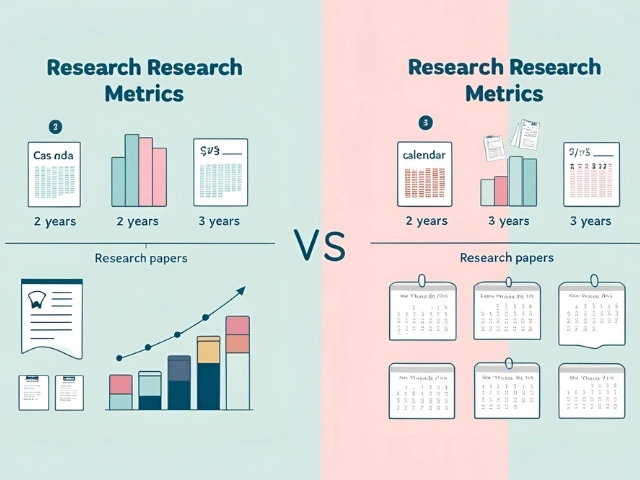
A journal’s Impact Factor is calculated as the ratio between the total number of citations received by articles published in the previous two years and the total number of research papers published in that journal during the same period. Only specific types of papers, such as research articles and review papers, are taken into consideration for this calculation.
For example, suppose the total number of citations received by research papers published in 2021 and 2022 in a journal is 850, and the total number of research papers published in those two years is 115.
Therefore, Impact Factor = (Total number of citations of research papers published in 2021 and 2022) / (Total number of research papers published in 2021 and 2022)
= 850/115 = 7.39
CiteScore:
Compared to Impact Factor, CiteScore is a relatively new metric, introduced in 2016 by Elsevier. Its purpose was to provide a broader and more transparent metric that could better assess the long-term impact of research.
This metric is provided through Elsevier’s Scopus database. CiteScore is primarily calculated based on research papers published in a journal over a three-year period. For example, suppose the total number of citations received by research papers published in 2020, 2021, and 2022 in a journal is 1070, and the total number of research papers published in that journal during those three years is 155.
Therefore, CiteScore = 1070/155 = 6.90
Compared to Impact Factor, CiteScore takes into account a wider variety of document types, such as research papers, review articles, conference papers, book chapters, and data papers.
Why is this important?
Both Impact Factor and CiteScore provide valuable insights into the quality and importance of journals. While Impact Factor is more suitable for understanding a journal’s short-term value, CiteScore offers more comprehensive information, as it covers a longer timeframe and includes more types of documents.
Note: Collected from Facebook:——–
https://www.facebook.com/share/p/1PJMzziHgF/