Ahmad Shamsul Islam: (August 6, 1924—April 14, 2025)
Farewell to a Pioneer and a Shining Star of Research in Bangladesh
Tofazzal Islam
Founding Director and Professor, Institute of Biotechnology and Genetic Engineering, Gazipur Agricultural University and Fellow, Bangladesh and World Academy of Sciences
Email: [email protected]
Science knows no geographical boundaries, religion, race, or political bias. It applies equally to all. When science is made open to everyone, everyone benefits from it. Everything we use in today’s world is the gift of science. Science is the driving force of civilization’s evolution and economic development. The more world-class scientists a country or society has, the more developed and esteemed it is in the global arena. Unfortunately, in developing countries, scientists often fall victim to politics. In Bangladesh too, scientific work and recognition are hampered by political tagging. We must keep scientists free from all tagging and discrimination, and nurture them for the greater benefit of society and the country. Otherwise, science will not flourish here and most talented and promising scientists will leave the country in search of opportunities in the developed world. To prevent this brain drain, we must keep our scientists free from political tagging and allow them to serve society without any political bias.
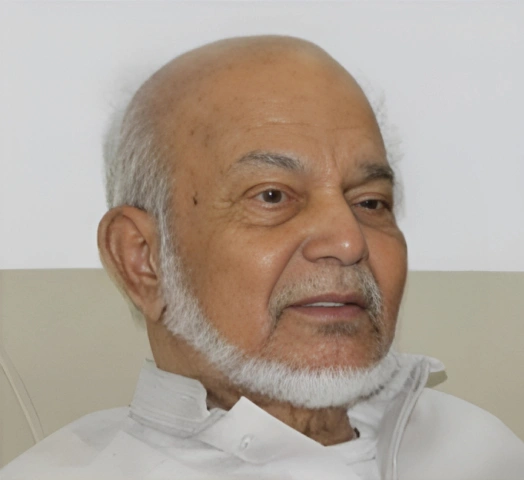
Professor Ahmad Shamsul Islam was an extraordinary and influential world-renowned scientist in Bangladesh. Overcoming all the aforementioned adversities, he rose to prominence in his own right, setting himself as a rare example. He showed how one can contribute to world-class scientific research and bring honor to the country, even while working in a developing nation. He was a mentor and guiding light to hundreds of scientists who are now working both at home and abroad. In his over-a-century-long life, he was a trailblazer and leader in research in tissue culture and biotechnology, which has had a profound impact on our agriculture, food security, and research landscape. Remarkably, he remained free from any political bias or tagging. On April 14, 2025, at the age of 100 years and 7 months, he passed away, leaving the scientific community and all well-wishers in mourning. I was fortunate to have come into contact with him, which deeply influenced my own scientific and academic career in Bangladesh. Although he was not my direct teacher, he became an ideal figure for myself and other scientists striving to practice competitive science at a global level in this beautiful yet highly polarized society. This article is a humble tribute and reflection on the illuminated life of this legendary and accomplished scientist.
Ahmad Shamsul Islam was born on August 6, 1924 in Medinipur District, then British India. After his primary and secondary education at Rajshahi Collegiate School and Rajshahi College, he completed his Bachelor’s in Botany with honors in 1945 and his MSc in 1947 from Presidency College, Kolkata. Later, as the first recipient of a British Council scholarship, he joined the University of Manchester in the United Kingdom for PhD research and earned his degree in Cytogenetics in 1954. For his outstanding contributions in chromosome analysis of strawberries and the development of seedless strawberries, he received the “Curry Memorial Award” that same year.
From the very beginning of Ahmad Shamsul Islam’s research career, several of his papers on plant cytogenetics were published in the world-renowned journal Nature. In 1960, he published a research article in Nature that was the first in the world to report a successful hybridization between two species of jute, a work that remains significant in contemporary research. Under his leadership, in 1984, Bangladesh’s first plant tissue culture research article (on sugar-centric crops) was published.
Ahmad Shamsul Islam began his career at the then Jute Research Institute, laying the foundation for the establishment of the Jute Gene Bank. After 1971, he became the Head of the Department of Botany at Dhaka University and played a pivotal role in establishing the foundation of modern botany and biotechnology research in Bangladesh. Under his vision, the country’s first ‘Plant Tissue Culture and Genetics Laboratory’ was established, which later played a fundamental role in expanding agriculture-based biotechnology. He introduced tissue culture methods for producing disease-free planting materials of local jute, potato, and orchid. Through nationwide workshops and trainings, he inspired and equipped many young scientists to pursue this new stream of research.
The unraveling of the life’s secrets of Bangladeshi jute is one of science’s most talked-about topics. Professor Ahmad Shamsul Islam laid the cornerstone of this historic initiative and was the first to provide direction for jute genome research. In 2005, he published a key research paper on the preliminary work of analyzing the genome of golden fiber jute from the University of Texas in the United States. His vision, leadership, and ability to coordinate top researchers in the jute genome sequencing project remain exemplary to this day. He brought in expatriate scientist Dr. Maqsudul Alam into the project, who later became the main driver of its success. The article on genome sequence analysis of Tossa and deshi jute was published in the prestigious journal Nature Plants. This historic paper was dedicated to Professor Ahmad Shamsul Islam. For his successful leadership in the high-impact jute genome sequencing, Bangladeshi scientist Dr. Maqsudul Alam, who was then working at the University of Hawaii, received the country’s highest civilian honor, the ‘Independence Award’. Sadly, Dr. Maqsudul Alam had passed away before he could receive this award.
Professor Ahmad Islam was an internationally trained and recognized scientist. He was affiliated with research and teaching at renowned universities including California Davis, Cornell, Nottingham, and Tokyo. His life’s work is marked by a unique combination of deep scholarship, scientific spirit, and leadership. He was an elected fellow of both the Bangladesh Academy of Sciences and the World Academy of Sciences.
Professor Ahmad Islam was the founding editor of the Bangladesh Journal of Botany and a co-founder of the Journal of Plant Tissue Culture and Biotechnology, which continues to be one of the country’s leading scientific journals. In addition, he was the founding editor of five international journals. He authored several textbooks. His book ‘Bongshogatibidyayr Moolkotha O Gene Prokoushol’ (“Fundamentals of Genetics and Genetic Engineering”) is recognized as the first textbook on genetics in the Bengali language. Professor Ahmad Shamsul Islam was also a founding member and the first moderator of the Global Network of Bangladeshi Biotechnologists (GNOBB). Under his inspiration, this influential platform created a vast network among expatriate and local scientists, leading to many collaborative research projects and innovations.
In 1984, Professor Ahmad Shamsul Islam received the ‘President’s Gold Medal for Agriculture’ and in 1987, Bangladesh’s second-highest civilian honor, the ‘Ekushey Padak’, for his special contribution to education. He also received the Bangladesh Academy of Sciences Gold Medal (1987). Today, his successors hold key positions in various universities, research institutions, and international organizations. He was not only a pioneering scientist, but also an enlightened teacher whose teachings and ideals have shaped a science-minded generation.
Professor Ahmad Islam was not just a teacher or researcher; he was a visionary and a dreamer—someone who dreamed of shaping the scientific community of the future. Remembering the contributions of Professor Ahmad Shamsul Islam, it can be said without hesitation that his life was one of the brightest chapters in Bangladesh’s scientific history. Though he is no longer with us, he has left behind an eternal light—one that will continue to guide our scientific journey in the years to come.
Not only in science and education, Professor Islam was also a successful father. His daughter, Professor Zeba Islam Seraj, is a distinguished researcher at the Faculty of Biological Sciences at Dhaka University and a leading biotechnologist in the country. His elder son, Professor Yusuf Mahbubul Islam, is the Vice-Chancellor of Southeast University, and his younger son, Khalid Islam, is a software engineer in the United States.
Professor Ahmad Islam was not just a scientist, but also an exemplary teacher and social organizer. In 1980, he founded the Quranic School Society, through which he inspired children in moral education. His death has left us with an irreparable void, but he has also left behind knowledge, ideals, and a profound humanist legacy. As we move forward on our journey of scientific advancement, the path he showed remains our greatest source of inspiration. We honor this great scholar with deep respect—whose life teaches us, “Knowledge is power, and its application is liberation.”