The Beginning:
It’s 1 a.m. Exam stress is on my mind. Hoping to relax a bit by watching something light, I opened Facebook.
First a meme, then a motivational reel, then a friend’s status.
I looked up at 1:48 a.m.
My head feels heavy. I can’t recall anything. But I was just scrolling!
So why do I feel so tired?
Scroll Fatigue: Fatigue, But Different
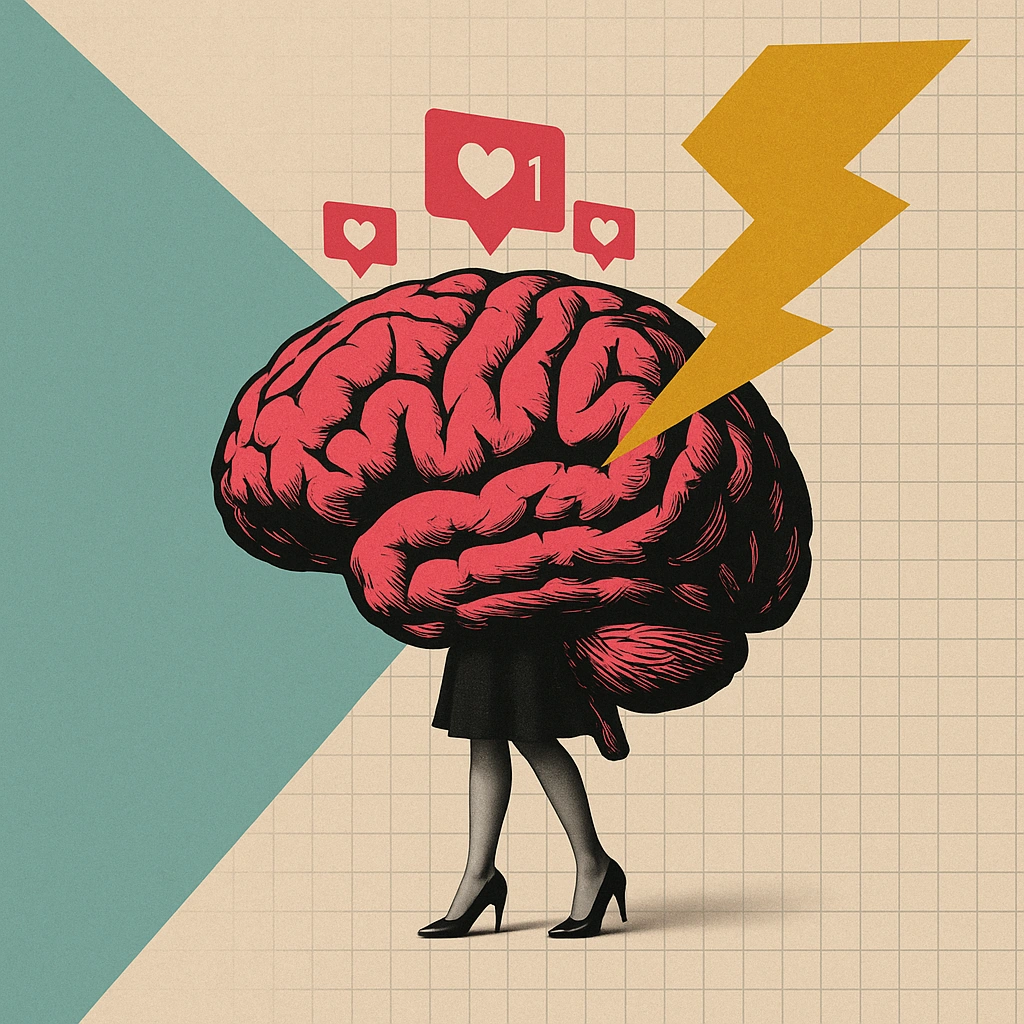
Usually, we think of fatigue as physical or mental exhaustion. But “Scroll Fatigue” is a type of tiredness that arises from neuronal decision overload. In other words, while you’re scrolling, your brain is making thousands of little decisions—
“Should I read this post?”
“Should I like this picture?”
“Should I skip this video?”
While these micro-decisions might seem trivial at first, hours and days of them put a unique neurological strain on the brain.
Prefrontal Cortex: The Main Stage of Fatigue
The prefrontal cortex of the human brain handles focus, decision-making, and planning. It’s powerful, but not limitless.
A famous study (Baumeister et al., 1998, “Ego depletion: Is the active self a limited resource?”) showed that our decision-making power is strongest in the morning, and decision fatigue sets in by day’s end.
Facebook scrolling depletes this capacity even faster. Each scroll brings new information, new faces, new emotional reactions, meaning the prefrontal cortex never gets to relax.
Dopamine Loop: The Trap of Pleasure
When you use social media, the neurotransmitter dopamine is released in your brain—this creates feelings of joy, excitement, and motivation.
The problem is, this joy is fleeting and comes in small bursts—the rewards are consistent, but never fully satisfying. This creates the “hedonic treadmill” effect: you’re constantly chasing pleasure, but true satisfaction never arrives. (Brickman & Campbell, 1971)
Multiple studies (Montag & Walla, 2016, “Carrying the Internet in your pocket: Links between Internet addiction, smartphone usage and emotional intelligence”) have shown that excessive scrolling impacts the brain’s reward circuitry, making it harder to find pleasure in ordinary things later.
Neuroscience Explanation: What Does Brain Fatigue Mean?
Amygdala: While scrolling through various emotional content, this area remains constantly active—increasing stress and anxiety. (LeDoux, 2000)
Hippocampus: The center for information processing and memory formation. With too much random information, it can’t assign decision tags—making it harder to remember things.
Default Mode Network (DMN): This system works when we’re resting and doing nothing. But social media disrupts this network, so even when we take a break, we don’t really “recharge.” (Raichle et al., 2001)
Signs of Scroll Fatigue:
1. Mild headaches and a foggy feeling
2. Delayed decision-making
3. Lack of focus
4. Difficulty memorizing what you read
5. Getting irritated or frustrated easily
Science shows there are solutions too:
Digital Fasting:
Dedicate set times each day to avoid scrolling—so your prefrontal cortex can relax.
Intentional Browsing:
“I’ll scroll for 15 minutes, and only visit specific pages or watch specific videos”—this kind of planned usage.
Pomodoro Technique:
Work for 25 minutes, scroll for 5. Setting time limits helps keep the dopamine loop in check.
Focused Content Creation:
When you create content yourself, your brain stays conceptually involved—reducing passive scrolling.
Final Words:
When we say, “My brain isn’t working today,” often the reason isn’t our body, but the exhaustion of our neurons.
Scrolling through Facebook or Instagram isn’t always restful—in many cases, it’s silent mental labor that tires out your brain in ways you might not notice, but you definitely feel.
Md. Iftekhar Hossain
Medical student, Cox’s Bazar Medical College | Interested in neuroscience, habit formation, and behavioral changes of the human brain.