News Desk, Biggani Org
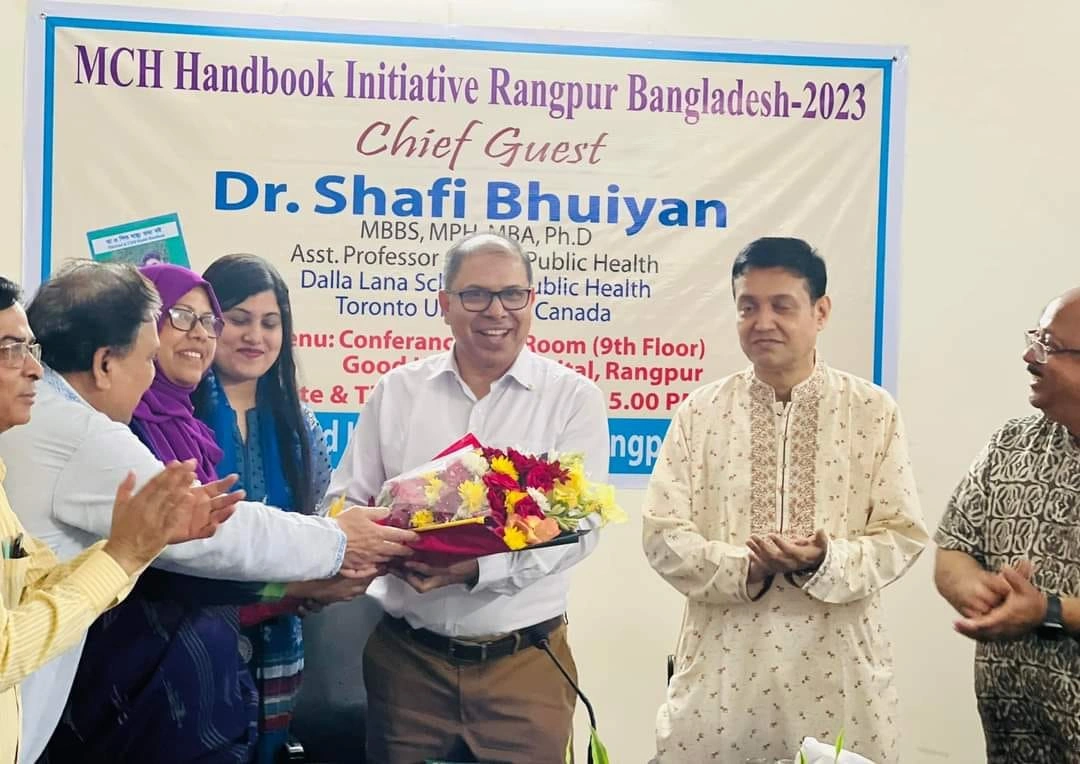
The idea that took root in the bustling corridors of Azimpur Maternity Hospital in Bangladesh has now spread to more than forty countries around the world. Through the Maternal and Child Health Handbook (MCH Handbook), Dr. Shafi Bhuiyan has put vital maternal and child health information at mothers’ fingertips, paving the way for a quiet revolution in healthcare. He refined the experience from Bangladesh so well that it is now recognized globally as a successful and replicable public health model.
Dawn had not yet fully broken. Even then, long lines formed in Azimpur Maternity Hospital’s corridor. Some held newborns, some waited in labor, others arrived for child vaccinations. Among this familiar crowd stood a young physician, Shafi Bhuiyan. Through his eyes, it wasn’t just about the sheer number of patients or the shortage of doctors—he perceived a greater challenge: lack of information, shortage of awareness, and a kind of chaos affecting maternal and child healthcare.
That day’s experience deeply moved him. He wondered, if a mother had a simple, reliable way to keep all her and her child’s health information together, wouldn’t her entire pregnancy, childbirth, and the journey of her child’s growth become safer and more organized?
It was from this straightforward yet powerful question that the idea for the Maternal and Child Health Handbook (MCH Handbook) was born—an idea that would later inscribe a new chapter not just in Bangladesh, but on the pages of global public health.
Today in Bangladesh, Dr. Shafi Bhuiyan is recognized as the originator of the MCH Handbook and the leading figure spreading this model to nearly forty countries worldwide. Yet, the origins of this global success story are quite humble: it started with a young doctor’s empathy and sense of responsibility while standing amidst the crowds in a busy hospital corridor.
A Hospital, a Reconstruction, and the Birth of a Visionary Idea
In 2000, the Azimpur Maternal and Child Health Training Institute was rebuilt with funding from the Japanese government. With more than three hundred outpatients each day, twenty to thirty deliveries daily, and the ability to maintain high standards in maternal and child care, this center quickly became a powerful public health model. The reason was not just infrastructure development, but also the effective coordination between two countries and the deep insight of a young physician. Dr. Shafi Bhuiyan was a vital link in this collaboration between Bangladesh and Japan.
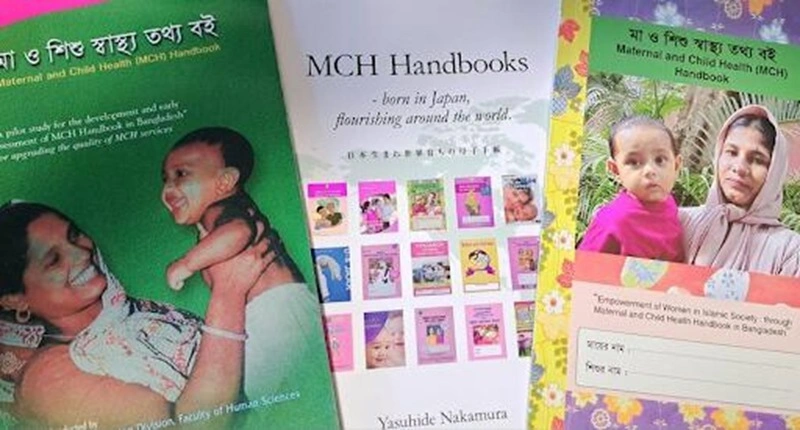
It was at this center that Bangladesh’s first comprehensive Maternal and Child Health (MCH) Handbook initiative began. It was not merely a book; it was a continuous record of a family’s health journey, an awareness tool for mothers, and a reliable companion for making informed decisions. This is where change began—change that would go on to set new standards for maternal and child healthcare worldwide.
Research in Japan, Implementation in Bangladesh, and Then Expansion to the World
During his PhD at Osaka University and later as a JSPS Post-Doctoral researcher, Dr. Shafi Bhuiyan delved deeply into maternal health education, information management, and the behavioral aspects of health systems. On returning home, he redesigned the Japanese model to fit the realities, resources, and needs of Bangladeshi society.
The result was remarkable. The successful implementation of the MCH Handbook in Bangladesh proved so effective that before long, other countries became interested in exploring the “Bangladesh Model.” Today this handbook has been adopted as a tested, effective policy innovation across numerous Asian countries, regions of Africa, parts of the Middle East, and even in some areas of North America.
This widespread acceptance shows that advancing healthcare doesn’t always have to be tech-driven. Sometimes, simply putting a small book with essential information, awareness, and clear guidelines for regular follow-up in people’s hands can spark the biggest changes.
A New Era for the MCH Handbook in the United States
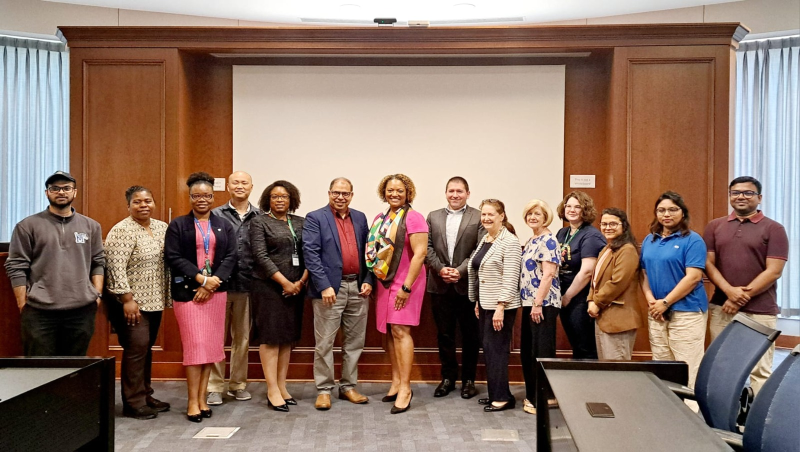
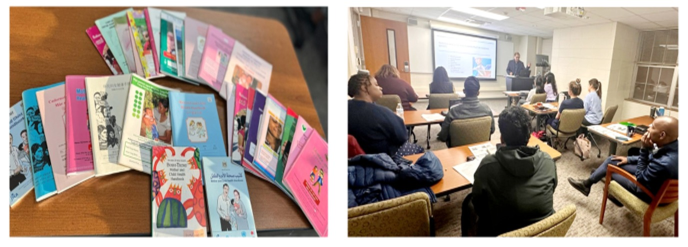
Currently, a modern and advanced version of the MCH Handbook is being developed in the United States, with Dr. Shafi Bhuiyan at the helm. Considering advanced health information management, digital records, the experiences of immigrant families, multicultural populations, and health inequities, a technology-driven, user-friendly, and culturally sensitive model is being tailored for the US context. This work demonstrates that health innovation is not bound by geography or income level—it can evolve and become even more effective by adapting to place, people, and culture.
Why the MCH Handbook is Called a ‘Revolution’
This handbook puts health decision-making directly in the hands of mothers and families, a power that for so long had been the sole domain of medical institutions. From the start of pregnancy to child vaccination, growth charts, malnutrition risk, symptoms of illness, and necessary treatment information—a mother can now access it all in one place. It not only enriches her with information but also enables her to make timely, informed decisions regarding her own and her child’s health.
Families who once had access to little information outside hospitals can now become aware of risks and needs right at home. This brings several major changes:
• Disease prevention becomes easier
• Symptoms can be identified earlier
• Delays in seeking medical care are reduced
• Families gain more confidence in their decision-making
To make healthcare more humane, inclusive, and efficient, models like this are the most effective in the long run. The MCH Handbook is not just a book—it is a quiet yet powerful revolution toward health equity.
International Recognition for Bangladesh
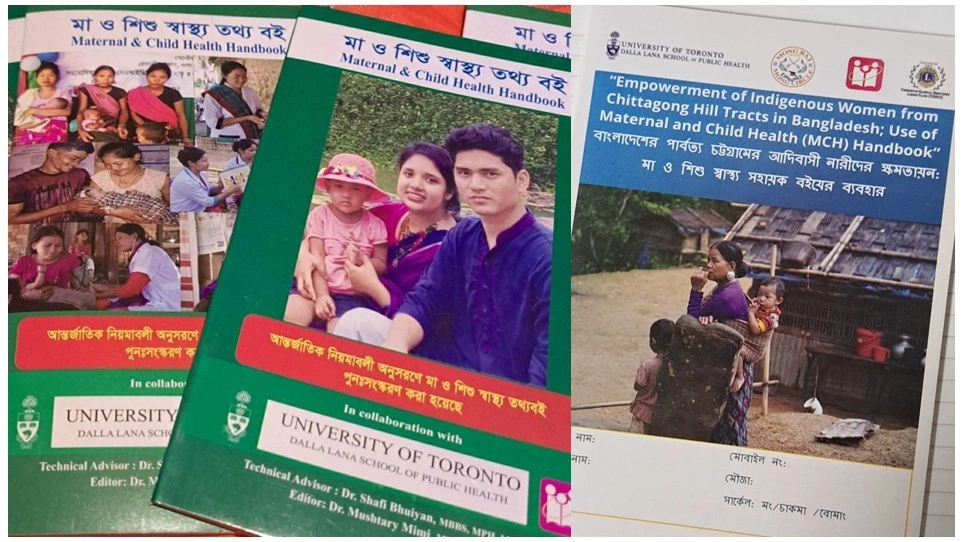
When we talk about Bangladesh’s declining maternal mortality rate, the success of immunization programs, or the reduction in child mortality, the MCH Handbook must undoubtedly be seen as part of that legacy. This model, rooted in Bangladesh’s experience, is now being followed by many countries worldwide. Dr. Bhuiyan’s leadership makes all the difference—he not only dreamed but transformed that vision into a globally recognized fixture on the world health map. In several northern districts of Bangladesh, in the Chittagong Hill Tracts, and at various levels of service centers in Gazipur district near Dhaka, the positive use and effectiveness of the mother and child health handbook have been demonstrated. Now, widespread national adoption and expansion are what the times demand.
Final Thoughts
Today, as the pioneer of the MCH Handbook in Bangladesh and the leader of its expansion to nearly forty countries worldwide, Dr. Shafi Bhuiyan’s work reminds us that the true strength of public health lies within the people themselves. The right information, the right tools, and a bit of expert guidance can change people’s health and lives. The journey that began with a young doctor’s question in a busy corridor of Azimpur is now a global example of humanitarian service.
With Japan’s support, this health development model, both at home and abroad, proves that the right ideas and a humanitarian perspective can enable local solutions to create global change.
References
https://canadianimmigrant.ca/education/program-empowers-internationally-trained-medical-doctors
https://discover.research.utoronto.ca/18562-shafi-bhuiyan/about
https://www.newcomernavigation.ca/en/news/featured-member-shafi-bhuiyan.aspx
https://discover.research.utoronto.ca/18562-shafi-bhuiyan/about
https://pandemics.utoronto.ca/people/asst-prof-shafi-bhuiyan/