Plagiarism: The Theft You Can’t See, But That Erases Your Future
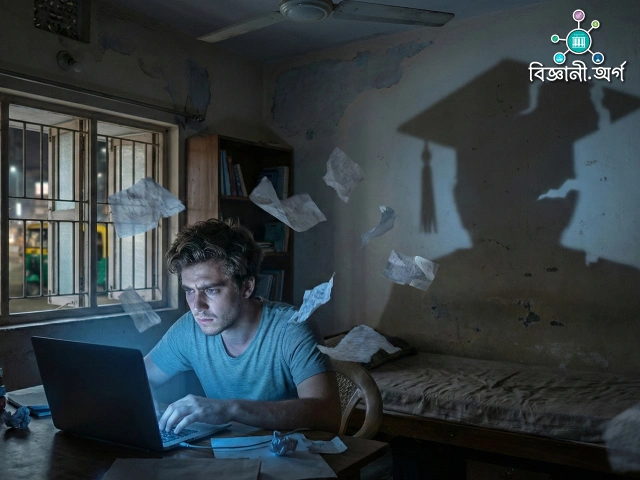
The last hours of the night. A window open in a student dorm in Dhaka. Outside, the ring of rickshaw bells; inside, the blue glow of a laptop. A young student sits staring at the screen, eyes red, head heavy. He has to submit his seminar paper tomorrow. He searches on Google, copies, pastes. Changes a few lines here and there. He thinks to himself, “Who’s really going to notice?” He doesn’t know that these few copied lines are leaving a mark on his whole future that can never be washed away.
This silent theft is called plagiarism. No, it’s not just copying—it’s stealing someone’s thoughts, putting someone else’s sleepless hard work under your own name. The most dangerous part is that though many know the word plagiarism, they don’t grasp its real meaning. To many, it’s just a ‘little trick’ to get through exams, finish assignments. But in reality, it is a kind of intellectual suicide. When you pass off someone else’s ideas as your own, you form a habit of not using your own brain. And when the brain doesn’t work, neither does your future.
In the context of Bangladeshi education, this tendency is like an invisible epidemic. Too many students in the classroom, too little time, teachers exhausted. Quick results are demanded, but there’s no time for depth. From the very first year at university you’ll hear, “Bro, give me last year’s assignment”—it’s like a natural language. But no one asks, “What am I actually learning by doing this?” According to a World Bank report, education systems in developing countries now value certificates more than actual learning. Bangladesh is no exception. We are advancing in numbers, but lagging in critical thinking.
University is not just a place for degrees; it is a factory for building minds. Learning to steal here means learning to break your own backbone. Ironically, many students think plagiarism will not be caught. But this very belief—“I won’t get caught”—is the biggest mistake. In developed countries, software now exists that not only detects copying, but tries to identify the author based on writing style. In universities, academic integrity is now valued even more than job credentials. In many universities in Europe and America, if you are found plagiarizing even once, it leaves a permanent mark on your transcript. All your GPA fades beside that stain.
UNESCO research shows that about 60% of students worldwide have committed plagiarism at some point in their lives, whether intentionally or unintentionally. Here, “unintentionally” is important. Many don’t know how to reference ideas, how to put things into their own words. At school, we were never taught quotations or referencing, just memorization. That memorization puts on modern clothes at university—it becomes plagiarism by name.
Do you know where plagiarism does the most damage? In character. When you pass off others’ ideas as your own, you start a lie with yourself. You keep telling yourself, “I can do this.” But in truth, you can’t—you’re just covering things up. Covering up like this, a day will come when you can’t even tell where to stop. In research, as in life. People stop trusting you, and you forget how to trust yourself.
There was a time when Newton said he stood on the shoulders of giants. The key to avoiding plagiarism lies in that very line. Science means building on others’ work, but without erasing your own name’s shadow. Marie Curie never hid the names of those who came before her in her discoveries, Einstein never forgot the contributions of past thinkers in his theories. Because science is about light—you can’t write your name by making it dark.
When Bangladesh’s pride, Abdus Salam, spread light worldwide, he took his country along with him. People like him never stole others’ light; instead, they lit their own. The question is, do we want to inherit that brilliance—or do we want to bury big dreams with little acts of theft?
Avoiding plagiarism isn’t something you can memorize as a rule—it’s a matter of mindset. It’s about learning to respect yourself. If you believe your thoughts are valuable, you’ll never steal someone else’s. You will learn how to read, how to understand, and how to express things in your own words. It takes time, it’s hard, but this struggle is what builds you.
Bangladesh allocates only a tiny fraction of its GDP for research. OECD countries spend on average 2-4% on research, while we’re still fighting the copy-paste culture. Yet, if we could maintain intellectual honesty even with these limited resources, this very country could one day export ideas.
No one will come and say, “Hey student, don’t plagiarize.” You have to understand it yourself. You have to realize that this path may get you a degree, but not an identity. If you truly want to become a scientist, a thinker, the first condition is to find your own voice. Having the courage to walk the path of truth, even with broken thoughts, incomplete sentences, and messy arguments in your own words—that is real bravery.
One day, many years from now, you might be standing in a lab, an office, or a classroom. Someone will look at you and say, “Sir, your work has inspired me.” In that moment, if you know this work is truly your own, your heart will feel light. But if you know it’s actually someone else’s, that moment will become your heaviest burden.
Avoiding plagiarism is not just about following rules, but about saving yourself. Valuing your own thoughts. So that no one, like that young student, copies his own future in the dead of night. Rather, he writes his own story in his own way.
This country needs scientists, not copiers. We need thinkers, not thieves. And a reader like you is the hope for a new Bangladesh.