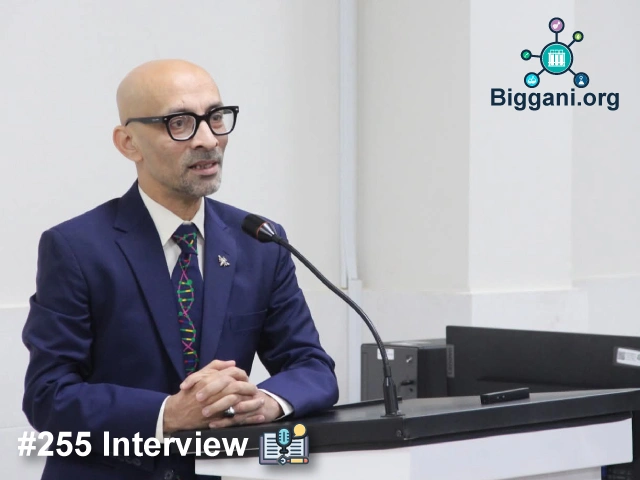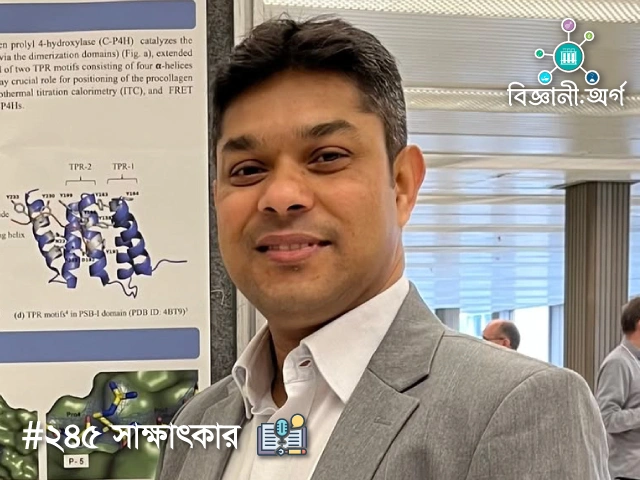
Dr. Ripon Kumar Sikder is a Plant Stress Physiologist and a professional in seed management and agricultural development. He has conducted research on plant tolerance to environmental stress, especially the effects of salinity, and how proper nutrient management can reduce those impacts. His doctoral studies analyzed how saline environments affect crop growth, photosynthesis, and yields.
At present, he is working within the PARTNER project, conducted under the Bangladesh Agricultural Development Corporation (BADC) and funded by the World Bank. Through this project, he is focused on improving national seed production, quality control, and farmer-centered seed supply systems. The core aim of his research is to transform scientific knowledge into practical field-level solutions for the direct benefit of farmers and the agricultural sector. He is actively contributing to agricultural research and development in Bangladesh.
💬 Q&A Session:
Question: To start, could you tell us about yourself?
Answer: I am Dr. Ripon Kumar Sikder—a Plant Stress Physiologist and Seed System & Agricultural Development Professional. I am currently working at the Bangladesh Agricultural Development Corporation (BADC) on the PARTNER project funded by the World Bank. My work aims to make seed production, quality control, and farmer-centered seed supply systems more effective and sustainable at the national level. My main goal is to convert scientific research into practical, field-level solutions that benefit farmers and further strengthen the country’s food and seed security.
Question: What is the focus of your research?
Answer: My primary research focuses on how plants survive and thrive under environmental stress, particularly salinity. In Bangladesh’s coastal regions, high soil salinity reduces water absorption and disrupts the plant’s normal internal processes. My PhD research revealed that salinity stresses weaken photosynthesis in leaves, slowing plant growth and reducing yields. I explored how proper nutrient management could minimize these losses.
Question: How does your research benefit us now or in the future?
Answer: My research provides a scientific foundation for keeping crops healthy under stresses like salinity, drought, and climate change. It enables the selection of suitable crop varieties, balanced fertilizer management, and advanced seed production methods. As a result, production will increase, farmers’ earnings will grow, and food and seed security will be greatly strengthened.
Question: Can you share any special experiences from your research life?
Answer: While researching, I was deeply affected by seeing the decline in growth and leaf greenness of plants in saline environments. In many experiments, initial results were not as expected. But with perseverance and methodological changes, positive results started to emerge. This taught me that patience and integrity are absolutely vital in research.
Question: What qualities do you believe a scientist should have?
Answer: A scientist needs curiosity, patience, analytical reasoning, integrity, a willingness to learn, problem-solving attitudes, and good communication skills. Science is a quest for truth, so ethics and a sense of responsibility are extremely important.
Question: What is your message for young students?
Answer: My message to young people is—love science and do not be afraid of it, and always learn to ask questions. Failure is a part of research. With regular perseverance, honesty, and curiosity, anyone can succeed. One should always remember that research should be connected to the welfare of people.
Contact Information:
Email: [email protected]
LinkedIn: https://www.linkedin.com/in/riponsikder/
Dr. Ripon Kumar Sikder’s research offers crucial guidance for the development of agriculture in Bangladesh’s coastal and saline-prone regions. His work on plant environmental stress tolerance and seed management presents realistic solutions. The biggani.org team extends sincere best wishes for his scientific dedication and professional integrity. It is hoped that his research will inspire future generations of students to pursue scientific inquiry.
Seed Security and Sustainable Agriculture: Insights from Dr. Ripon Kumar Sikder
Dr. Ripon Kumar Sikder is a Plant Stress Physiologist and Seed System & Agricultural Development professional. His academic research has focused on plant responses to environmental stress, particularly salinity stress, and the role of nutrient management in mitigating its adverse effects. During his doctoral research, he investigated how salinity influences plant growth, photosynthesis, and yield performance, and explored scientific approaches to improve crop resilience under saline conditions.
Currently, Dr. Sikder is working under the PARTNER (Program on Agricultural and Rural Transformation for Nutrition, Entrepreneurship, and Resilience) project implemented by the Bangladesh Agricultural Development Corporation (BADC) with World Bank financing. In this role, he contributes to strengthening national seed production systems, quality control mechanisms, and farmer-based seed supply chains. Based in Bangladesh, his work aims to translate scientific knowledge into practical agricultural solutions that enhance crop productivity, seed quality, and national food security.
💬 Question & Answer Session:
Question: Could you briefly introduce yourself?
Answer: I am Dr. Ripon Kumar Sikder, a Plant Stress Physiologist and Seed System & Agricultural Development Professional. Currently, I am working under the World Bank–funded PARTNER project at the Bangladesh Agricultural Development Corporation (BADC). My work focuses on strengthening national seed production, quality control, and farmer-based seed supply systems. My primary goal is to translate scientific research into practical field-level solutions so that farmers benefit and national food and seed security become stronger.
Question: What is the main focus of your research?
Answer: My research primarily examines how plants tolerate environmental stress, particularly salinity, and continue to produce satisfactory yields. In coastal areas of Bangladesh, excessive soil salinity reduces water uptake and disrupts normal physiological processes. During my PhD research, I observed that salinity weakens photosynthesis, reduces plant growth, and lowers yield. Therefore, I explored how proper nutrient management, especially nitrogen application, can mitigate salinity stress and improve plant performance.
Question: How does your research benefit society?
Answer: My research provides a scientific basis for maintaining crop productivity under salinity, drought, and climate-related stress conditions. It supports the development of improved crop varieties, balanced fertilizer management, and enhanced seed production techniques. Ultimately, this can increase farmers’ income, improve seed quality, and strengthen national food and seed security.
Question: Would you share a memorable research experience?
Answer: During my PhD, I observed how plants struggled under saline conditions, with reduced chlorophyll content and stunted growth. Many experiments did not initially produce the expected results. However, through repeated trials and methodological adjustments, positive improvements were eventually observed. This experience taught me that patience, persistence, and scientific integrity are essential in research.
Question: What qualities should a good scientist possess?
Answer: A scientist should have curiosity, patience, analytical skills, integrity, a willingness to learn, problem-solving ability, and effective communication skills. Science is a process of discovering truth, and ethical responsibility is fundamental to that process.
Question: What message would you give to young students in Bangladesh who wish to pursue science?
Answer: My message to young students is to embrace science without fear and to cultivate the habit of asking questions. Failure is part of research and learning. With consistent effort, honesty, and curiosity, success becomes achievable. Research should always aim to contribute to human well-being and societal development.
Contact Information:
Email: [email protected]
LinkedIn: https://www.linkedin.com/in/riponsikder/
Dr. Ripon Kumar Sikder’s research contributes significantly to addressing salinity challenges in Bangladesh’s coastal and vulnerable agricultural regions. His work in plant stress physiology and seed system development offers practical scientific solutions to real-world agricultural problems. The biggani.org team extends its best wishes for his continued success. His dedication to research and agricultural development is expected to inspire young Bangladeshi students to pursue science with commitment and purpose.