The small children’s books at the neighborhood public library were all finished. Everything worth reading on the bookshelf at home had also been read. He had plenty of time, but there was nothing left to do—there were no mobile phones, no internet, and the era of strange electronic gadgets had not yet arrived. So what did the boy do? He would sit under a tree and mentally multiply two large numbers, simply to pass the time.
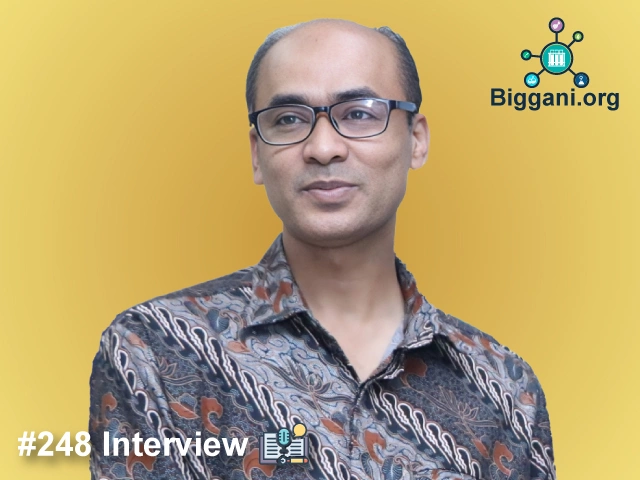
That boy is now Dr. Kaisar Alam, who has spent three decades working in biomedical imaging. He is an associate editor of international journals and the editor of two reference books. But Dr. Alam’s life story is not a straight climb up the ladder of success. It is a story of nearly falling flat several times, getting back up, and moving forward again. And that is perhaps the most useful part of his story.
It Started Before School
His education did not begin at school. It began in front of his maternal grandfather’s bookshelf. He never met his grandfather, but his grandfather’s extraordinary reading habit had left behind a large collection of books. Even before he could recognize letters, he developed an attraction to books by handling those thick volumes.
At the age of four, he was given a book called Amar Sathi. He gradually learned to read, and from then on, his curiosity never stopped. School lessons were there, of course, but after returning home, he would devour whatever he could find in his grandfather’s collection that was worth reading.
During this period, a teacher named Alam Hossain began coming to their home to teach him. His father had searched for several people before finally finding him. The teacher was an unusually encouraging person. Whatever the student wanted to do, he encouraged him to pursue it.
The teacher may no longer be alive, but Dr. Alam still feels indebted to him because he played a major role in planting the belief in his mind that “if you try, you can accomplish many things in life.”
The same can be said of his father, mother, and grandfather. His father could never accept what he called mediocrity. Whether the outcome was good or bad, one had to try. Without trying, nothing would happen—that was his philosophy.
Two Major Setbacks
As a child, Dr. Alam would occasionally develop unusual interests. Once he heard about something called a cadet college, where students supposedly received a good education, learned discipline, and progressed in life. That was enough—he wanted to go.
He sat for the admission test, passed, and enrolled.
Then reality arrived.
At five in the morning, regardless of winter or summer, the bugle would sound. One day there would be drill, the next day physical training. Within a short time, things became difficult. To escape drill and physical training, he would make excuses about being ill and get himself admitted to the hospital because staying there meant he did not have to attend classes.
Even during evening preparation time, he did not prepare properly. The result was predictable. In the Class Eight examination, he scored 23 in English. His father eventually took him out of the cadet college.
Later, he felt that things would probably have become much easier after Class Nine. Drill and physical training would not have disappeared completely, but they would not have been as intense as before.
He recovered from that setback after returning home.
The second setback came on a much larger scale—outside the country.
While studying as an undergraduate in India, he discovered that preparing for the admission examination required students to complete nearly half of the first-year syllabus. Once admitted, however, teachers did not teach that portion again.
A student who had not gone through that admission-test preparation effectively found himself sitting directly in the second semester.
On his first day of class, Dr. Alam realized that he could not understand what the chemistry teacher was saying. He could not understand the calculus teacher either. Physics and biology were no different.
After about a week, he felt as if he had become a complete idiot.
But there was one exception: statics.
In that class, he understood everything the teacher said.
How could he be an idiot in one class and not in another?
After investigating, the mystery was solved. Statics had not been included in the admission-test syllabus. So, at the undergraduate level, the teacher had simply continued from where the subject had ended in SSC.
The other subjects had been included in the admission syllabus, so the teachers did not teach those portions again.
It took him three semesters to make up the gap.
There were many more ups and downs in his life, but these two incidents remain particularly memorable to him. And notably, neither problem was caused by a lack of intelligence. They were problems of preparation, environment, and habits.
The People Who Shaped Him
He has met countless people throughout his life. Although he does not know a Nobel laureate personally, he says he knows at least one person who is of that caliber.
Yet he says he has never met anyone more intelligent than his father.
Until Class Eight, his children were not really given a say in decisions. After he entered Class Nine, his father gradually began giving him more freedom. By Classes Eleven and Twelve, there was even more.
Then, after he entered university, something remarkable happened. The father who had never asked for his opinion before making decisions when he was in Class Eight began asking, “What do you think? What would be the best way to do this?”
His father gradually gave him independence and, through that process, developed his ability to make decisions for himself.
Dr. Alam is now trying to do the same with his own children, although he is not sure how successful he has been.
His mother was a college teacher and an excellent student herself. His grandfather has already been mentioned. These three people, along with his teacher Alam Hossain, were his major inspirations.
At Siroil School, Cadet College, and Rajshahi College, he also had many excellent teachers. It would be difficult to name them all now.
As a professional mentor, he mentions Kazi Khairul Islam, who taught at RUET, then known as BIT, and after twenty-five years of service joined IUT as a vice chancellor in Electrical Engineering.
He considers him a mentor both personally and professionally.
The Answer of a Six-Year-Old
He had an inclination toward mathematics from childhood, along with physics, so engineering seemed like the natural choice.
There is a funny story about this. When he was six years old, someone asked him what he wanted to become when he grew up.
He immediately answered: an electronics engineer.
At that age, he could not possibly have known what an electronics engineer actually was.
Yet eventually, his undergraduate degree was in Electronics and Electrical Communication Engineering.
However, he had never planned to conduct research in biomedical imaging.
When he went to pursue his PhD, all he knew was that Electrical Engineering had something called signal processing, and he liked it.
He explains it with an example. When a doctor performs an ECG, a line appears on the screen—a signal that changes over time. By observing how that line rises and falls, a doctor can determine whether there is a cardiac problem.
What a doctor can identify visually can also, in many cases, be identified through electronic analysis.
He went to the United States as a PhD student in 1989. His work was completed in 1995, with the degree formally completed in 1996.
The turning point in his career came through a seemingly ordinary incident.
During his first semester, he had to take three courses. After selecting two, he could not find a suitable third course.
Eventually, he found one.
And he loved it.
The course was taught by Professor Kevin Barker.
For reasons he himself cannot explain, Professor Barker apparently felt that this student could become a good researcher.
After the course ended, he called Dr. Alam and asked whether he had found an advisor.
The answer was no.
Professor Barker then offered to work with him, and Dr. Alam happily accepted.
His PhD thesis focused primarily on blood flow.
Doctors can use Doppler ultrasound to measure blood-flow velocity, but such measurements are not always accurate and can contain errors.
His task was to develop a better estimate of how quickly the blood was actually flowing.
After completing his PhD, he worked as a postdoctoral researcher at an institution called Riverside in New York.
A Marble Inside a Pudding
One of the major areas of his work is elastography, which he explains using a kitchen analogy.
Imagine a pudding made of jelly or a regular egg pudding. It is soft and wobbly, and if you press on it from above, it deforms.
Now imagine putting a marble inside the pudding.
When you press down from above, you can feel the presence of the marble.
Something similar happens inside the human body.
When an organ develops a disease—whether cancer or various non-cancerous liver diseases—the elasticity of the tissue changes. The affected area becomes harder.
A doctor can sometimes feel a hard area by pressing on the outside of the body. But if a small area deep inside the liver becomes hard, it is practically impossible to detect it with a finger.
Elastography addresses this problem by applying pressure gradually and capturing images at each stage. By analyzing those images, researchers can determine which areas are hard and which are soft.
Its applications are not limited to disease detection.
When a disease is being treated without surgery, imaging can sometimes show whether the medication is working. If an area that was initially very stiff becomes less stiff later, it can indicate that the treatment is working.
Similarly, if a suspicious area is detected in the liver, image analysis can sometimes help determine whether it is cancerous without performing a biopsy.
When they develop something new, they write papers and try to publish them in journals. If the work is sufficiently innovative, they may also pursue a patent.
Currently, he is associated with Imaging Consultation Services LLC, where he provides consultation on diagnostic and therapeutic applications of medical imaging.
He gave an example of the kind of questions that arise in this field.
One day, a company called him and asked whether he knew of any way to completely liquefy a specific area inside the body, possibly in the liver.
He said yes.
A group was working on using ultrasound to completely liquefy a very small area inside the body.
The basic idea is simple: instead of cutting the tissue out with a surgical instrument, the area can be liquefied so that the body can absorb it more quickly.
Because of contractual restrictions with the organization, he cannot disclose the full details.
However, he can say that his main contribution to the project involved developing an automated system for minimally invasive surgery—performing surgery without opening the entire body, instead inserting small instruments through limited access points.
His role in the larger project was to develop image-based guidance that could determine from medical images exactly where the instruments were moving inside the body.
From the Editor’s Desk
Since 2013, he has served as an associate editor for two international journals.
People are generally invited to take on this role after establishing themselves as experienced and reliable reviewers.
In the case of one journal, he himself expressed interest. The journal was looking for someone in his field, reviewed his credentials, and appointed him.
The journal is Ultrasonics.
Papers involving tissue classification, elastography, therapeutic ultrasound, and related areas are sent to him.
He describes his editorial process openly.
First, he quickly scans the paper to see whether the English is acceptable. Then he checks whether the paper contains sufficient innovation and whether the work actually addresses a meaningful need.
There is little point in publishing a paper that has no practical or scientific purpose.
Finally, he looks at the results.
This initial assessment usually takes about ten minutes.
If the paper appears promising, he begins searching for reviewers in the relevant area. Usually, two reviewers are needed.
Then comes the decision: accept, minor revision, major revision, or reject.
If revisions are required, the authors are given specific instructions about what needs to be addressed before resubmission. The process can sometimes go through two or three rounds.
Writing Books
His opinion about writing books is clear: it is difficult, and he probably will not write another textbook.
While writing one book, he realized that, by comparison, writing a journal paper is not particularly difficult. Perhaps years of experience have also given him greater confidence.
If you have a good problem and a few students to work on it, the research can move forward.
But with a book, language becomes extremely important.
The material has to be written in such a way that anyone can understand it.
There are books that people read without understanding anything. A good textbook requires clear explanations, examples, and illustrations that show why something happens and how it works.
He never originally intended to write a textbook.
The initiative came from his Cadet College friend and colleague Javed Iqbal Khan, a professor at the University of Kent. Javed needed an imaging expert and contacted Dr. Alam.
Dr. Alam agreed—and then found himself in a situation where, as the saying goes, he could neither swallow the task nor spit it out.
The textbook was published in November 2019.
The reference book on elastography was entirely his own initiative.
He had been working in this field since 1987. By 2013, he felt that enough research had accumulated to create a comprehensive reference book.
He proposed the idea to a publisher, and several rounds of negotiation followed.
Eventually, they agreed.
Then the real work began.
He contacted different experts and asked them to contribute chapters. In total, 25 chapters had to be brought together.
One author informed him after two and a half years that they would not be able to complete their chapter. Getting another contributor to finish the work took two years.
The two-volume reference book was published in December 2019.
In other words, two books were published in two consecutive months.
The Four Conditions
His advice to Bangladeshi students is very specific.
If you want to publish in international journals, you should choose—or convince—someone who actively publishes in high-quality international journals to become your undergraduate or master’s thesis advisor.
If the advisor does not publish at that level, the quality of the work is unlikely to reach that standard.
He identifies four conditions for judging the quality of research.
First: Significance — The Problem Must Matter
There is no point in solving a problem that has no meaningful benefit.
Because he works in the medical field, he often talks to doctors to learn about the problems they encounter. Sometimes a research problem emerges simply through casual conversation.
The next step is to determine whether the problem can be solved using Electrical Engineering approaches such as signal processing, image processing, or machine learning.
Second: Innovation — Is the Work Truly New?
The question is whether the work genuinely introduces something new or whether the same problem is simply being presented with the same solution in a new package.
Third: Results — The Method Must Actually Work Better
Even if the problem is important and the approach is highly innovative, there is little benefit if the new method produces worse results than the existing method.
For example, if an existing method can identify 80 out of 100 patients, and a new method can identify 98, missing only two, that is a meaningful improvement in results.
Fourth: Clear Writing
Even if everything else is correct, the paper may be returned if the reviewer cannot understand it.
As a standard for clear writing, he offers an excellent rule:
Except for the mathematics or equations, the rest of the paper should be understandable to students in Classes Nine, Ten, or Eleven.
He believes Bangladeshi students are doing good work and publishing their research. They simply need to work a little harder.
He has taught twice in the Electrical Engineering Department at IUT and has continued to informally help many fourth-year students with their theses.
In terms of professional recognition, he is a Fellow of AUM and a Senior Member of IEEE.
Becoming a Senior Member is not particularly difficult. He applied himself in 1998.
Becoming a Fellow of a professional society, however, is much harder.
You cannot nominate yourself. Another Fellow must nominate you, several people must provide recommendations, and you need a strong publication record. Patents are helpful as well.
But the most important factor is service.
Simply publishing papers is not enough. You must also volunteer your time and contribute to the work of the professional society.
In 2012, he received a U.S. exchange scholarship and went to IUT.
The scholarship provides opportunities for students and researchers from the United States to go abroad and for international students and researchers to visit the United States.
He does not remember every detail of the application process, but he remembers that applicants first needed to identify a host institution and obtain an invitation letter.
Because he had previously taught at IUT, he was able to obtain one.
He encourages interested people to explore such opportunities.
Five Friends with Bags in Their Hands
His teaching career did not begin with an official appointment.
In the afternoons, he would go outside to play.
One day, two days before the half-yearly examination, school was closed. After playing, he returned home and found five friends standing outside with their bags.
“What happened?”
They said, “We are staying here.”
“Why?”
“Because you are going to teach us.”
That was how it started—and it has continued ever since.
He taught his friends during Classes Eleven and Twelve as well. After recovering from the first three-semester setback in India, he began teaching again. The night before examinations, his friends would come to his room for help.
Around 2017, he began thinking about establishing an educational institution.
But simply establishing an institution is not enough. To make it work as a business, you have to find a genuine need in the market.
In Bangladesh, there is a huge market surrounding university admission tests.
In the United States, the SAT and the overall university admission process play a similarly important role, and the process can be quite complicated.
Understanding how to prepare the application is extremely important because good presentation can increase the chances of success.
An application needs to bring together SAT scores, GPA, extracurricular activities, leadership experience, volunteer work, and internship achievements.
Having research experience while still in high school can also be a major advantage.
As a result, some high-school and Grade Eleven-Twelve students come to him to conduct research.
He initially started by teaching a few students for the experience. Later, he established an institution called Brave Excellence, created its own website, and moved all classes online through Zoom.
At first, he taught everything himself.
Now he has hired several tutors, most of whom are his own former students—students who performed well and whom he believes can also teach effectively.
Even so, he still considers himself a newcomer.
The journey has only just begun.
Throughout his long teaching career, he has taught at primary schools, middle schools—including Grades Six, Seven, and Eight—high schools, and universities, both in Bangladesh and abroad.
He felt most comfortable teaching graduate students because they had chosen to study by their own decision.
The most difficult group, he says, was Grade Seven.
In his words, “They turned half of my beard white.”
There are two things he loves most about his work: solving unsolved problems, which means research, and transferring knowledge, which means teaching.
His approach to teaching is particularly noteworthy.
Many teachers become frustrated when a student does not understand something even after two or three explanations.
He instead thinks that perhaps he is the one making the mistake. Maybe the student would understand if he explained it differently.
He takes the same approach to research.
If he does not know how to solve a problem, he believes he needs to find out who does know and then go and ask that person.
The 427-Gram Boy
His future plan is simple: he wants to keep working until the last day of his life.
He wants to conduct research and teach.
But he has developed another passion, and it comes from a deeply personal story.
His younger son is now 14.
He was born at 24 weeks of pregnancy—16 weeks earlier than expected.
At birth, he weighed only 15 ounces, or 427 grams.
He was smaller than a Barbie doll.
Doctors estimated his chance of survival at only 10 percent.
During the first 36 hours, his kidneys did not function, along with many other complications.
Alhamdulillah, he survived—and that is one of the greatest blessings their family has received.
However, because he did not receive the 16 weeks of development he would normally have had inside his mother’s womb, some difficulties remain.
He has some learning disabilities.
He is not autistic, but some of his symptoms resemble those associated with autism.
Dr. Alam hopes that once he has organized his business properly, he will be able to work with children who have learning disabilities.
He believes there is more that can be done beyond what has already been accomplished.
He does not know how much he will be able to contribute as a researcher, but he believes there are opportunities to contribute socially—both in the United States and in Bangladesh, where many things are changing.
Lessons from a 427-Gram Beginning
Finally, his observation for young people is brief but brutally honest.
Since childhood, he has seen some extraordinarily intelligent people.
He has also seen people of average intelligence who were exceptionally hardworking.
When he compares the two groups, his conclusion is clear:
The people who worked harder were the ones who succeeded.
Among them were a few who were both exceptionally intelligent and extremely hardworking.
That combination, he says, is where Nobel Prize winners and major business successes often come from.
You may be able to do well in an examination while barely studying, but professional life requires you to overcome many obstacles.
If you set a major goal and apply both your intelligence and hard work toward it, you may not win a Nobel Prize, but you can still go a very long way.
Even when someone has both intelligence and hard work, however, the expected success does not always come.
His view is that we are responsible for making the effort, but success or failure is not entirely in our hands—it is in the hands of Allah.
And finally, he emphasizes something that is rarely included in discussions about success: respecting elders.
He feels that this value has declined in Bangladesh in recent years.
Yet, in his experience, successful people are generally humble and respectful.
Those who consider themselves cleverer than everyone else and do not give others proper respect often fail to reach the level they could otherwise have achieved.
📌 Contact Info
📧 Email: [email protected]