


The password you frequently need to enter quickly—try writing it down with a pen or pencil at the same speed instead of typing it on the computer keyboard one day. You’ll notice that you don’t feel very comfortable doing it. In fact, it’s not unusual to write the password incorrectly in such a case. But why does this happen? Is your brain somehow warning you not to write your password down somewhere? It’s actually better to see this as a caution from your brain, because a password is an extremely important piece of personal information that is best kept solely in your memory.
There is some information that you don’t have to actively remember—it simply stays with you. This is called the brain’s “procedural long-term memory.” Among the parts of your brain that help retain procedural long-term memory, the “motor cortex” is particularly important. The motor cortex mainly consists of three parts: the “primary motor cortex,” the “premotor cortex,” and the “supplementary motor area” (SMA).
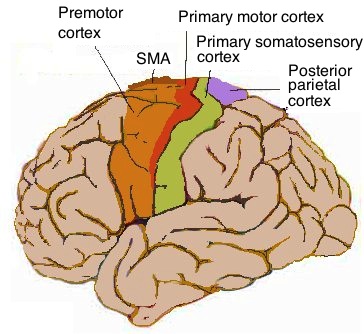
Every time you decide to type your password on a computer keyboard, your brain’s supplementary motor area plans the entire process: from looking at the keys on the keyboard, identifying the necessary keys, and then pressing those keys one by one with your fingers to type out the entire password. Once the planning is complete, the supplementary motor area communicates this plan to certain neurons in the premotor cortex. These neurons then direct the primary motor cortex according to the plan. Each time you type your password, the primary motor cortex receives instructions from specific neurons in the premotor cortex in a defined sequence, and it then directs your hands and fingers accordingly. Therefore, to efficiently recall and quickly use information like a password, the primary motor cortex tries to become very familiar with the exact sequence and the specific neurons in the premotor cortex that issue those instructions—almost like an office clerk who’s a master at swatting flies! Now, if instead of typing your password with your fingers you suddenly try to write it down holding a pen or pencil, it means the plan devised in the supplementary motor area has been altered. As a result, unfamiliar commands start coming from some unfamiliar neurons in the premotor cortex, causing the primary motor cortex to become bewildered! That’s exactly why you feel out of your comfort zone.











This comment has been sanitized for the English site.
This comment has been sanitized for the English site.