One afternoon, Shuvo and Trisha are sitting at Dinghi, a cafe beside Dhanmondi Lake in Dhaka. Shuvo really loves this place. He enjoys the view of the lake through the glass windows. Shuvo is pursuing a master’s degree at a private university and is extremely passionate about technology. They’re batchmates, but unlike Shuvo, Trisha did not do a master’s degree and instead became an entrepreneur. She runs an e-commerce business selling handicrafts. Shuvo helps Trisha with the technical side of things. With a cup of coffee in hand, Shuvo exclaimed—
Shuvo: “Trisha, did you know something incredible just happened in the world of artificial intelligence?”
Trisha: “Wow! What’s new this time? I’ve seen ChatGPT, Bard—all of that! What’s next?”
Shuvo: “This time it’s DeepSeek! It’s a technology that will make AI even more powerful, efficient, and most importantly, affordable!”
Curiosity shone in Trisha’s eyes. She wants to know more. Shuvo took out his phone and began explaining DeepSeek in detail…
In this age of information technology, artificial intelligence (AI) is bringing about revolutionary changes every day—things that used to exist only in our imaginations. AI is now being applied in many fields around us, making daily tasks easier. One of the main technologies on everyone’s lips right now is DeepSeek. Many may ask, “What exactly is DeepSeek?” or “What makes it so special?” Let’s hear from Shuvo in simple terms about the emergence of DeepSeek, its technological intricacies, current uses, and future prospects. We will also learn who is behind it, how it was created, and why it’s so important for students.
1. The Beginning of DeepSeek
DeepSeek is currently considered one of the most innovative AI-based platforms. It’s essentially a Large Language Model (LLM) whose main job is processing language and working with text in various ways—like answering questions, drafting content, translating, searching for information, etc. While other large language models like ChatGPT have been popular for a while, DeepSeek brings some unique features and technologies that set it apart from the rest.
The world’s major AI platforms typically require enormous computing power (GPUs, high-powered servers, etc.). Although thanks to advances in technology, these costs are gradually decreasing. Many models aren’t open source or have closed proprietary architectures. This makes it difficult for researchers and developers with limited resources to carry out research or create new products. One key to DeepSeek’s remarkable success is that it can be trained and run with relatively low resources, and a large part of it is open source. So, anyone can refine or customize it as they see fit.
Why does this matter? Because artificial intelligence is no longer confined to labs. It’s making its way into our everyday lives—in education, healthcare, business, app development, and even creative work. Therefore, a new technology like DeepSeek will undoubtedly help more people get involved with AI. It’s especially crucial for students because in the future, knowledge and skills related to AI will become essential in the job market.
2. The Evolution of Technology
The story of artificial intelligence began in the 1940s and 50s, when Alan Turing conducted research on computational theory and intelligence. His famous Turing Test remains a crucial benchmark in AI to this day. From there, AI gradually continued to develop.
- The 1956 Dartmouth Conference: The term “artificial intelligence” was used for the first time. Back then, there was an effort to make computers intelligent. However, early computers required a lot of powerful hardware to accomplish very little, and they were extremely slow.
- Expert Systems and Rule-based Systems (1960–1980): At the time, it was thought that computers could perform like humans if you just encoded enough rules or algorithms. But things like understanding language or learning from new experiences remained complex.
- Machine Learning and Deep Learning (1990–present): Gradually, there was a rise in the use of statistics and probabilities in machine learning. Neural networks, backpropagation algorithms, and later, deep neural networks reshaped the potential of AI.
- The Rise of Large Language Models (LLM): In 2017, the research paper “Attention Is All You Need” introduced the Transformer architecture, paving the way for advanced LLMs like ChatGPT, BERT, and GPT-3. Models like “DeepSeek” are the fruit of this continuous progression.
But there was always a problem: most models weren’t open source or required huge amounts of resources to train. DeepSeek was born from a desire to provide an open-source large language model that could be trained quickly and with limited resources.
3. Pioneering Scientists and Their Contributions
A few names are indispensable when mentioning those who played a pioneering role in the development of artificial intelligence—
- Alan Turing
Known as the father of modern computing theory. He was the first to suggest that computers could think like humans. His methodological thinking and the Turing Test laid the foundation for today’s AI. - The “Godfathers of AI”
- Yoshua Bengio
- Geoffrey Hinton
- Yann LeCun
They played a crucial role in developing “deep learning” methods. Their research on how neural networks work and how to build smarter models with big data paved the way for models like GPT and DeepSeek.
- Tim Berners-Lee
While not an “AI Founding Father” per se, he made knowledge universally accessible by developing web technologies. Without the web, today’s massive datasets or cloud-based training would be unimaginable. - The DeepSeek Team
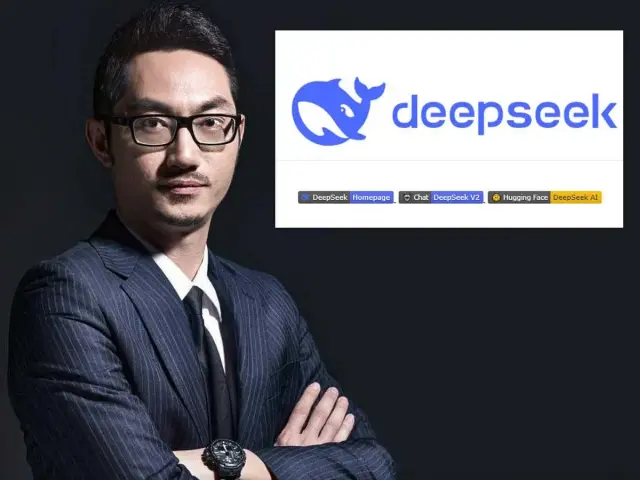
DeepSeek was founded by Liang Wenfeng in December 2023, and the following year it released its first AI-based large language model. There is not much public information about Liang himself, but he holds degrees in electronic information engineering and computer science from Zhejiang University. The core creators of DeepSeek prefer to remain anonymous under open-source licenses and are not attached to major corporations. Instead, the work was started as a collaboration among international scientists, researchers, and open-source developers. Their collective goal: “To build a large language model that works on low-power devices and is accessible to all.”
4. How Does DeepSeek Work?
There are three key pillars or features behind DeepSeek that make it unique—
- Chain of Thought
Simply put, when we seek a solution, our minds analyze through several logical steps. We proceed step by step, connect the dots, and eventually arrive at an answer. DeepSeek can do this too—it “thinks” through problems step by step, which is called “Chain of Thought.” For example, if you ask DeepSeek, “I want to travel to Turkey, what things do I need?” DeepSeek will first figure out what documents are required, then consider where to get those, how the visa process works—it will organize the results through a detailed process. This makes the answers more precise and coherent. Here’s another simple example—imagine your office has a thousand employees. You come in and say, “I can’t find my pen.” Standard AI systems would assign all thousand employees to search for the pen. But DeepSeek’s approach is unique—only a few employees will be tasked to search, each in a different room. The rest wait until their assistance is needed. That means DeepSeek doesn’t activate the whole system at once but allocates resources step by step as necessary. This is why it uses so little computational power: it scales resources only as needed. - Reinforcement Learning
The term may sound intimidating, but let’s simplify it—you can compare this to how children learn to walk. A child falls repeatedly, moves their arms and legs, experiments to balance, and gradually learns a “policy”—what makes them slip and what doesn’t. When they succeed, they receive a reward like joy or cheers from their surroundings. DeepSeek works similarly, experimenting to see which steps and which reasoning yield the best results. It uses a reward or points system to determine which policy works best. This “reward-based learning” is called reinforcement learning. This helps the model figure out which answer structures are most effective over time. - Model Distillation
Imagine you have two types of knowledge repositories—one very large, packed with detailed information, and a smaller one focused on the essentials. The big one is the “teacher model,” and the smaller is the “student model.” DeepSeek transfers the crucial and necessary elements from the big model (teacher) to the smaller one (student) so that it can work with fewer resources. Suppose the teacher model has 60–100 billion parameters, but not all are needed all the time. A “student” with 6–7 billion parameters can handle most tasks if trained properly. This is called “distillation.” DeepSeek uses this method to lighten its model, so it runs even on less powerful computers.
This blend of three techniques makes DeepSeek an LLM that is relatively inexpensive to train, open source, and user-friendly. Training DeepSeek initially cost an estimated $5 million, compared to the hundreds of millions spent on many famous models.
5. Present Applications and Use Cases
The main appeal of DeepSeek is its openness. That means a large part of it is available to everyone. You can download the source code, retrain the model on your own data, or modify it in any way you like. A major advantage of open models is that developers globally can contribute, and as a result, bugs get fixed faster, features update more quickly, and security patches roll out efficiently.
Let’s quickly look at where DeepSeek is currently being used—
- Education: Many universities are using DeepSeek in their computer science or IT departments to let students experiment hands-on with NLP (Natural Language Processing). It’s used for building experimental question-answer systems and for pulling information from digital libraries.
- Business Applications: Various companies, big and small, are using modified versions of DeepSeek for customer service systems. For example, those who can’t afford to invest heavily in chatbot or virtual assistant solutions can build on DeepSeek at a relatively low cost.
- Research & Development (R&D): Many are using DeepSeek across various branches of AI research. It’s being used to develop new architectures and more efficient fine-tuning methods. DeepSeek has become a great platform for exploring enhancements in Chain of Thought or reinforcement learning techniques.
- Creative Work: DeepSeek is also helping with writing, lyrics, art direction, scriptwriting, and more. Especially for those creating content in various or low-resource languages, DeepSeek’s linguistic versatility is a real asset.
6. Future Prospects and Development
DeepSeek is just the beginning. In the future, we’ll see even more “compact” yet powerful models. Here are a few possibilities to look out for—
- More Advanced Model Distillation: Over time, models will become even more capable at smaller scales. One day, a model with just 2–3 billion parameters may be able to perform at ChatGPT-4’s level. This would make it possible to run such models even on ordinary village computers.
- Personalized AI Assistant: Since DeepSeek is open source, anyone can customize the model for their own needs or business purposes. As personal AI assistant trends grow, DeepSeek or similar models could play a major role.
- Edge Device Integration: AI is spreading everywhere—smartphones, tablets, IoT devices. But most big models must run on the cloud. Lightweight models like DeepSeek could soon run directly on smartphones, allowing high-level language processing even when offline.
- Security and Privacy: As AI adoption increases, privacy and cybersecurity become increasingly important. DeepSeek’s open code allows easy inspection for security flaws. This will allow for ever-stronger security architectures in the future.
- Multilingual Support: Many languages in Asia, Africa, and Europe are still underrepresented on digital platforms. DeepSeek will make it easier to create content in those languages and play a special role in breaking down linguistic barriers.
7. Online Resources and Books to Learn More
1. DeepSeek Official GitHub Repository
- Address: (Example) github.com/DeepSeek/official
Here you’ll find the source code, documentation, and news updates.
2. OLAMA Framework
- If you want to try running DeepSeek on your own computer, you can check out the OLAMA framework (example: github.com/OLAMA/official).
3. Introduction to Artificial Intelligence
- Book: “Artificial Intelligence: A Modern Approach” – Stuart Russell & Peter Norvig
- Website: https://ai.google/ (Google’s AI resource hub)
- Online Courses: Search for “Machine Learning” or “Deep Learning” on Coursera and edX.
4. Understanding Transformers and Large Language Models
- Book/Guide: “The Illustrated Transformer” (free online guide available)
- Website: Hugging Face ( https://huggingface.co/ ), which hosts a variety of open-source LLMs.
5. Learning Reinforcement Learning
- Book: “Reinforcement Learning: An Introduction” – Richard S. Sutton & Andrew G. Barto
- Online Courses: Search for “Reinforcement Learning” on Udacity or Coursera.
8. Why Should Students Care?
1. The Future Workplace: In the coming days, AI and machine learning will be present in almost every business, industry, and service sector. Knowing about models like DeepSeek will help students prepare themselves for the future. For those aspiring to be software developers, data scientists, or computer scientists, this knowledge is now becoming essential.
2. Innovation and Creativity: DeepSeek isn’t just for processing information, it also fuels creativity. Whether it’s writing essays or providing ideas for presentations, DeepSeek is a powerful assistant. So young entrepreneurs and content creators can get higher-quality output with less effort.
3. Research and Academic Advancement: Students can use DeepSeek for basic language processing or data analysis tasks in research. Writing scientific articles, analyzing relevant data, or finding references for research papers becomes much easier.
4. Building a Knowledge-based Society: In the future, countries will compete to see who can advance fastest in knowledge and technology. If a student gains awareness of AI and NLP from an early age, they can later create innovative solutions. This is also important for the overall development of a country.
5. Preserving and Enhancing Our Own Languages: If models like DeepSeek can be properly trained in Bangla, Bangla speakers will benefit enormously. Such large language models can play a massive role in enriching our language and culture on digital platforms, making it even more relevant for students to learn and practice these models.
9. Conclusion
DeepSeek has opened up a new horizon in artificial intelligence, making it possible to run powerful models at low cost. Its Chain of Thought, reinforcement learning, and model distillation techniques are nothing short of a revolution in AI technology. This technology demonstrates that the power of AI is not limited to a few tech giants but can be accessible to ordinary people and researchers all over the world.
Moving beyond reliance on tech giants, DeepSeek is an example of how open-source platforms can create, train, and launch new AI horizons. In the future, many other models will follow this path, making our lives even easier, smarter, and more creative than before.
Of course, responsible usage, following appropriate guidelines, and enforcing policies are just as important. Powerful models also increase the risk of misuse or potential hazards. So, AI usage must always prioritize security, ethics, and privacy.
I’ve already emphasized why this technology is vital for students—not only will it turn individuals into skilled professionals or researchers, but on a larger scale, it will also contribute to the development of society. If we can develop localized, culturally sensitive AI within our country, it will significantly help in expanding and digitally enriching the Bangla language. Therefore, getting familiar with models like DeepSeek, engaging in their use and research, will play a highly effective role in our progress.
Finally, remember that technological development is not limited to competition. It’s through a mix of global cooperation, open-source culture, and universal access to knowledge that technology can truly benefit humanity. The arrival of DeepSeek can be seen as a symbol of those values. Perhaps, as future generations experience today’s free and open AI, they will learn how freeing the chains of thought can bring science and knowledge to everyone’s fingertips.
Read discussions about this article on social media here.
Video
Watch the video below for more: