Title:
With the rapid advancement of technology, are we really heading toward a lack of intellect?
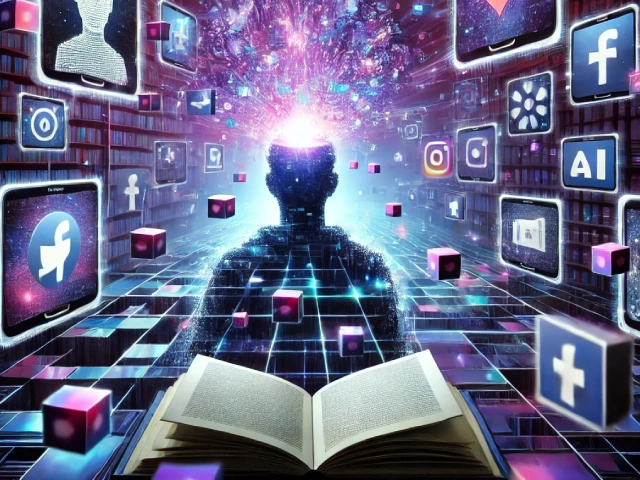
In today’s era, social media reels and stories have stirred up a storm in the world of entertainment and content. On one hand, these features are delivering countless contents right to our fingertips, making creators’ work easier and creating endless opportunities. On the other hand, consuming such fast-paced, bite-sized videos is gradually reducing our brain’s attention span (ADHD). Where once we could become absorbed in a book for hours, now seeing a long article often makes us lose interest in reading.
The human brain is inherently wired to adapt to slow, gradual changes. This organ, shaped through the complex process of evolution, becomes confused by abrupt, intense changes. Today, we’ve reached a digital landscape where new tools, platforms, and technologies change before we can even notice. As a result, our concentration is constantly disrupted, losing stability, leaving our brains bewildered.
Against this backdrop, ‘large language models’ and AI-driven technologies are making our tasks even easier than ever. From complex calculations to coding—jobs we once had to do ourselves—now software handles with ease. We’re getting necessary solutions without much mental effort. While this may temporarily boost our productivity, the real question is: what’s happening to the natural development of our brains, our reasoning, and our awareness?
If the challenges around us no longer make us think, if every question is answered with a single click, we start to lose the joy of learning and the drive for creativity. There may come a time when no one has the patience to read a book in one sitting or deeply analyze a topic. Technology does save us time, but are we investing that time in productive tasks—or are we just drowning ourselves further in surface-level entertainment?
All in all, the question remains—“By trying to become more productive, are we actually becoming more unconscious?” Because of this added convenience and ease, thinking itself is becoming secondary. If in the future, the younger generation no longer does math or writes code—if machines do everything—where will human creativity, logical structure, and the scope of thought stand?
It is said, “What we call increased productivity, might result in an increased stupidity.” On one hand, modern technology is giving us speed and convenience, but on the other, it’s creating a vast emptiness in our ability to think and concentrate. Unless we consciously continue our intellectual practices, we may soon find ourselves at the lowest rung of knowledge and science. Before it’s too late, we must ask ourselves: how can we use technological advancement in a healthy way so that we can ensure true intellectual growth?
It’s not possible to completely avoid new technology; rather, the key is to use it wisely, enhance our skills, and keep our creative thinking alive—maintaining balance among these. Otherwise, under the lure of excessive convenience, our social, intellectual, and mental growth may decline. So now is the time to consider—while keeping up with technology, we must make sure that ‘human intelligence’ does not fall behind.