



At that time, I was studying for my honors degree. My major was Chemical Engineering, but for some reason, I always felt a special attraction to biology. Driven by that interest, I taught chemistry classes at a renowned school in Kushtia—School of Laureates International—and for quite some time, I also taught biology classes there. On one such day, as I arrived to teach, the students suddenly requested to hear a story. While storytelling was strictly forbidden in class, I also understood that sometimes a story works like caffeine to break the monotony. So I adopted a unique method: whenever students asked, I would tell a story related to the lesson. That day too, I asked the students what kind of story they wished to hear. They told me that once I had said my life’s goal was to work in research. Now, they wanted to know—why?
I replied, “To me, the lives of scientists have always seemed thrilling and mysterious. They work tirelessly, day and night, to make the world a better place and our lives easier. But unfortunately, many scientists do not receive the recognition they deserve. Their names fade into oblivion. Often, someone else follows the path they discovered and achieves ultimate success, and we know only that person. Sometimes, in the competition among contemporary scientists, some are left behind.”
As an example, I said, “The original concept for the radio was given by Acharya Jagadish Chandra Bose, but because he couldn’t publish his research in time, Guglielmo Marconi became known as the ‘father of radio’. Similarly, although Nikola Tesla came up with revolutionary ideas such as AC current, Thomas Alva Edison’s fame and business acumen overshadowed him, so Tesla’s name faded to the background. There have also been scientists who, like Amedeo Avogadro or Gregor Johann Mendel, never received recognition for their achievements during their lifetimes.”
I paused for a moment after saying this. Looking at the students, I realized they were now eager to hear the story of at least one of these scientists. By then, I too had become absorbed in the spirit of storytelling. So without further delay, I began the story of Gregor Johann Mendel, the father of genetics, since there was a related chapter in their textbook as well.
The year 1822—A Beginning
The Mendel couple—Anton and Rosine Mendel—lived in a village in Austria (present-day Hynčice, Czech Republic). They resided and worked on a farm that had been in the Mendel family for almost 130 years. They had a daughter. That year, their home was blessed with the birth of a son, whom they named Johann Mendel. Later, another sister was born. Growing up surrounded by his parents’ love, Mendel worked in the garden and also gained knowledge about beekeeping, which later played a key role in developing his powers of observation.
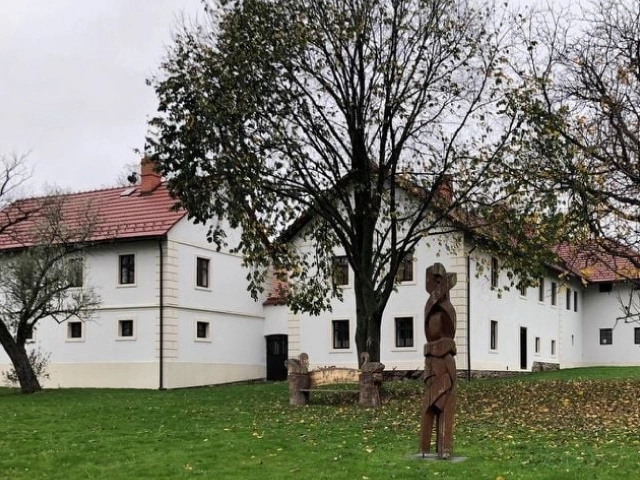
Mendel’s home in Hynčice, Czech Republic (Source: Collected)
The year 1843—A Journey of Struggle
Mendel’s educational journey was far from easy. From 1840 to 1843, he studied philosophy, physics, and several other subjects at the University of Olomouc. However, due to illness, he had to take a year-long break. Added to this were financial constraints. As a child of a poor family, managing the costs of his education became extremely difficult. As a result, that same year he entered the priesthood. Upon entering religious life, he added “Gregor” before his name, and thus became known as Gregor Johann Mendel.
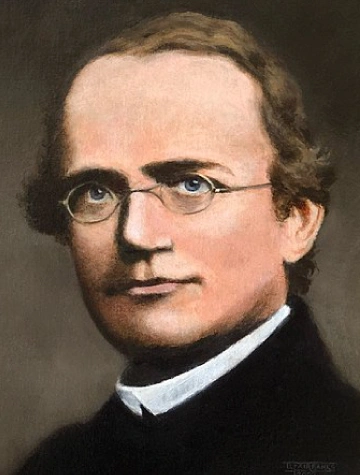
Gregor Johann Mendel (1822–1884), father of genetics (Source: Collected)
The year 1851—The Experience of Failure
That year he was sent to the University of Vienna for higher education so that he could acquire more formal knowledge. Before that, he had started working as a substitute teacher at a church high school because in 1850, he had failed to pass the oral part of the permanent teacher recruitment exam.
The year 1856—The Beginning of Research
He again failed the oral part of the permanent teacher recruitment exam, even though by that time he had taken up the responsibility of teaching physics in 1853. However, this year would prove to be one of the most important times of his life, as this was when he began his research journey. On about five acres of church land, he created an experimental garden. There, he cultivated about 28,000 pea plants of 34 different varieties, observing various stages of hybridization. His research journey was not easy. The head of the church gave little importance to his research proposals and plans, and largely ignored them. However, he received significant encouragement from Polish naturalist Alexander Zawadzki.
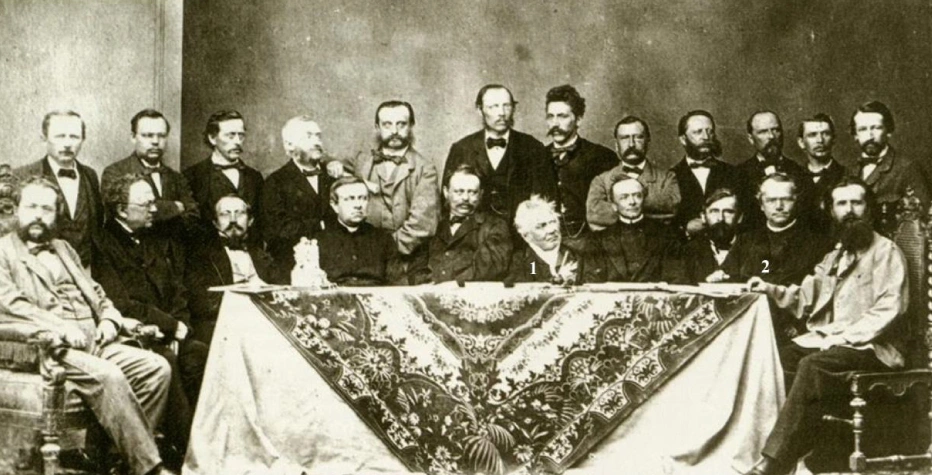
Alexander Zawadzki (1) with Gregor Johann Mendel (2). (Source: Collected)
The year 1866—A Neglected Discovery
At last, after seven long years of research, his results were published in the journal Verhandlungen des naturforschenden Vereines in Brünn. Earlier, on February 8 and March 8 of 1865, he had presented his research paper titled “Experiments on Plant Hybridization.” However, this groundbreaking discovery did not garner much attention in the scientific community. At that time, most biologists believed in the concept of ‘blending inheritance’—meaning that the features of parents mix to express themselves in the child. As a result, many misunderstood Mendel’s work and considered it to be only about hybridization, not inheritance. The outcome was deeply disappointing: in the next 35 years, his research paper was cited only three times. It is important to note that the structure of DNA had not yet been discovered. Thus, Mendel used the terms “factor” or “character” in his research, which we now know as genes.
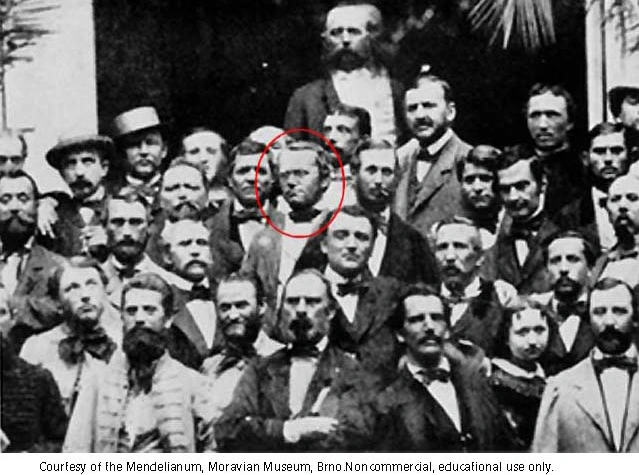
Mendel traveling in Paris and London in 1862. (Source: Collected)
The year 1884—Farewell Without Recognition
January 6—without having received any recognition for his work, this great scientist departed from the world. After suffering from kidney disease for a long time, he passed away. At the time of his death, he was serving as the abbot of St. Thomas Monastery. Sadly, during his lifetime, his scientific contributions were barely recognized; he was known primarily as a priest.
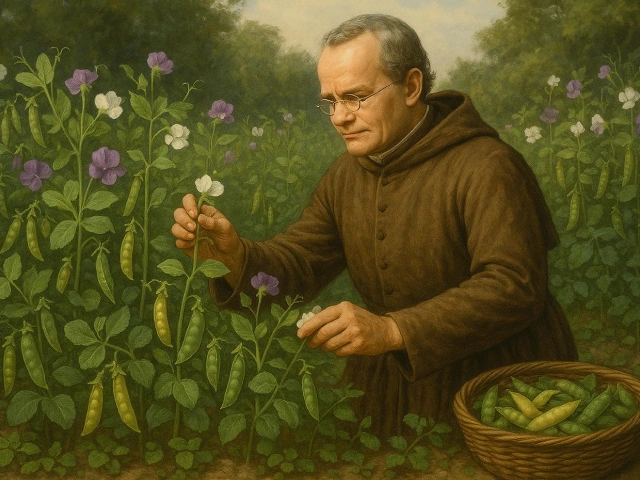
Mendel working in his garden
The year 1900—Recognition of a Revolutionary Principle
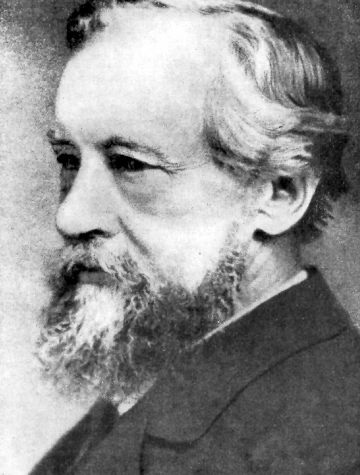
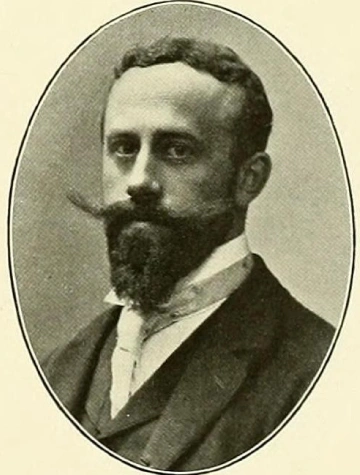
Spring. In the span of just two months, three scientists—Hugo de Vries, Carl Correns, and Erich von Tschermak—independently conducted research and obtained similar results. All three acknowledged Mendel’s priority. It is even thought that de Vries himself did not fully understand the significance of his own results until he read Mendel’s work. Gradually, the scientific community began to realize—that Mendel had been the first to explain heredity scientifically and correctly. Later, William Bateson widely promoted Mendel’s theories and popularized the term “genetics.” Thus, almost sixteen years after his death, Mendel was established as the “father of genetics.”
Hugo de Vries (1848–1935)
Erich von Tschermak (1871–1962)
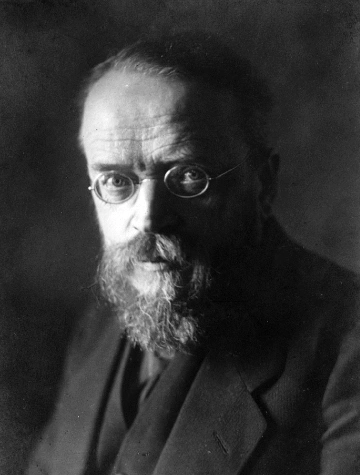
Carl Correns (1864–1933)
The Present—A Classroom
After finishing the long story, I looked at the students. They still sat there, completely absorbed. Class time was over, yet no one seemed to move. Silently, I walked out of the classroom. Before leaving, I glanced back and saw respect for Mendel in their eyes, a sense of empathy for him, and a shared call to the adventurous journey of science. The very same feeling that once took root in my own heart—in the year 2008.