Guest Author:
Azizul Haque
Assistant Professor, Yeungnam University.
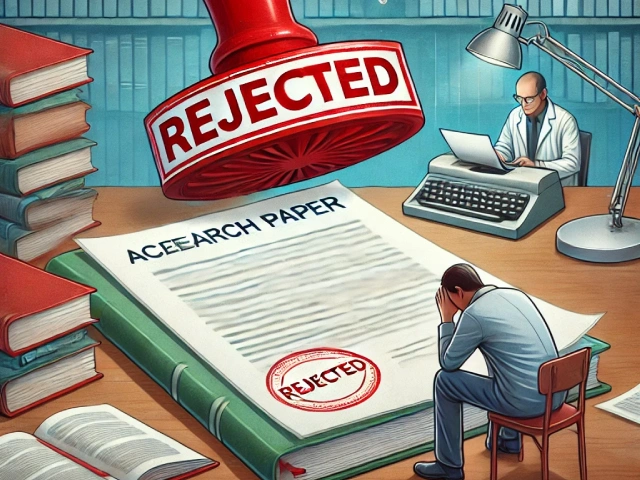
Preparing a research paper and submitting it to a suitable journal for publication is a crucial step for researchers. However, the biggest challenge is avoiding desk rejection — that is, having your paper rejected by the editor before it even reaches the reviewers. Journal editors have observed the main causes of desk rejection over the years, and regardless of the research topic, the reasons for rejection tend to be quite similar. Most causes for desk rejection are within the author’s control when it comes to publishing research. Therefore, with proper preparation, this hurdle can easily be overcome. In this article, I will discuss the top five reasons for desk rejection and how to avoid them.
1. Submitting to the Wrong Journal
If you fail to select the right journal, the publication process may become prolonged. So, finding the most suitable journal for your research is extremely important from the outset. To do this, you need to develop the habit of reading a lot of research papers. If you find a paper similar to your research, note which journal it was published in. Also, seek advice from colleagues and mentors, as they usually have good knowledge about relevant journals in your field and can recommend appropriate options for your work. Some online tools that use artificial intelligence can also help you identify journals that fit your research. Once you have a shortlist of potential journals, carefully read the aims and scope of each to understand what types of research they are interested in publishing.
2. Not a True Journal Article
Sometimes editors can tell that the submitted manuscript is not truly a journal article. It might be a book chapter, a thesis summary, or some other form of academic writing. If a manuscript contains certain common features, it may not be deemed suitable for journal publication. For example: too many disconnected points, incoherent content, a journalistic style of writing, or lacking the structure and language of a journal article. Therefore, before you start writing, make sure that your piece is a proper journal article and that its structure is correct.
3. Not Following Journal Guidelines
Each journal has its own rules and guidelines to help authors prepare their papers. These guidelines are known as Instructions for Authors (IFAs). From these, you can learn about the journal’s type and format, rules for preparing manuscripts, publishing options (such as open access), peer review process, and data sharing policies. So, before submitting to any journal, make sure your paper fully complies with that journal’s guidelines.
4. Poor Quality Manuscript
If a manuscript is of low quality, it may face desk rejection. Several factors can contribute to a weak manuscript: not following the journal’s conventions, poor grammar, irrelevant formatting or methods, lack of novelty, missing appropriate theoretical framework or context, improper presentation, and weak proofreading. Following the correct structure, writing in clear and concise language, and getting feedback from colleagues can help you overcome these issues.
5. Unethical Practices or Bias
If a research paper involves unethical practices or is presented in a biased way, it may be desk rejected. Common unethical practices include: issues with authorship, competing interests, submitting the same paper to multiple journals, data or image manipulation, plagiarism, copyright infringement, and more. To avoid these mistakes, it is essential to be aware of publication ethics guidelines and remain vigilant throughout the process.
Note: Collected from Facebook:——–
https://www.fachttps://www.facebook.com/share/p/19rzjD9Ehc/ebook.com/share/p/15fa7ccFbC