
Rauful Alam
Researcher, University of Pennsylvania, USA
Flowers, fruits, various foods, and fragrant items for personal care—they are inseparable from our lives. We cannot even imagine life without scent. Would tea taste the same if we couldn’t smell it? It wouldn’t. Yet so much about scent remains a mystery. Some even ask, if we can send images as tiny messages, why can’t we send smells?
Can we imagine life without scents? Just as we cannot imagine life without music or color, scent is also essential in our daily lives. The smell of morning tea or coffee, food, festivals, even cosmetics, romance, or different rituals—scent is intertwined with all of these.
Have we ever wondered, what is the source of these different scents? Whether pleasant or foul, all scents originate from molecules. And in most cases, these molecules are organic compounds.
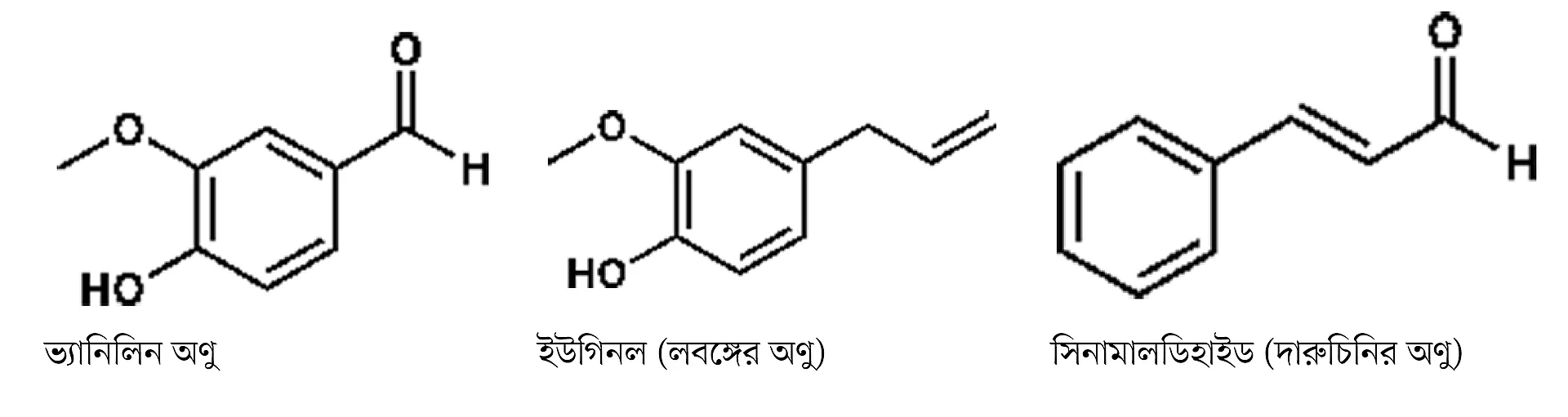
When we add cinnamon to tea, a wonderful aroma emerges, the same happens with clove. The distinct scent of cinnamon primarily comes from a molecule called cinnamaldehyde. In many foods and beverages on the market, instead of real cinnamon, only this chemical compound is used to impart the cinnamon flavor.
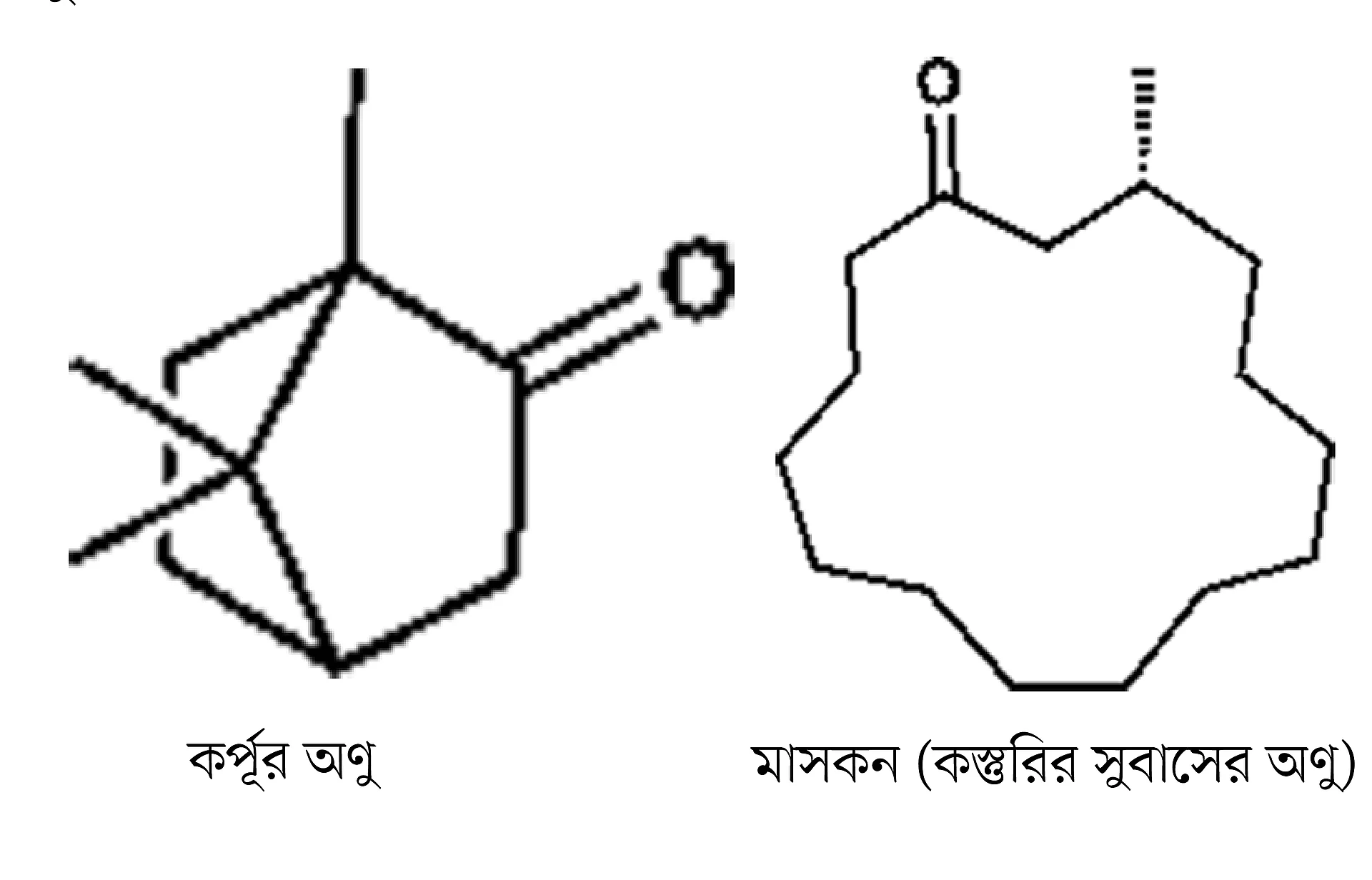
Sandalwood has been used in the Indian subcontinent for thousands of years. The main reason for its demand is its fragrance. Or take camphor, for example. Edible varieties of camphor are added to food. The use of camphor in India also dates back over a thousand years.
Anyone with a little knowledge of music knows that musical notes are used to compose music. Notes are fundamental. Combining multiple notes creates beautiful melodies. On instruments like guitar or piano, we call a combination of notes a chord. Likewise with colors—mixing two colors creates a new one.
It’s the same with scent. The aroma we get from a flower or spice is actually a blend of many molecules. Sometimes a few molecules dominate the blend, but just like musical chords, wonderful fragrances are created by combining several molecules. This could be compared to a musical harmony—a symphony of odor.
Humans have learned about this symphony of scents from nature. All perfumes in the cosmetic world are made by blending several chemical molecules in different concentrations and ratios. This is how a signature perfume is created. Those skilled in this art are called master perfumers.
Worldwide, numerous fragrant chemical compounds are used in the perfume, cosmetic, toiletries, and food industries. There are major companies dedicated to producing these compounds, employing many researchers in chemistry (fragrance chemists) who design, create, and study new molecules. Germany, France, Switzerland, China, Japan, and the USA are leading the industry globally.
We know why an object appears red or blue. Red or blue light is reflected at specific wavelengths, which our eyes receive. The brain processes this and creates the perception of different colors. Color is essentially a result of wavelength. The same is true for sound or music—we perceive different sounds based on the frequency of sound waves.
Humans have always wondered, how do we perceive scent? Scientists have found that when a chemical molecule binds with a receptor (olfactory receptor) inside our nose, those cells become active. An electrical signal is sent from these cells to the brain, and we perceive the scent. For this work, scientists Linda Buck and Richard Axel were awarded the Nobel Prize in Physiology or Medicine in 2004. However, the truth is, we still lack clear understanding in many aspects of this field. The process is so complex that even with extensive research, not all questions are answered yet. For instance, the wide variety of scent perceptions—why some smell floral, some musty, some fruity—how these sensations and differences are formed still remains largely unexplained by scientists. A recent study suggests that humans may be able to perceive about one trillion different scents. Nearly forty billion molecules could be odorant molecules. Research is ongoing, but there is still much left to uncover.
We know that the structure of chemical molecules leads to differences in scent. But since molecules only bind to receptors, how does this produce such variety in smell? We don’t yet fully understand this. Another complexity is that many molecules with different structures can produce the same scent perception. Why this happens is still a mystery.
Many have heard of musk. A certain species of deer has a gland known as the musk gland, which contains a fragrant compound called muscone. These compounds are called musk compounds.

Mughal emperors used to hunt these deer at the base of the Himalayas to collect musk and use the fragrance. Musk is also referenced in our literature. The British and French once took musk obtained from these Indian deer back to their own countries. France, renowned for its perfume industry, has maintained this reputation for centuries. As hunting deer for musk is not a sustainable practice (as eventually the deer would become extinct), European chemists analyzed the chemical structure of these compounds and then synthesized them in laboratories. This is called synthetic chemistry. Chemists have also created similar and even structurally different molecules to replicate the scent of musk. These musk compounds are in high demand in the perfume industry.
Scent is also connected to our memory. A person can retain all sorts of smells in their brain. We use scent to identify many things. For many other living creatures, scent is extremely important. Numerous insects and animals secrete various scents to attract their mates. These scented molecules secreted by animals are called pheromones. The scented molecules we derive from flowers, fruits, and plants are called essential oils. Many plants produce these fragrant compounds to protect themselves from insects—a natural defense strategy. For example, it is often said that if you put cloves in stored rice, insects won’t infest it. Why is that? Because the main chemical compound in clove, eugenol, repels insects. Many people use oils on their skin to prevent mosquito bites. These oils are mostly plant-derived fragrances—chemical molecules. These molecules do not kill insects, but they deter them. Moreover, these compounds are not harmful to us, whereas insecticides that kill mosquitoes do cause some harm to humans. As a result, insect repellents are becoming far more popular than insect killers.
Many aromatic molecules are also used in medicine. Many have heard of aroma therapy, which utilizes fragrant compounds for therapeutic effects. Aromatherapy has gained popularity for various skin conditions and pain relief.
How do chemical molecules create different scent perceptions in our brains? How can we predict the scent of a molecule before it is even synthesized? We do not yet know the answers to many such questions. Artificial intelligence is now being used to seek these answers. Just as we use GPS to navigate from one place to another, if we had a map of scents with molecules as destinations, we could navigate from molecule to molecule in the scent world. It’s even more fascinating—just as we can text a song or a color emoji, or send them digitally from one person to another, we can’t yet send a scent. Can scent be texted? Many are wondering about this. In this digital era, why shouldn’t we be able to send scent? For this, too, AI is being used. Isn’t it an intriguing idea? Someday, perhaps, we will text scents as well. That is what many researchers are hoping for.
Sources:
This article is adapted from an essay published in Bigganchinta Magazine.
Author: Dr. Rauful Alam, Researcher, University of Pennsylvania, USA.