


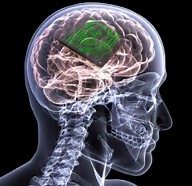
The mobile phone you are using is not just for making calls or sending SMS; it also serves as a PDA, digital camera, and music player. Very soon, both the quality and range of these services will expand. As a result, the mobile phone will become a multifunctional device. Before long, your mobile phone will act as your wallet, credit card, car key, home door key, or a personal remote control for various tasks—in essence, your phone will be your identity.
However, in the distant future, this mobile phone will become insignificant to you, turning into a child’s toy. No company will manufacture such phones anymore, because they will no longer be necessary. At that time, each person will themselves become a mobile phone, with specially designed chips implanted in their skull or beneath their skin.
The microprocessors currently being produced are silicon-based, and processor manufacturers have already reached the limits of integration. In other words, they’ve arrived at a point where adding more of one substance to another doesn’t result in complete amalgamation, or simply put, no further absorption or integration is possible. Take Intel as an example. They pledged to deliver a 4 GHz Pentium 4, but only managed to reach 3.8 GHz. There was no room to add more transistors, so they couldn’t push to 4 GHz. This was due to serious overheating issues. That’s when they decided to place two cores in a single mold, thus introducing dual-core processors. Eventually, it won’t be possible to add more cores to a single mold—at that point, silicon-based manufacturing technology will reach its ultimate limit.
At that stage, new technology will be required. Researchers have already started this journey. Instead of silicon circuits, they are working with lasers to transmit data in processors. To achieve quantum computing, researchers are using a single electron (a subatomic particle) to store binary information. They claim that reaching the stage of quantum computing will allow us to store massive amounts of data in a tiny space.
Research is also underway in the field of biological computing. Japanese scientists have already managed to store 100 bits of data in a single bacterium. This clearly shows that technologists are moving towards more efficient technologies.
Cybernetics and cyborg research have also made significant headway—it’s no longer just the stuff of science fiction. The world’s first real cyborg is Professor Kevin Warwick, who has had a chip implanted in his arm, allowing him to control a robotic arm. In the future, every person could become a cyborg or machine-human. Just as millions of computers today are connected to the internet, humans, too, could become globally networked. Each person would essentially be a computer themselves.
This is because a special type of chip will be implanted in their skull or under their skin, storing a wealth of personal information—including which country they are a citizen of. Everything will be in the brain; there will be no hardcopy documents. Like a computer, an individual will be able to perform mathematical operations, download and upload necessary information from websites, and share experiences effortlessly. Video files will be stored in their minds. The chip will ensure protection from any kind of natural disaster. Vision could extend vast distances, hearing ability would become so finely tuned—like a bionic woman—that even distant sounds would be clear. If the noise is too much, there would be no need for a physical switch; a mere thought from the brain could adjust it. When approaching a car, the door would open automatically. All electronic devices could be controlled without getting up from a chair. With a handshake, personal identification would be exchanged automatically. Speaking aloud would become obsolete, replaced by more effective alternatives. No more lengthy introductions—these would all happen automatically. At that point, humans themselves would become machines.
If this happens, it goes without saying that mobile phones will cease to exist in the future. Whatever you accomplish today with your mobile phone, in the distant future your own body will perform those tasks.
The cyborgs we see in science fiction tend to look grotesque, with wires running throughout their bodies, cameras in place of eyes, aerials where ears should be, and mechanical devices instead of arms. But if advances in quantum and biological computing systems are achieved, these technologies can be integrated directly into the human body. Electrons and biological cells would be used to store information, eliminating the need for grotesque-looking machinery to be attached to the body. The body itself would become a cyborg—all that would be required is to set the program. The human body already contains vast quantum and biological storage capacity, along with a sufficient electrical field. Theoretically, it is possible to set a program and process data within the human body; if this can be accomplished, then instead of grotesque machine-like cyborgs, every human body can be turned into a cyborg.
At that point, governments will be able to easily keep records on every individual. Pregnant mothers could give birth to biologically pre-programmed children. The moment the child is born, detailed information about them will be transferred to the government database via the global human network.
Although the initial idea involves implanting microchips inside the body to create human cyborgs, alternative thinking is emerging. In this case, there would be no need to implant a chip; regular biological programming would suffice.
The whole concept may seem unnatural and unbelievable, but in the distant future, this is about to become reality. Researchers are working tirelessly to make it happen.











Really good news for next generation………….
This comment has been sanitized for the English site.
This comment has been sanitized for the English site.
This comment has been sanitized for the English site.
This comment has been sanitized for the English site.
Manab Virusssssssssssssssssss