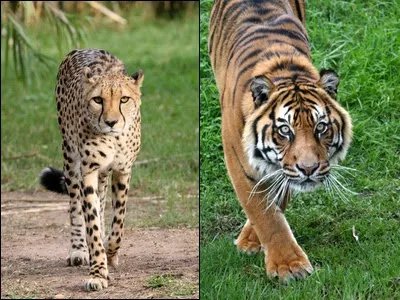
The contrast in the hunting techniques of cheetahs and tigers stems from their physical and behavioral differences, and within that contrast lie the origins of two opposing strategies found throughout human civilization!
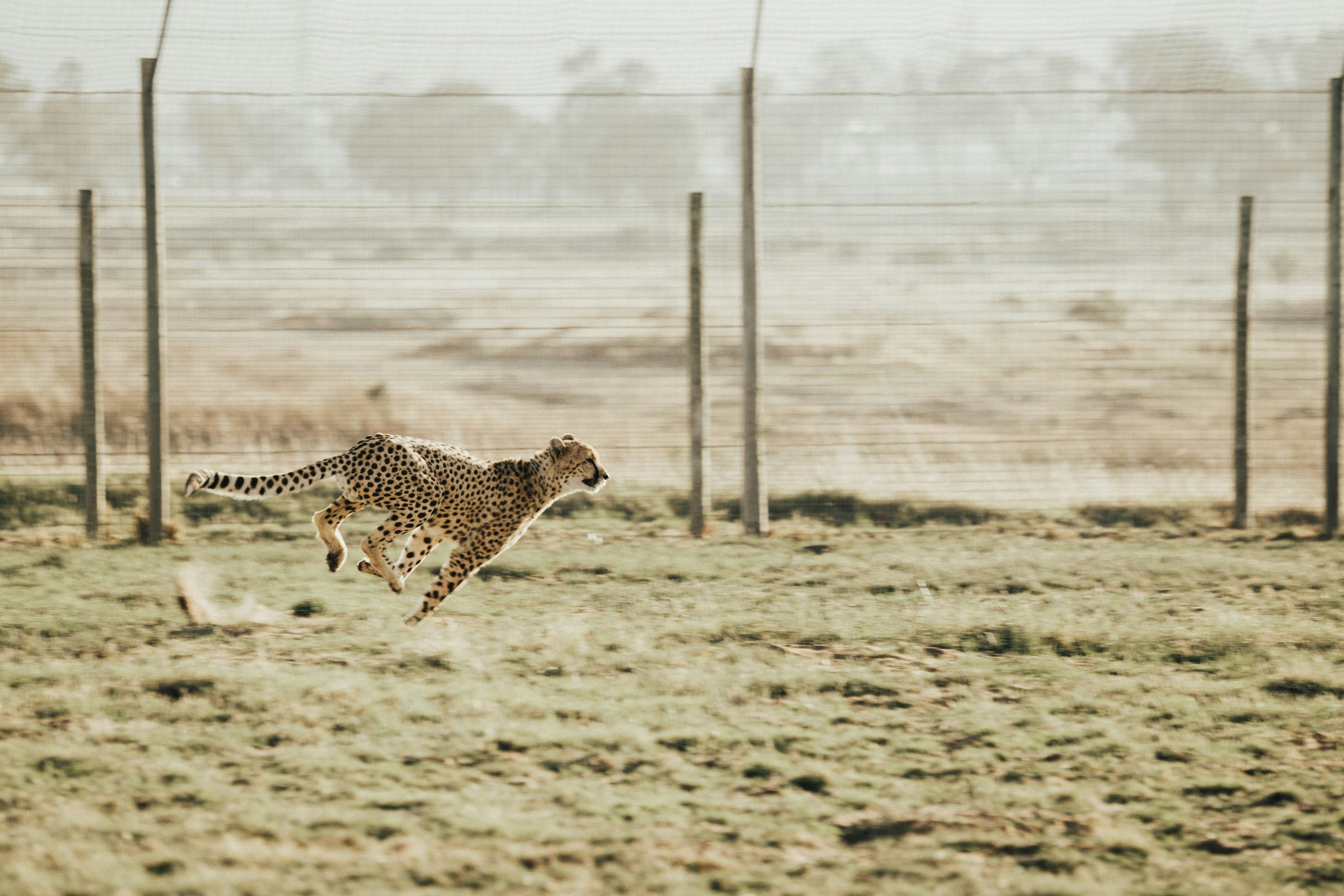
The cheetah always roars, challenging its prey to a race. Once the prey starts to flee with all its might, the cheetah gives chase, and within about 30 seconds, defeats its prey in this race. The cheetah’s muscular body gives it incredible strength, while its flexible spine and four long, slender legs, loosely attached to the body, allow it to launch forward with an acceleration of 29 feet per second squared. The cheetah’s unique body shape also reduces air resistance during the sprint, helping it reach speeds of 50–80 miles per hour. When the prey repeatedly changes direction to escape, the cheetah’s two-and-a-half-foot-long tail helps balance its speed and body, allowing it to make sharp turns quickly while closely pursuing the target. If we closely observe the cheetah’s leg movements while it runs, we’ll see why it is the fastest land mammal—the cheetah’s four legs alternately bunch together and then stretch out. No matter how much its whole body moves during the run, the cheetah keeps its head remarkably steady. By keeping its head still and focused on the direction of the prey, the cheetah quickly closes in. It partially retracts its claws into its paws, increasing friction with the ground, so even at such high speed, its feet never slip! Inspired by this feature, sprinters in running competitions use spiked shoes.
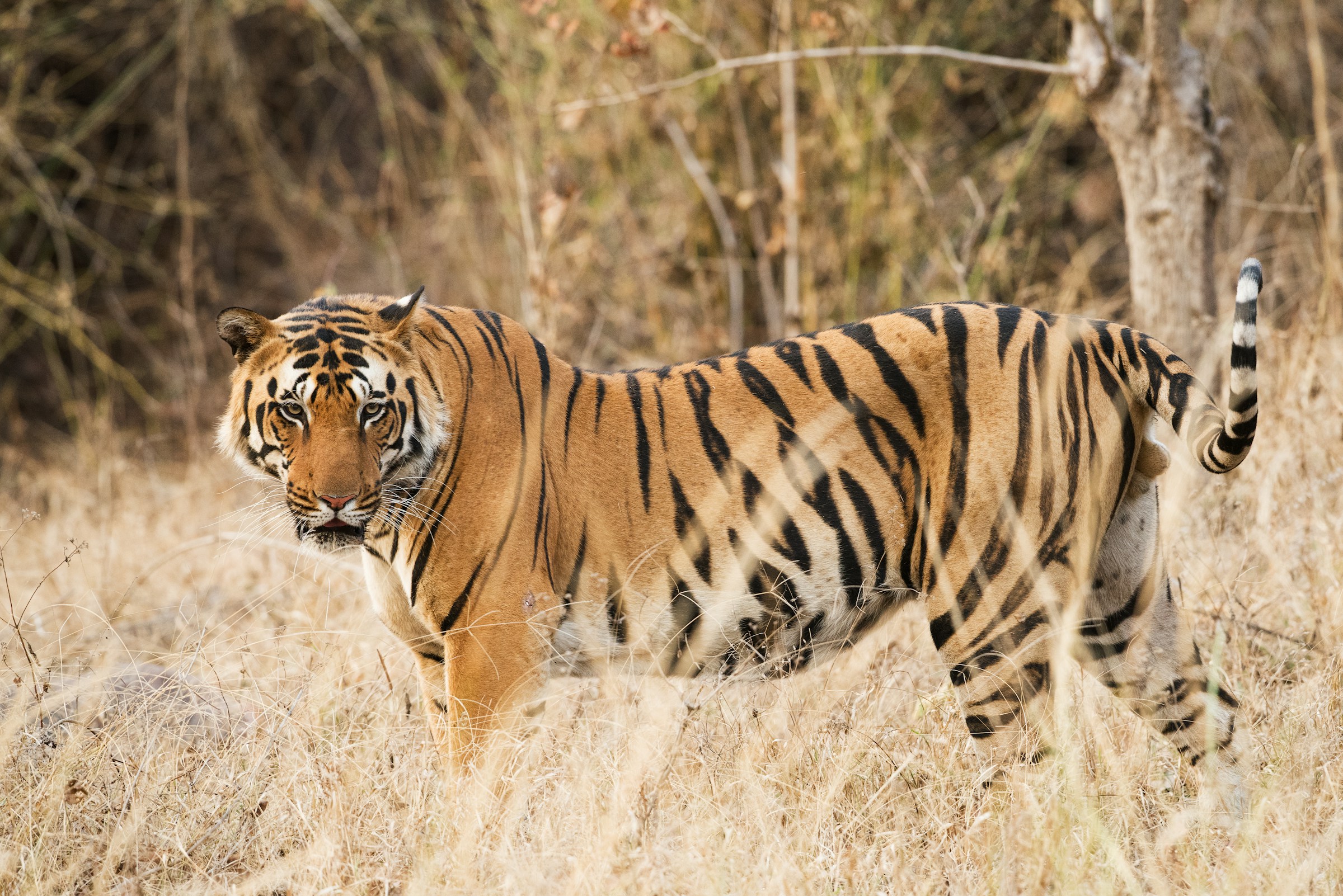
An adult cheetah weighs between 21–72 kg, whereas an adult tiger weighs between 65–310 kg—the tiger’s average weight is much higher than that of the cheetah. Because of its heavier build and lack of a running-optimized body, the tiger tries to catch its prey without running too much. The cheetah destroys its prey’s confidence before killing it, but the tiger pounces and kills its prey so swiftly that the prey hardly has a chance for its confidence to be of any use! Thanks to a much larger number of light-sensitive rod cells in the retina of its eyes, the tiger can see extremely well at night. For this reason, the tiger often hunts at night, targeting animals with poor night vision. The tiger’s yellow body with black stripes helps camouflage it in the shadows of the forest and undergrowth. Using this camouflage, the tiger keeps watch on its prey and waits for the right moment; when the opportunity arises, it lunges from the bushes. The tiger can also fully retract its claws into its paws, allowing it to silently stalk and leap upon its prey from behind.
The cheetah’s hunting style resembles the traditional strategies in human civilization, where displays of power are highly valued. On the other hand, the tiger’s hunting tactics inspired the unique “ambush” strategy in human civilization, where victory is the sole focus rather than flaunting strength.