


If the code of a system is open source or public, users generally feel more comfortable using that solution. One reason is that open source code tends to have fewer security issues, and even if there are problems, they are quickly resolved by developers. On the other hand, when the code of software solutions is not open, users have no way of knowing how those solutions work.
Major tech companies are divided in their approach to open source philosophy. Organizations such as Firefox, Red Hat, Ubuntu, and many other software companies operate based on open source. Conversely, Microsoft and Apple are primarily closed-source companies—their solutions are not openly available in the same way.

However, due to increasing user awareness about open source, many closed-source companies are gradually making their solutions open. Microsoft has brought several of its solutions to open source. But the situation is quite different when it comes to Apple. All of its solutions are based on its own hardware and proprietary software. In other words, Apple hardly makes anything open.
Artificial Intelligence and Open Source
Now, let’s talk about artificial intelligence. The company that has succeeded in bringing AI technology to the masses is OpenAI. Seeing the word “Open” in its name might make you think their solution is open. But that’s not really the case. Their AI codes and language models (the engines on which the AI runs) are still not open. For its unusual naming, OpenAI receives a lot of criticism because its philosophy does not actually match with that of open source.
What is a Language Model?
A language model is a type of artificial intelligence (AI) model capable of understanding and generating language. It is an important part of natural language processing (NLP) technology. Language models are trained on large datasets and learn the relationships between sentences, words, and phrases. As a result, they can be used for various tasks such as text analysis, translation, summarization, and answering questions.
Types of Language Models
- N-gram Model: This is the most common and basic language model. Here, the probability of the next word in a sentence is determined based on a specified number (N) of preceding words. For example, if N=2, it is known as a bigram model.
- Markov Model: This model predicts the probability of future states based on the current state. It is generally an extended version of the N-gram model.
- Deep Learning Models: These models use neural networks for language processing. In particular, architectures like Transformer and models like LSTM (Long Short-Term Memory) are commonly used in modern language modeling.
Open Source and Language Models
The good news is that several organizations have made AI language models open source. One such company is Meta from Facebook, a name we all know. They have released an open-source language model called Llama, which has drawn significant interest from technologists. Those who want to build artificial intelligence can now use Llama to do so easily.
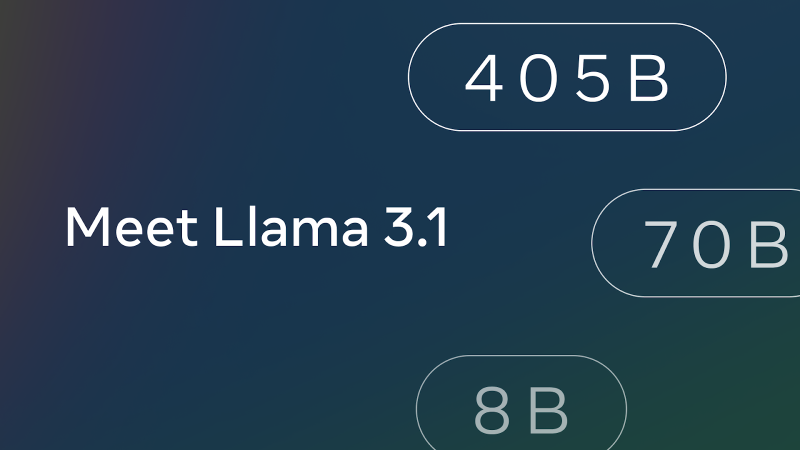
The latest version of Llama is 3.1. It currently has 405 billion parameters. When developing an AI solution, a language model like this is required. Therefore, having good open-source language models will help technologists in various ways. And since it’s open source, we can better understand its inner workings, which broadens our knowledge about it.
Technologists have greatly welcomed Meta’s initiative, and many have expressed their thanks to Zuckerberg. We all hope that Meta will continue to bring more quality open-source solutions, which will allow artificial intelligence to be used for better purposes and for the benefit of humanity.











Leave a comment