


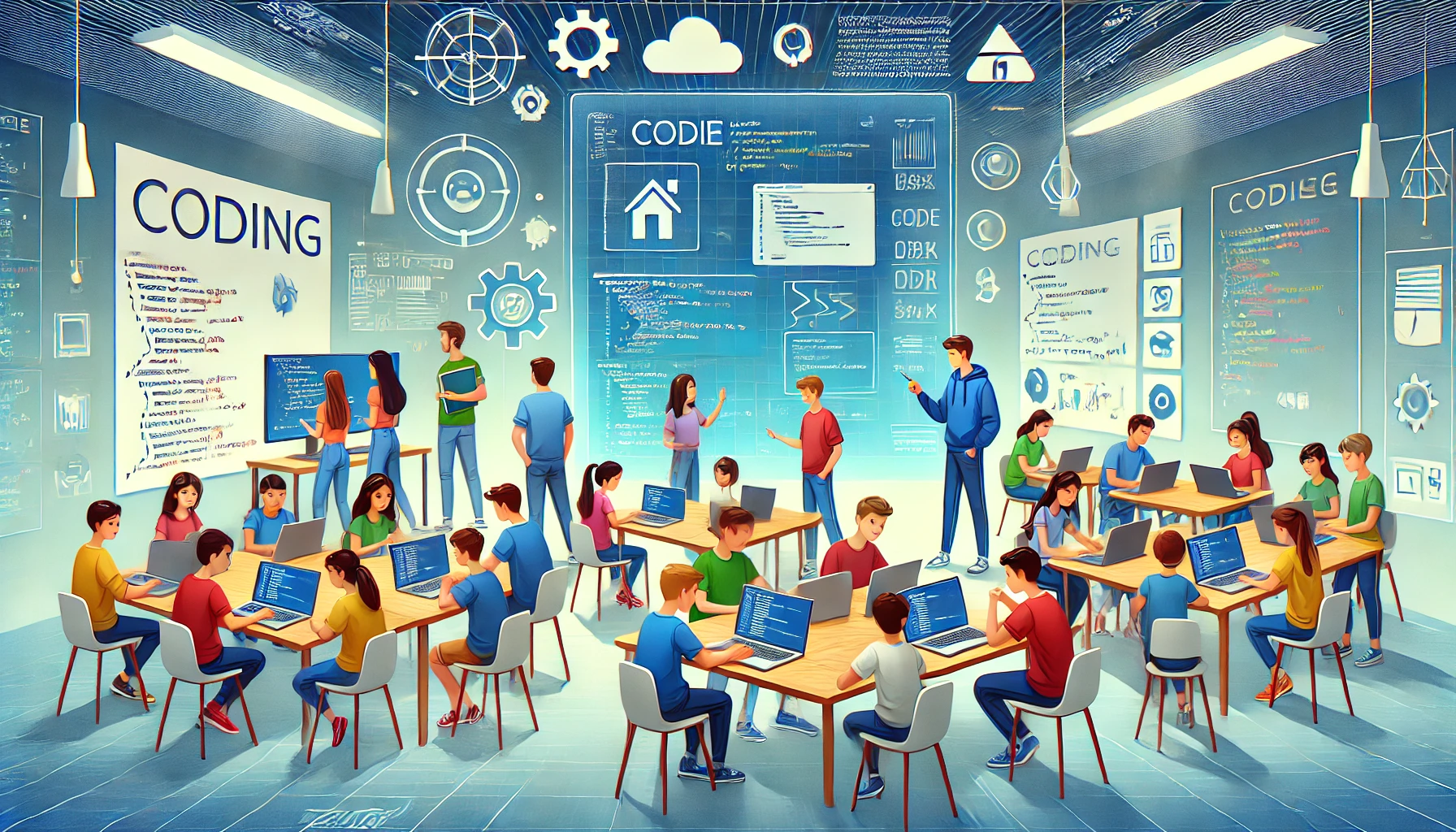
In today’s digital age, coding has emerged as a fundamental skill, as important as literacy was in the previous century. It’s not just a tool for creating software and applications, but a vital skill for innovation, problem-solving, and digital literacy. Understanding what coding is and its benefits can significantly influence students’ academic growth and career paths. In this article, we will discuss what coding is, its various advantages for students, its role in professional development, and why it is essential for the future.

What is Coding?
Coding is the process of instructing a computer to perform specific tasks using a programming language. This set of instructions forms commands, which are compiled into a program capable of performing everything from simple calculations to managing large data systems. Each coding language, such as Python, Java, JavaScript, C++, and many others, has its own unique syntax and use cases, serving different aspects of software development and problem-solving.
Elements of Coding
- Syntax: The set of rules that defines the combinations of symbols regarded as correctly structured programs in a language.
- Algorithm: Step-by-step instructions for carrying out a task or solving a problem.
- Data Structure: Efficient ways to organize and store data so that it can be accessed and modified effectively.
- Control Structure: Constructs such as loops and conditional controls that govern the flow of a program.
- Debugging: The process of identifying and resolving errors or bugs in code.
Benefits of Coding for Students
1. Enhances Problem-Solving Skills
Coding is intrinsically linked to problem-solving. As students learn to code, they are taught to break down complex problems into small, manageable parts. This process, known as decomposition, boosts their analytical thinking skills. They learn to think logically and sequentially, which is valuable both academically and in real-life situations.
2. Encourages Creativity and Innovation
Coding is not just about writing lines of code; it is about creating something new and functional. Students can build games, apps, and websites that bring their ideas to life. This process encourages creativity as they think of unique solutions and features to incorporate into their projects.
3. Fosters Patience and Resilience
Coding can be challenging, involving numerous trials and errors before achieving the desired result. This process teaches students patience and resilience. They learn to cope with failure, debug their code, and try different approaches, all of which are valuable life skills.
4. Improves Logical and Computational Thinking
Learning to code enhances students’ logical reasoning and computational skills. They learn to create algorithms, identify patterns, and design step-by-step solutions to problems. These skills are transferable to other areas such as mathematics, science, and engineering.
5. Prepares for Future Careers
As technology advances, coding skills are becoming increasingly valuable. Many jobs in the future will require some level of coding knowledge. By learning to code, students prepare themselves for various technology careers, including software development, data science, cybersecurity, and artificial intelligence.
The Role of Coding in Professional Development
1. Opens Up Diverse Career Opportunities
Coding skills are in high demand across various industries, not just in technology. From healthcare to finance, education to entertainment, businesses are leveraging technology to innovate and enhance efficiency. Professionals with coding competence have a competitive edge in the job market.
2. Enables High-Paying Jobs
Careers in technology, especially those requiring coding skills, often offer attractive compensation. High-paying positions such as software engineer, data analyst, and cybersecurity specialist are in great demand.
3. Enhances Professional Development
Even if professionals aren’t directly involved in coding, understanding how technology works can be beneficial. It improves their ability to communicate effectively with technical teams, understand project requirements, and contribute to digital transformation initiatives within their organization.
4. Facilitates Entrepreneurial Initiatives
For aspiring entrepreneurs, coding skills can be especially valuable. They can prototype their products, develop websites, and understand the technical aspects of their ventures, reducing reliance on external developers and saving costs.
5. Promotes Lifelong Learning
The tech industry is dynamic, with new languages, frameworks, and technologies emerging regularly. Learning to code fosters a mindset of continuous learning and adaptation, which is crucial for long-term career success.
Coding as an Essential Technology for the Future
As we move deeper into the digital era, coding is becoming an indispensable skill. Here are a few reasons why coding is a must-have technology:
1. The Rise of Automation and AI
Automation and artificial intelligence are transforming industries, driving efficiency, and creating new opportunities. Understanding coding is fundamental to working with these technologies, whether it’s developing AI models or managing automated systems.
2. Growth of the Internet of Things (IoT)
The Internet of Things is connecting devices, allowing them to communicate and share data. Coding is essential to developing and managing these interconnected systems, from smart homes to industrial IoT applications.
3. Importance of Cybersecurity
As cyber threats become more sophisticated, the demand for cybersecurity professionals is increasing. Coding is necessary to build secure systems, identify vulnerabilities, and develop robust defenses against cyber attacks.
4. Expansion of Data Science
Data is the new oil, driving decision-making across industries. Coding skills are required for data analysis, developing algorithms, and creating data-driven solutions that can provide insights and drive business growth.
5. Growth of Digital Platforms
Digital platforms—including websites, mobile applications, and social media—are central to business operations and communication. Coding is fundamental to developing and maintaining these platforms, ensuring they are user-friendly, efficient, and secure.
Preparing for a Coding-Driven Future
To prepare for a future where coding is deeply integrated, students and professionals can take several steps:
1. Start Early
Introducing coding from an early age can have a lasting impact. Schools should integrate coding into their curriculum, using fun and interactive platforms to engage young learners.
2. Use Online Resources
Numerous online resources are available for learning coding, from free tutorials on platforms like Codecademy and Khan Academy to more comprehensive courses on Coursera and Udemy.
3. Get Involved in Practical Projects
Beyond theoretical knowledge, working on real-life projects is an effective way to hone coding skills. Students can start their own projects, such as building a simple website or developing a small game, which helps them learn the practical applications of coding.
4. Join Organizations and Clubs
Coding clubs and online organizations or platforms offer a great way to learn coding. These platforms enable networking and communication with others. Here, students can seek guidance from experienced coders, collaborate with peers, and further develop their skills.
5. Participate in Hackathons and Competitions
Participating in hackathons and various coding competitions helps students test their skills and solve real-world problems. These events also develop teamwork, time management, and the ability to work under pressure.
The Future of Coding
1. Enhanced Education Systems
In the future, coding will become an integral part of education. Schools and universities will incorporate more coding courses and programs into their curricula, providing students with technology knowledge from the outset.
2. Increasing Career Opportunities
Coding skills will not only be confined to software development and the IT sector but will also be needed in healthcare, finance, education, and even arts and the humanities. Coding will help professionals become more innovative and efficient in their respective fields.
3. Growth of Automation and Robotics
The importance of coding will continue to grow in automation and robotics. Advancements in robotics and the increasing use of automated systems will create new possibilities and job opportunities for coders.
4. Coding for Humanity
Coding will play a role not only in business and technology but also in solving social and humanitarian problems. Coders will be able to design innovative solutions in fields such as healthcare, education, and environmental protection.
Key Steps for Coding Education
1. Policy and Government Initiatives
Governments and policymakers should introduce initiatives to promote coding education among students. This can be implemented through coding classes, workshops, and coding clubs.
2. Teacher Training
Teachers should be provided with proper training to teach coding. Trained teachers will be able to guide students more effectively on their coding learning journeys.
3. Access to Technology
It is important to ensure that every student has access to the necessary technology to learn coding. Access to computer labs, internet connectivity, and software tools will make this process easier.
Conclusion
Coding is an essential skill in the modern world. It enhances students’ creativity, problem-solving abilities, and logical thinking. In professional life, coding skills open the doors to high-paying jobs, diverse career opportunities, and new avenues of professional development. In the future, lacking coding skills will be similar to being illiterate today. Therefore, students and professionals can prepare themselves for the future by learning coding. Coding is not just a skill; it is a language that forms the key to communication and success in the digital world of tomorrow.











Leave a comment