


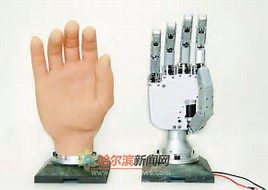
Information technology is advancing every day. There is hardly any field untouched by technology. Its contribution to the medical sector is undeniable. Bionic technology has introduced new possibilities in medicine, and bionic hands crafted using this technology have given new life to people with disabilities.


What is Bionic: The word “bionic” comes from the Greek word βίον and the suffix ic. “βίον” is pronounced “Bion” and means part of life or full life, and “ic” means “like.” Therefore, the full meaning of the word “bionic” is “like life.” Many dictionaries note that the word “bionic” is a combination of “bio” from biology and “nics” from electronics. Technologically, bionic is related to biomimetics, biognosis, biomimicry, or bionical creativity. Bionic technology includes touches of modern tech, thoughtfully designed by engineers, and operates naturally—either by brain or other means.
Bionic technology was pioneered by a healthcare worker of the Scottish National Health Service (NHS), and the current director of the organization, David Gow, is the inventor of the bionic hand. Livingston’s Touch Bionics provided all necessary support in designing and manufacturing this hand. As a result, a person without a hand can move it at will just like a healthy person, and even use fingers to hold objects effortlessly. It looks like a real hand and is controlled by the brain. This technology has been tested on people from various walks of life, including U.S. soldiers who lost their limbs in the Iraq war. Recently, in an interview on BBC’s “Good Morning Scotland,” David Gow said that this is the first bionic hand to hit the market which can be used just like a healthy hand, and you can move the fingers.
Bionic Hand Users: The first user of the bionic hand, Donald McKillop, has been using it successfully on a trial basis since 2006. Donald McKillop is a retired welder who lost his right hand in a terrible accident thirty years ago. Since then, he searched across various places for a suitable hand, but none could meet his expectations—until the bionic hand. According to him, the most important aspect of this bionic hand is that it allows him to use all his fingers fully, just as before, which sets it apart from other artificial hands. Juan Erredondo from Texas, who lost a hand in the Iraq war in 2004, also uses a bionic hand. This user mentions, “It’s truly wonderful to have a hand with me at all times, letting me effortlessly lift large cups or mugs. And with full attention, I can do any task large or small with both hands. I can also compare the strength between my bionic hand and my regular hand, all controlled by my intelligence and focus.” Another user said that compared to other artificial hands, the bionic hand has made everyday life much easier, smoother, and more comfortable.
How it Works:
Control Mechanism: Recently, researchers have invented ultra-advanced, small, and sensitive devices that can wirelessly assist disabled limbs via muscles very efficiently. A large electrode rod is firmly placed on the chest, and a coil (twisted wire) is brought over the shoulder to enable wireless reuse of electricity. Signals are then transmitted via computer to the brain, which tells the hand to function (move). With this method, electrodes can be conveniently placed directly in the brain and nerves.
Power Source: The latest research has developed a hydrogen peroxide pneumatic system that is used instead of relatively weak, bulky, and slow motors. The chemical reaction of hydrogen peroxide with an iridium catalyst helps move the hand.
Flexibility: Proto-2 technology can move at least 25 joints. Simultaneously, shoulder and wrist rotation, bending, elbow folding, and even individual finger and finger joint movements are possible. Each finger joint bone is both connected together and very lightweight, made from a blend of carbon fiber and aluminum.
Construction Style: The construction of this super-duper device is truly diverse, astonishing, and modern.
At its final stage, the bionic hand will possess highly human-like sensory abilities, such as detecting temperature differences, sensing heat, and recognizing objects by touch. With a fully articulated hand, even writing will be possible.
Stuart Mead, Chief Executive of Touch Bionics, said they are very delighted and happy to be able to market, do business, and conduct research with such a modern and advanced technology as bionic hands, and they are undertaking all kinds of activities for its further development. He added, “We will be fully successful only when we can deliver this bionic hand worldwide, especially to the truly needy and suffering. We always strive to provide timely and accurate service to genuine patients or sufferers, so that someone injured or disabled receives full and proper care.” He commented that achieving the intended goal with the bionic hand is truly a great challenge.
The bionic hand is already being used experimentally among disabled patients at the University of Strathclyde. The inventor of the bionic hand, Mr. David Gow, is currently conducting new kinds of research at the state-of-the-art center at Ashley Ainslie Hospital in Edinburgh. He is very optimistic about the future of the bionic hand. He hopes that within two to five years, the bionic hand will spread worldwide, which could lead to the creation of other limbs as well. As a result, this bionic hand will perform like magic in the health and service sectors. Ultimately, the ultimate success of the bionic hand will determine the future of other organs, including the bionic eye.
What is Bionic: The word “bionic” comes from the Greek word βίον and the suffix ic. “βίον” is pronounced “Bion” and means part of life or full life, and “ic” means “like.” Therefore, the full meaning of “bionic” is “like life.” Many dictionaries mention that “bionic” is formed from “bio” (biology) and “nics” (electronics). In technology, bionic is related to biomimetics, biognosis, biomimicry, or bionical creativity. Bionic technology involves modern advances, is carefully designed by engineers, and functions naturally (through the brain or otherwise).
Bionic technology was originally invented by a health worker at the Scottish National Health Service (NHS), and the organization’s current director, David Gow, is the inventor of the bionic hand. Livingston’s Touch Bionics has assisted in designing and producing this hand. The result is that an amputee can move the hand at will like a healthy person’s, even holding objects naturally with their fingers. It looks like a real hand and is controlled by the brain. This technology has been tested on people from various backgrounds, including US soldiers who lost limbs in the Iraq war. Recently, on BBC’s “Good Morning Scotland,” David Gow said this is the first bionic hand on the market that you can use like your healthy hand, even moving the fingers.
Bionic Hand Users: The first user of the bionic hand, Donald McKillop, has been successfully using it on an experimental basis since 2006. McKillop, a retired welder who lost his right hand in a severe accident thirty years ago, searched widely for a prosthesis that met his needs, but only the bionic hand fulfilled his hopes. According to him, the most important feature of the bionic hand is that he can use all his fingers as before—a feature that sets it apart from other artificial hands. Juan Erredondo from Texas, who lost a hand during the Iraq war in 2004, also uses a bionic hand. He says, “It’s really wonderful that I always have a hand with me that allows me to easily lift large cups or mugs. With my full attention, I am now able to do any big or small task using both hands. I can also understand the relative strength of my bionic and normal hands, which I can control using my intelligence and attention.” Another user remarked that the bionic hand has made daily life much simpler, smoother, and more comfortable than other artificial hands.
How it Works:
Control Mechanism: Recently, researchers have invented highly advanced, tiny, and sensitive devices that can wirelessly support the disabled limb through muscle activity. A large electrode rod is attached tightly to the chest, and a coil (twisted wire) is placed over the shoulder to allow wireless power transmission. Subsequently, signals are sent to the brain through a computer, and the brain tells the hand to move. With this method, electrodes can conveniently be placed directly in the brain and nerves.
Power Source: This research has introduced a hydrogen peroxide pneumatic system that replaces relatively weak, bulky, and slow motors. The reaction between hydrogen peroxide and an iridium catalyst creates movement in the hand.
Flexibility: Proto-2 technology can move at least 25 joints. Simultaneous rotation and bending of the shoulder and wrist, elbow flexing, as well as individual finger joint movement is possible. Each finger joint bone is both assembled together and extremely lightweight, made from a combination of carbon fiber and aluminum.
Construction Style: The construction style of this super device is truly diverse, amazing, and modern.
At its final stage, the bionic hand will have much more human-like sensory abilities: detecting changes in temperature, sensing heat, and recognizing objects by touch. Even tasks like writing will be possible with a fully articulated hand.
Touch Bionics CEO Stuart Mead said, “We are very excited and happy that, with the bionic hand, we can engage in marketing, business, and research related to such an advanced technology, and can take all possible steps towards its betterment.” He further stated, “We will only be completely successful when we can deliver this bionic hand globally, especially to those truly suffering and in need. We are always committed to ensuring genuine and timely service to real patients or sufferers, so that an injured or disabled person receives complete and proper care.” He said that delivering on their goals with the bionic hand is truly a great challenge.
The bionic hand is already being experimentally used among disabled patients at the University of Strathclyde. The inventor of the bionic hand, Mr. David Gow, is currently engaged in innovative research at the state-of-the-art center at Ashley Ainslie Hospital in Edinburgh. He is very hopeful about the bionic hand’s future. He expects that within the next two to five years, the bionic hand will reach people worldwide, eventually leading to the development of other artificial organs. As a result, this bionic hand will work like magic in the health and service industries. Ultimately, the ultimate success of the bionic hand will determine the future of other organs—even the bionic eye.







Leave a comment