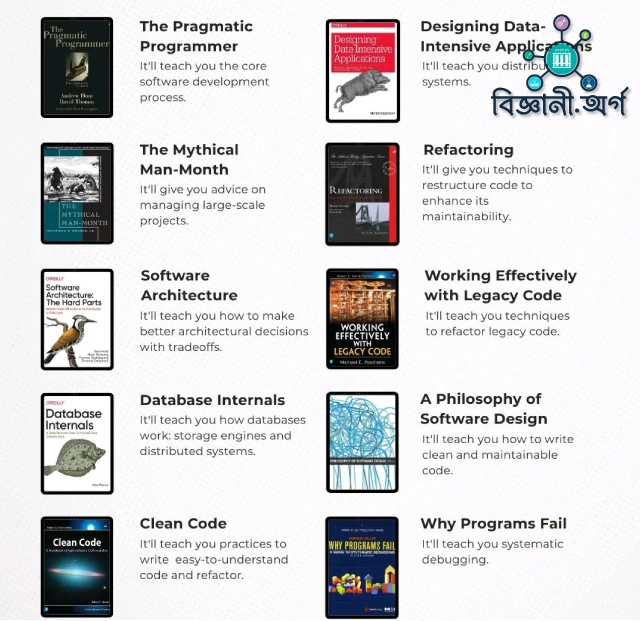
If you want to become a skilled software engineer in the future, learning only how to code is not enough. You also need to develop a way of thinking, problem-solving strategies, and a deep understanding of technology. The world’s renowned programmers have shared their experiences in books. By reading these books, you’ll learn not just how to write code, but also how to plan effectively, manage large projects, and use technology to transform people’s lives. Now, let’s talk about ten books that will build a strong foundation for students entering the world of software engineering.
The first book is The Pragmatic Programmer. It’s often called the beginner’s guide for software engineers. Here you’ll learn how to break down a problem into smaller steps and how to make your code more efficient and reusable. The main highlight of this book is its practical advice. It includes various small tips to help you understand that a programmer’s job is not just about writing code; thinking skills, creativity, and communication strategies are equally important.
Next comes Designing Data-Intensive Applications. Today’s world can be called a “world of data.” Platforms like Facebook, YouTube, or Google process billions of pieces of information every day. This book teaches how to build large-scale data systems, store information, and use data effectively. For those curious about how YouTube manages videos for millions of users or how Google finds billions of pieces of information within seconds, this book is an essential guide.
Software isn’t just a tangle of code—behind it lies teamwork and planning. That’s the lesson of The Mythical Man-Month. This book explains that adding more people doesn’t necessarily make the work go faster. Instead, team management, sharing responsibilities, and time management are more important. Those who work on group projects or competitions at school will realize from this book that without proper planning, team success is impossible.
Writing code once doesn’t mean the job is done. Continuously organizing, cleaning, and improving code is the process of “refactoring.” This technique is taught in the book Refactoring. A special highlight of the book is the “Bad Smells in Code” chapter, which points out where problems can occur in code and how to fix them. When a student writes their first programs, they’ll make many mistakes. This book teaches the right method to tidy up those errors.
Just like large buildings need blueprints, big software projects also require software architecture. The book Software Architecture: The Hard Parts teaches how to design systems that remain usable for a long time. The key lesson of the book is that every decision has both advantages and disadvantages. So, when designing software, you need to consider all aspects before making choices. This is crucial for students because they will learn how important it is to plan for the future.
In real-life software projects, most of the time engineers work with legacy code. The way to tackle this challenge is shown in Working Effectively with Legacy Code. This book teaches how to understand old code and how to write tests to change it properly. It’s important for students because they’ll realize that, while creating new things is important in the tech world, understanding and improving the old is equally necessary.
The modern world is unimaginable without vast stores of information, or databases. The book Database Internals teaches the inner workings of databases—how information is stored, quickly searched, and distributed across multiple servers are all discussed here. Students will learn from this book how sites like Facebook or YouTube manage to operate smoothly amidst billions of records.
A Philosophy of Software Design is a bit different. It doesn’t just teach technology, but introduces a new way of thinking. The main focus is on how to solve complex problems simply, and how to keep code clean and maintainable over time. Students can learn here that writing code isn’t just about technology; it can also be a form of art.
One of the most famous books in the software world is Clean Code. Here you’ll learn how to write code that’s easy for others to understand. Naming, writing comments, breaking functions into smaller parts—all these topics are discussed in detail. This is very important for students because the code they write today will be read, understood, and used by others in the future.
The last book is Why Programs Fail. This book explains why bugs or errors can suddenly appear when running programs. The main topic is the systematic method for finding and fixing errors. The biggest challenge in software engineering is finding and correcting mistakes. Students will learn from this book that mistakes are actually a part of the learning process.
Now you might ask, why should a high school student read these books? First of all, reading them will allow you to learn “ways of thinking” beyond just coding. Second, they will prepare you for the future. Those who work at major companies like Facebook or Google often build their knowledge on the concepts from these books.
The easiest way to start is to pick up The Pragmatic Programmer or Clean Code. These cover the fundamentals in a manner that’s easy for beginners to understand. After that, you can gradually start reading books on databases, architecture, or large systems. Read a little each day, and try coding the examples from the books yourself.
Ultimately, remember—these books are not just for becoming a software engineer; they’ll also help you build a life that’s planned and driven by logic. So if you can start building the habit of reading today, it will take you further down the path toward your dreams.