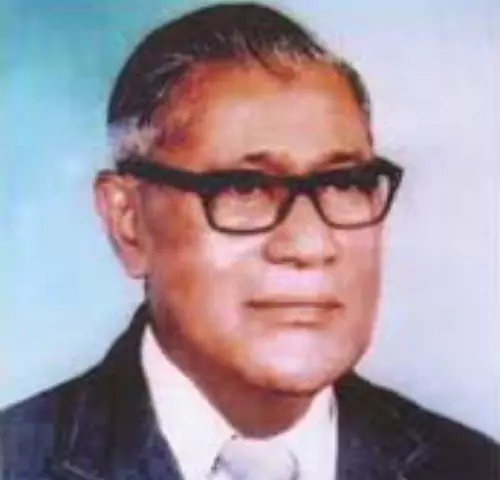
Dr. Mohammad Ibrahim (1911–1989) was a unique figure in the history of medical science in Bangladesh, who played a pioneering role in the field of diabetes care and research in the country. He was not only a physician, but also a social worker, educational reformer, and a trailblazer in public health. His contributions to Bangladesh’s health sector are still considered legendary today. The Bangladesh Diabetic Association, founded by him, and later BIRDEM (Bangladesh Institute of Research and Rehabilitation in Diabetes, Endocrine and Metabolic Disorders), introduced a new dimension in diabetes treatment, research, and training.
Birth and Childhood Background
Dr. Mohammad Ibrahim was born in 1911 in Murshidabad district of West Bengal, India. He came from an educated and culturally rich family. From his early years, he was inspired by his family to devote himself to serving ordinary people. The contemporary history of British India, the independence movement, and the spread of education played significant roles in shaping his mindset. After completing his primary education, he obtained his MBBS degree from Calcutta Medical College, and later completed his MRCP from Edinburgh, Scotland. Earning these advanced degrees elevated his medical knowledge to international standards.
The Beginning of His Professional Life
After the Partition of India, many Bengali physicians were scattered within and beyond the country. Dr. Ibrahim returned to East Pakistan (now Bangladesh) during that time and began teaching at Dhaka Medical College. Gradually, he developed his own philosophy and techniques in medical science, focusing not only on curing diseases, but also on prevention, raising public awareness, and expanding an integrated health system. During his student days, he had already noticed that diabetes was emerging as a growing threat. Although there was a great need for management and awareness of this disease in developing countries, at that time it was extremely limited.
Background of Diabetes Research
Globally, diabetes had emerged as a silent killer. In then Bangladesh (former East Pakistan), there was little to no research or healthcare infrastructure for the prevalence, causes, prevention, or treatment of diabetes. Dr. Ibrahim sought to fill this gap. He believed that the treatment of chronic diseases like diabetes could not be limited to medication alone; it also required trained personnel, informed patients, balanced nutrition, exercise, lifestyle changes, and above all, social initiatives. To realize this vision, he wanted to establish an organized structure where patients, doctors, researchers, and social workers could all work together.
Birth of the Diabetic Association
In 1956, he established the Diabetic Association of Pakistan, which became known as the Diabetic Association of Bangladesh after the country’s independence. This organization acted not just as a medical center but as a social movement. Its purpose was to raise public awareness about diabetes, formulate guidelines for disease control, and ensure affordable care for poorer communities. With the joint efforts of volunteers, patients and their families, physicians, nutritionists, and social workers, the association gradually built a strong foundation.
Establishment and Activities of BIRDEM
After the success of the Diabetic Association, Dr. Ibrahim realized the need for a more organized and research-oriented institution where in-depth research, training, and advanced treatment for diabetes and other endocrine disorders could be provided. Thus, in 1980, the Bangladesh Institute of Research and Rehabilitation in Diabetes, Endocrine and Metabolic Disorders (BIRDEM) was established. BIRDEM not only provides diabetes care but also offers research and treatment for endocrine and metabolic diseases. Here, patients receive nutrition counseling, regular checkups, the supply of insulin and medications, and specialized services for managing diabetes-related complications.
BIRDEM is now recognized as one of the largest centers for diabetes care and research in Asia. Every year, countless patients receive treatment here. Dr. Ibrahim’s core philosophy was a “community-based health care model”—bringing health care to the doorsteps of the people. For this purpose, branch centers have been established at district and sub-district levels under BIRDEM, ensuring easy access to diabetes care even for people in rural areas.
Education, Training, and Research
Dr. Mohammad Ibrahim understood that clinical treatment alone was not enough to control a disease like diabetes; there was also a need for developing doctors’ skills, conducting research, and creating public awareness. He was extremely careful about education. Regular training is provided at BIRDEM for doctors, nurses, nutritionists, health workers, and researchers. New physicians can acquire modern knowledge about diabetes and learn how to apply it in the local context. He encouraged students with the necessary research resources and opportunities to foster new ideas and innovation.
In research, he focused on studying the impact of local dietary habits, lifestyles, and environmental factors. He strongly emphasized the importance of nutritious food, exercise plans, and regular blood tests for diabetes patients. As a result, patients have been able to improve their quality of life and reduce the risks and complications of diabetes by adopting healthier living practices.
Social Perspective and Public Health
One of Dr. Ibrahim’s major contributions was his humane and holistic approach toward patients. He believed that treatment could not be limited to just medicine and diagnostics; social and psychological support were also necessary. Many diabetes patients struggle with despair due to their chronic illness. Through empathy, proper counseling, and guidance, he introduced a new culture in treatment. He wanted diabetes patients to develop self-reliance and confidence so they could work normally, remain part of mainstream society, and move forward with their lives.
Through social awareness campaigns, he consistently emphasized to the public that diabetes is controllable and not something to be feared, provided the right steps are taken at the right time. He stressed the importance of consuming local fruits, vegetables, and healthy foods, which is particularly effective in the context of developing countries.
Recognition and Honors
In recognition of Dr. Mohammad Ibrahim’s unique contributions, the Government of Bangladesh awarded him the title of “National Professor.” For his outstanding work, he received the Independence Award (posthumously) as well as several national and international honors. His work was highly regarded not only in Bangladesh but also internationally. The ‘Bangladesh Model’ established through the Diabetic Association and BIRDEM is considered a role model for developing countries. International organizations, including the World Health Organization (WHO), have praised these initiatives.
His Legacy After Death
Dr. Ibrahim passed away in 1989. With his death, Bangladesh lost a true humanitarian and an eminent person. However, he left behind a well-organized institution, hundreds of trained doctors, nurses, health workers, and hundreds of thousands of conscious patients. BIRDEM continues to follow his path, and diabetic centers established in various parts of the country are bringing health care to every level of the population. His legacy—innovative thinking in the local context, a humane approach to patients, and research-based health systems—continues to inspire new generations of doctors and researchers.
Conclusion
Dr. Mohammad Ibrahim was a multifaceted personality who viewed medicine as a tool for holistic public welfare. He provided unique guidance for combating complex, long-term diseases like diabetes in an integrated manner. The institutions and movements he built continue to bring relief and security to millions of lives in the country. By combining education, research, treatment, and awareness, he established a community-oriented health model that will continue to guide Bangladesh’s health sector not just in the past, but also in the future.
The life story and work of Dr. Mohammad Ibrahim remind us that real development is not just about infrastructure, but about a change in mindset and innovation involving community participation. His legacy is instructive not only for Bangladesh but for the entire world. It teaches us that pioneers of humanitarian sciences have illuminated society throughout the ages. Dr. Ibrahim was one of those torchbearers, who quietly but profoundly dedicated himself to the service of humanity.