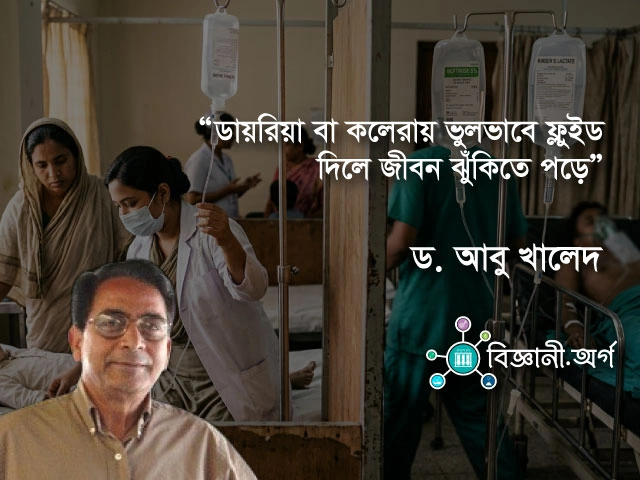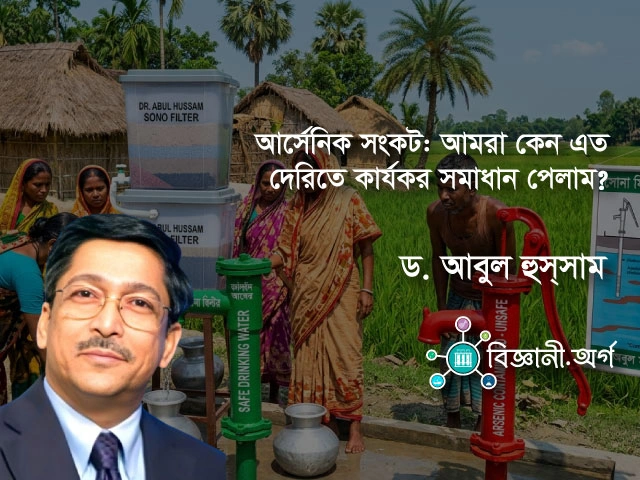
Many people refer to arsenic contamination in Bangladesh as a “silent disaster.” This is because the effects of this toxin are not immediately apparent, but over the years, it accumulates in the body and slowly destroys human health. The presence of arsenic in tube well water became scientifically clear in the 1990s. Still, the question remains—despite knowing about the problem, why did it take us so long to reach an effective solution? In searching for the answer to this question, the experience of Dr. Abul Hussam offers an important perspective. In his words, “We knew about the problem long ago; it took us time to reach a solution.”
The arsenic crisis began with the installation of tube wells to escape shortages of safe water. Groundwater was considered safe, so millions of tube wells were installed across the country. But the long-term environmental impact of this initiative was not properly considered. As a result, arsenic contamination spread in many areas. Even after the problem was scientifically identified, there were delays in getting solutions to the field—weaknesses in policymaking, lack of sufficient coordination, and a deficit of long-term planning all played a role.
Dr. Hussam’s invention, the Sono filter, demonstrates that a solution was technologically possible. The question is, why wasn’t this type of technology rapidly scaled up? One reason is the gap between research and policymaking. Even if scientists find solutions, a coordinated effort at the governmental level is necessary for implementation. Often, technology remains stuck at the experimental stage and isn’t scaled up in the field. Consequently, people end up waiting a long time for effective solutions.
This crisis teaches us a valuable lesson—just identifying the problem is not enough; it is equally important to build a structure for swift implementation of solutions. In developing countries, technological solutions often become dependent on international assistance, donor agencies, or projects. When the project ends, the initiatives often come to a halt. The arsenic crisis has also shown a lack of long-term, sustainable solutions.
Dr. Hussam’s work shows that effective solutions are possible only when technology matches local realities and gains acceptance at the governmental level. His filter works without electricity and can be made at low cost—features that make it suitable for rural settings. Yet, the administrative and policy obstacles that prevented fast dissemination of such technologies highlight limitations in our development framework.
This experience carries an important lesson for young researchers and policymakers. Without effective bridges between scientists and the state system, no major social problem can be solved quickly. To avoid similar delays in future environmental, water, or health crises, it is crucial to strengthen processes that bring research-based solutions swiftly to the field. The arsenic crisis reminds us—knowing about a problem is not enough; timely decision-making and implementation are what truly save lives.
Read the full interview with Dr. Abul Hussam: