It’s an ordinary afternoon at 5 pm, on a street in New York City. Dog lover Lina is out for a walk with her pet Labrador, Bruno. Bruno is usually lively and jumps around with joy during their walks. But today, his eyes seem a bit tired, and his movements are slower than usual. Lina can’t figure out—is Bruno unwell, or is he feeling down?
But what if there were a technology that could instantly analyze Bruno’s facial expressions and tell Lina exactly how he is feeling?
Emotion Analysis with Artificial Intelligence: Understanding Messages in a Dog’s Facial Expressions
Scientists today are searching for answers to this very question. Researchers from the University of the West of England (UWE) and Scotland’s Rural College (SRUC) are developing an artificial intelligence (AI) system called the “DogFace Reader”, which attempts to interpret a dog’s emotions by analyzing its facial expressions.
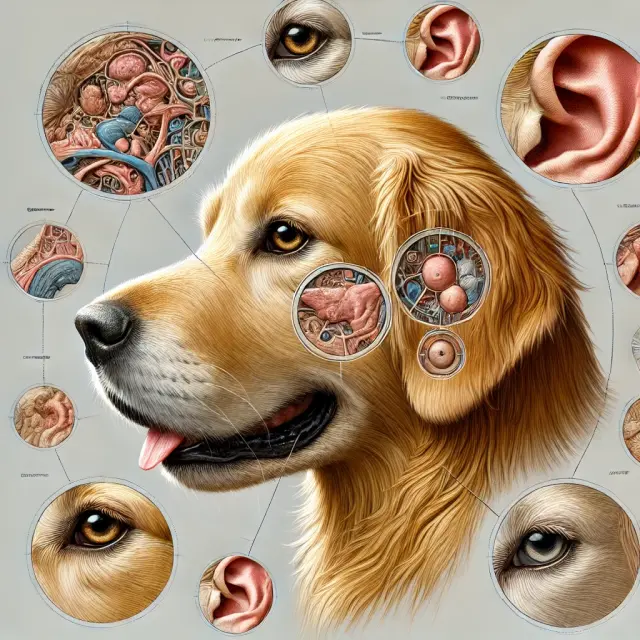
This technology is not only capable of recognizing individual dogs—it can also detect signs of pain, stress, or depression. Just as we can tell when a human smiles or frowns in annoyance, a dog’s eyes, ears, facial muscles, and tail movements reveal their emotional state.
How are a Dog’s Facial Expressions Analyzed?
Charles Darwin wrote in his 1872 classic The Expression of the Emotions in Man and Animals that animals express emotions through their facial expressions.
Research has shown that dogs have specific expressions that indicate their pleasure or pain:
- Widened eyes – Signs of excitement or enthusiasm.
- Mouth clamped shut or lips pressed tight – A sign of distress or pain.
- Ears pulled back – An indication of fear or anxiety.
- Repeatedly sticking out the tongue – A sign of psychological stress.
Researchers are training AI models to identify these expressions by analyzing thousands of photos and videos of dogs.
Fast and Accurate Detection with AI
It’s difficult for humans to observe every movement of an animal, but AI can perform such analysis within seconds. Researchers collect pictures of various animals and use them to train AI models. In this way, AI can automatically detect key regions of the face and measure distances between different facial points to determine whether an animal is in pain or experiencing anxiety.
In recent years, several AI models have achieved remarkable accuracy in detecting pain in animals. For example:
- Scientists at the University of Cambridge demonstrated in a 2016 study that their AI software can determine the pain levels of sheep quickly and with high accuracy.
- Researchers at Hannover University have developed an AI model capable of detecting pain in cats with 77% accuracy.
- A researcher at the University of São Paulo found that AI can identify pain in horses based on their facial expressions with 88% accuracy.
Can AI Understand Animal Happiness and Sadness?
The question remains: Can AI only detect pain and stress, or will it be able to understand more complex emotions as well?
Researchers believe that it is possible. For example:
- A team of scientists has developed an AI model by analyzing Labrador facial expressions that can identify “happiness” and “sadness” with 89% accuracy.
- Similarly, by analyzing horses’ facial expressions, researchers have found that AI can detect whether a horse is depressed with 61% accuracy.
This shows that AI is learning to understand not just pain or stress, but also emotions like joy, disappointment, or excitement in animals.
The Future Role of AI in Animal Welfare
This progress in AI could revolutionize animal welfare. AI is already being used in farms and research labs. In the future:
- Veterinarians will be able to diagnose animal pain more quickly and accurately.
- Pet owners will be able to upload pictures to mobile apps and easily get information about their pet’s health.
- With smart farming technology, it will be possible to monitor the health of every animal, thereby improving standards of animal welfare.
Final Thoughts
AI is gaining the ability to detect pain, stress, and other emotions by analyzing the facial expressions of animals. While there are still some limitations, researchers believe that very soon, AI will be able to understand even more complex emotions in animals. This could bring about a revolutionary change in the field of animal welfare.
References:———-
https://www.science.org/content/article/can-ai-read-pain-and-other-emotions-your-dog-s-face
You can share your comments at: biggani.org