
There was a time when death was the only solution.
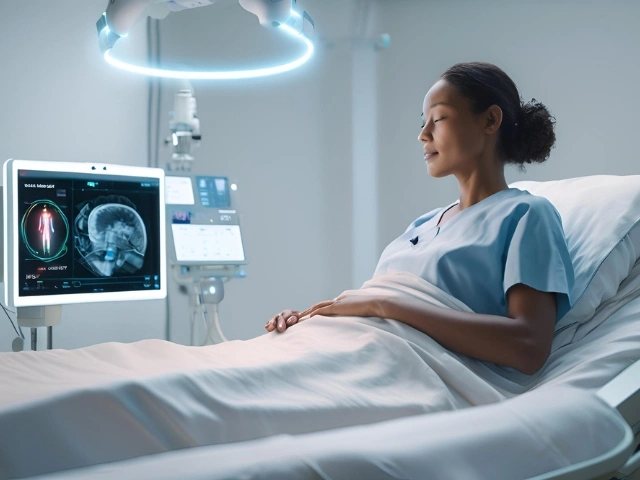
A little over a year ago, doctors told 37-year-old Joseph Coats of Renton, Washington, “Do you want to die in the hospital or at home?” Coats was nearly unconscious, spending day after day bedridden. He suffered from a rare blood disorder called POEMS syndrome. His limbs were paralyzed, his heart had enlarged, and his kidneys were failing. Every few days, liters of fluid had to be drained from his abdomen. Coats was so gravely ill that even a stem cell transplant—which might have saved him—was not possible.
“I thought this was the end,” Coats later said in an interview. “I had given up mentally.”
But his partner, Tara Theobald, was not one to give up so easily. About a year earlier, she had met Dr. David Fajgenbaum, a physician from Philadelphia, at a rare disease conference. Holding onto hope, she sent him an email.
The next morning, Dr. Fajgenbaum replied with a proposal for an alternative treatment—a combination of chemotherapy, immunotherapy, and steroids that had never before been tried for this disease.
Within three days, Coats’s body began to respond. In just four months, he was healthy enough for a stem cell transplant. Today, he is in complete remission.
And that treatment idea? It didn’t come from a human—but from an artificial intelligence (A.I.) model.
New Life from Old Drugs
“The truth is, we’ve long ignored the possibilities right in front of us,” says Donald C. Lo, former head of Therapeutic Development at the National Center for Advancing Translational Sciences and now with the European group Remedi4All.
With the help of A.I., scientists are now discovering new treatments hidden among thousands of old drugs. This process is called drug repurposing—finding new uses for existing medicines.
According to the World Health Organization, around 300 million people worldwide suffer from rare diseases. But over 90% of these conditions have no approved treatment. There is little research, little investment, and uncertain outcomes.
So, at a time when hope is fading for many patients, A.I. is opening a new horizon.
One Patient, One Scientist, and an Unusual Belief
This story began with trying to save the life of a patient. Dr. David Fajgenbaum was that very patient. At age 25, while in medical school, he was diagnosed with a rare form of Castleman disease. He took matters into his own hands, becoming his own physician.
“I didn’t have millions of dollars or ten years of time. I knew my rescue might lie in an old drug,” says Dr. Fajgenbaum.
Ultimately, a medication used in kidney transplants, sirolimus, saved his life.
From then on, he resolved to continue this work for life. He founded Every Cure, a nonprofit organization that, with the help of A.I., analyzes all approved drugs for new potential uses.
From Research to Reality
“A.I. hasn’t just increased the speed, it’s changing the entire nature of research. We can now analyze connections between thousands of drugs and diseases all at once,” says Dr. Marinka Zitnik, associate professor at Harvard Medical School.
Dr. Matt Might from a research institute in Alabama, USA, says, “Through A.I., we suggested inhaled isopropyl alcohol to reduce a patient’s nausea. Believe it or not, it worked instantly.”
Still, Questions Remain
Of course, A.I. is not always right. “Sometimes A.I. makes decisions based on evidence that isn’t strong enough,” says Dr. Zitnik.
One such example occurred in Japan in 2023, where an A.I.-recommended treatment caused serious side effects in a child patient, causing the related research project to be halted.
That’s why proper clinical assessment by physicians is crucial.
Still, the big picture is one of hope.
“This is the kind of A.I. that gives us hope, not fear. It’s changing lives,” says Dr. Grant Mitchell.
Potential in the Bangladeshi Context
Bangladesh, too, has thousands of patients fighting for their lives, often in despair. Experts believe that if A.I.-based drug repurposing models are introduced in both public and private sectors, it could transform the lives of many patients.
Professor Dr. Rafiqul Islam of Dhaka Medical College says, “If this can be started in research settings in Bangladesh, then in the future, unique A.I. models could be developed for local patients. Especially by testing commonly available drugs for new diseases, it’s possible to revolutionize our national healthcare system.”
At a workshop in December 2024 at Bangabandhu Sheikh Mujib Medical University, researchers announced a pilot project called ‘AI for Orphan Drugs.’ Under this initiative, the effectiveness of 10 old drugs is being evaluated using A.I.
Final Thoughts
The story of saving Joseph Coats isn’t just a story—it’s a roadmap for the medicine of the future. A drug once dismissed as a “side effect” might today become a core treatment for a disease—this truth challenges us to think anew.
And it compels us to consider that maybe we, too, need to find new ways to survive—with help from machines, for humanity.
Reader Opinions:
“I believe that if such technology is applied in Bangladesh, thousands of lives could be saved.”— Rukaiya Hossain, Public Health Researcher.
“If A.I. can save lives, then it’s not our enemy, but the doctor of the future”— Md. Arifuzzaman, medical student.