Guest Author: Rauful Alam
Writer and Researcher
Email: [email protected]
We often fail to recognize the contributions of chemists even when they’re right before our eyes. The discovery of chemical painkillers is one such vital contribution. The extraction of painkillers from willow bark was nothing short of a chemical revolution. Here is the story and history of the pioneers of that revolution…
Long ago, when people in Europe had fevers or colds, they would eat the bark of the Willow Tree or drink its extract. For thousands of years, the medicinal properties of willow had been known. Not just in Europe—ancient civilizations like Mesopotamia and Assyria also recognized the herbal value of willow. The Greek physician Hippocrates wrote about the healing powers of willow in his books. Generation after generation used the leaves and bark of this tree.
However, people did not know which chemical compounds were present in the bark of the willow tree, let alone their structures. In the nineteenth century, a renaissance began among European chemists. They started to try and separate the chemical compounds from various plant extracts. A single plant extract contains many chemicals. Among them, a specific compound is responsible for relieving ailments. That specific compound is called the Active Pharmaceutical Ingredient (API). In the nineteenth century, isolating these compounds and determining their chemical structures was both time-consuming and difficult. Yet talented chemists persisted in their efforts.
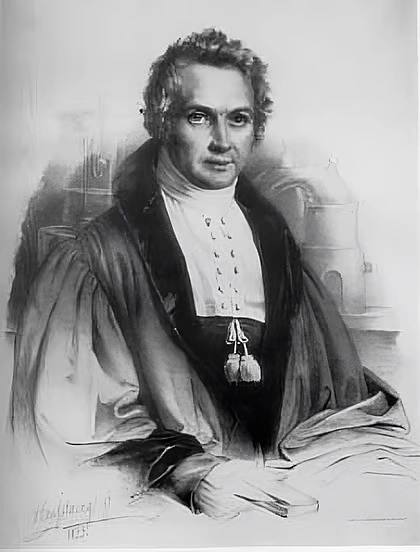
German Chemist Johann Andreas Buchner
In 1828, a German chemist named Johann Andreas Buchner isolated a chemical compound from the willow tree. It was named Salicin, derived from the Latin name for willow, Salix. At the time, this discovery caused quite a stir among chemists across Europe, prompting further research. Salicin soon began to be used for treating various diseases. Building on this, in 1838, Italian chemist Raffaele Piria isolated salicylic acid from Salicin. Chemists realized that salicylic acid was the magical compound present in willow bark responsible for its fever-reducing effect.
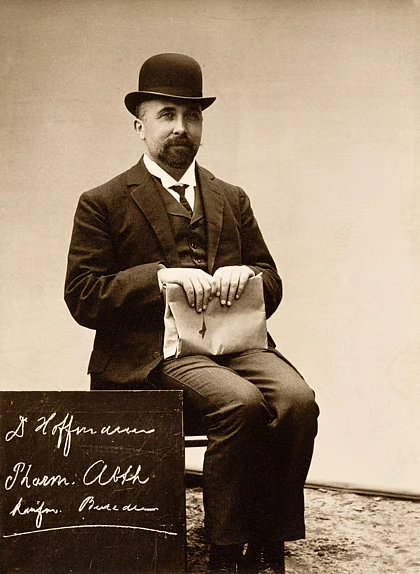
German Chemist Felix Hoffmann
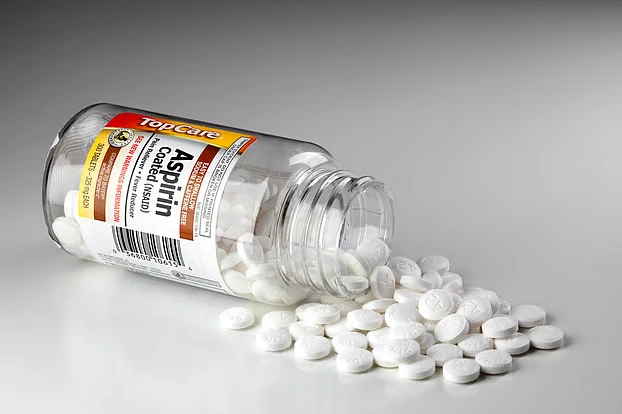
At that time, the renowned German pharmaceutical company Bayer began looking to utilize salicylic acid. Several bright chemists worked at Bayer then. Among them was Arthur Eichengrün, under whom a young chemist named Felix Hoffmann worked. Eichengrün instructed Hoffmann to produce acetylsalicylic acid (ASA) from salicylic acid. Felix Hoffmann succeeded in making it. The process of turning one compound into another through chemical means is called chemical transformation. The produced acetylsalicylic acid was named Aspirin. This happened in 1897.
Interestingly, Bayer’s senior officials initially rejected Aspirin. They believed it wouldn’t bring any significant change and would act just like salicylic acid. Eichengrün was shocked and could not accept this view. Therefore, he secretly provided Aspirin to doctors he knew and asked them to administer it to their patients. The doctors gave it to their patients and later reported back that Aspirin was proving to be a great analgesic. Unlike salicylic acid, which did not work as a painkiller, Aspirin—created from it—proved effective. Eichengrün was astonished by these results and informed his senior colleagues. Within two years, in 1899, Bayer registered Aspirin. It quickly spread worldwide. At the beginning of the twentieth century, this medicine became a blessing for humanity. Aspirin was the first laboratory-made drug to be sold globally. Bayer made enormous profits. Even today, Aspirin remains one of the most widely used and sold medicines in the world.
For thousands of years, people consumed willow bark to recover from fever and cold, but chemists isolated and identified salicylic acid from the bark and, through chemical transformation, turned it into an even more useful medicine. Without relying on trees, they learned to synthesize salicylic acid through chemical reactions in the lab and then turn it into Aspirin. Such is the contribution of talented minds to human civilization. They investigate what surrounds us, transform it into new forms, redefine it, and then use it for the benefit of humanity. Aspirin is just such a story. This medicine keeps countless people around the globe healthy.
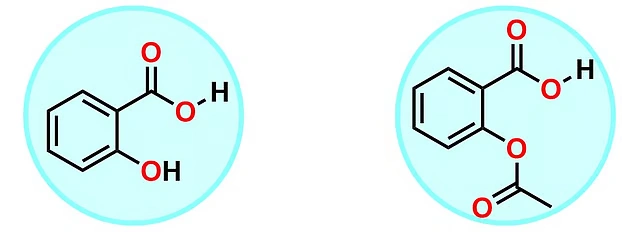
Image 2: The difference between salicylic acid (left) and aspirin (right) is that in salicylic acid, the active alcohol group (OH) has been converted to an ester group.
The molecule on the left in Image 2 is salicylic acid. On the right is acetylsalicylic acid, or Aspirin. The difference lies in the active alcohol group (OH) of salicylic acid being converted into an ester group. This small change is what gives the compound its new medicinal property. All over the world, chemists develop countless chemical compounds through chemical transformation. Using scientific methods, they search for desired compounds, which may turn out to be medicines for different diseases.
Chemists have developed antibiotics, painkillers, anesthetics, antimalarials, and many other medicines. Without chemists, the world would be a suffering, agonized land of death!
Note: 1. Willow trees generally grow in cold climates.
2. Felix Hoffmann is credited with creating Aspirin. However, there is controversy about this. Many authors claim that Hoffmann worked under Eichengrün and that it was under Eichengrün’s instructions that Hoffmann created Aspirin.
3. In 1853, a French chemist produced acetylsalicylic acid, but that compound was not pure. Purifying compounds is very important in chemistry, and at that time, no tests were done to see if the compound had medicinal properties.
References:
This article is based on an essay published in the Biggan Chinta Magazine.
Author: Dr. Rauful Alam, Researcher, University of Pennsylvania, USA.