Dr. Mashiur Rahman
The World and Bangladesh in the Age of Artificial Intelligence
The global rise of Artificial Intelligence (AI) technology is bringing radical changes to workplaces. According to estimates by the World Economic Forum, AI will replace approximately 85 million jobs by 2025. At the same time, demand is rapidly increasing for new types of skills—data analysts, machine learning specialists, and technically skilled AI professionals. The impact of AI technology has also begun to be felt in Bangladesh. Although the government is taking some initiatives with the aim of building a “Smart Bangladesh,” in reality, AI adoption and implementation remain limited. On the IMF’s AI Readiness Index, Bangladesh scores only 0.38—much lower than developed countries and even some neighbors. This low score indicates significant gaps in our digital infrastructure, human resources, and policies. Technological transformation has already started in key sectors of the country; for example, about 47% of large factories and 25% of medium factories in the ready-made garment (RMG) sector have begun using automated technology in production. This reality indicates that in order to survive in the future job market, adapting to technology is a necessity.
The Risks of an Outdated Education System and the Skills Gap
As the workplace is changing rapidly, Bangladesh will face serious risks if our education system is not updated accordingly. The warning signs are already clear. A large segment of the labor force remains unemployed despite higher education—around 900,000 graduates in the country are jobless, with an unemployment rate among graduates at 13.5% (far higher than the national average of 4.48%). A significant reason for this is the vast gap between the education received at universities and the actual demands of the job market. The kinds of skills needed in the era of the Fourth Industrial Revolution (4IR) have changed, but the curricula at many of our public universities are still lagging behind. As a result, students may earn degrees but fail to acquire the skills the industry needs.
A senior academic has warned that all educational institutions in the country need to immediately restructure their curriculums to meet the demands of the changed work environment of 4IR. We must move beyond theory-based education and emphasize practical skills and applicable knowledge; without building strong connections with industry, graduates cannot be adequately prepared for the available jobs. The reality reflects this: in a 2021 survey, 46% of private employers in Bangladesh reported facing difficulties filling vacancies due to candidates’ lack of proper skills. That study highlighted a clear gap between the skills learned by our graduates and the demands of the labor market. In other words, the higher education system is failing to produce appropriately skilled human resources, resulting in many young men and women remaining unemployed or forced into under-qualified jobs despite having degrees.
The Importance of Modern Skills and Basic Computing Knowledge
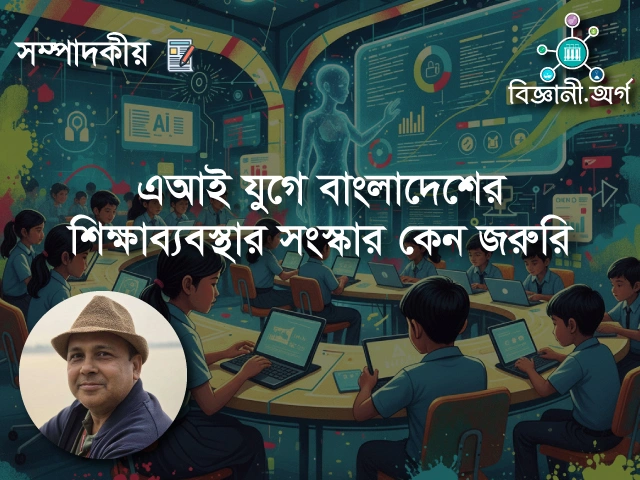
One of the main weaknesses of the current curriculum is the lack of modern computational thinking and basic programming knowledge. In a technology-driven world, students must be skilled in foundational topics such as programming logic, algorithms, data structures, and memory management—not just as technology users, but as creators. According to experts, while students are learning to use AI tools, it is equally important for them to learn the core concepts behind how AI works. Recommendations have been made to introduce AI as an elective at the secondary and higher secondary levels in Bangladesh, as well as to incorporate logic, data science, and coding from the outset, so that future generations grow up not just as consumers of technology but also as innovators.
Currently, many students are proficient in using high-level programming languages or ready-made tools but do not gain a deep understanding of how computers actually operate. As a result, lower-level topics such as assembly language or memory management are being neglected, which in turn reduces the ability to understand software efficiency and security. Weak knowledge of fundamental algorithms and memory management will cause difficulties for our youth when it comes to solving new problems or developing innovative software. Therefore, higher education should once again emphasize these foundational subjects. A former vice-chancellor has suggested breaking down the artificial divide between STEM and humanities by ensuring that every discipline includes minimum instruction in mathematics, data science, programming, languages, philosophy, and ethics—so that students acquire integrated and critical thinking skills to meet the challenges of the 4IR era. University curricula should also harmonize national and global needs to develop computational thinking, enabling our graduates to compete in the job markets at home and abroad.
Early Use of AI Tools: Blessing or Curse?
At the dawn of the AI revolution, students and professionals in Bangladesh have started using generative AI tools like ChatGPT. On the plus side, these tools provide quick information and help in writing or coding, thereby speeding up work. In reality, a quiet transformation has already taken place in the country’s schools and colleges—many students are now using AI for homework, and teachers are using AI tools in lesson planning. Sometimes students, lured by quick results, are skipping studying altogether and relying solely on AI-generated answers. As a result, there is a growing trend of submitting entirely AI-generated assignments or reports, which is no different from parroting pre-made answers instead of genuine knowledge. In response, many teachers are changing their assessment methods—testing students’ own thinking abilities through in-class impromptu writing, oral exams, or presentations. The goal is simple: to ensure that students do not rely solely on AI-generated responses but also exercise their own judgment and reasoning.
This raises the question: is this early use of AI a blessing or a curse for our students? There are two sides to this. On the one hand, if used correctly, AI can save time and effort, boosting productivity. Research shows that generative AI significantly increases the performance of skilled workers, and even less skilled workers can learn tasks more quickly with AI’s help. On the other hand, overdependence comes with risks. If students or young professionals blindly rely on AI-generated answers without mastering core concepts, they risk losing critical thinking and creativity. AI may sometimes provide false or misleading information that appears convincing—if users lack the skills to verify these, disastrous outcomes can ensue. For this reason, many educational institutions are emphasizing responsible use rather than imposing a total ban on AI. For example, a deputy head teacher at a school in Dhaka has mentioned that they are working with international education boards to incorporate AI into the curriculum and train teachers, so that the benefits of technology can be harnessed while also identifying improper AI usage. In short, it is not possible to ignore AI; instead, we must learn how and where its use is appropriate. Students should be encouraged to have a critical mindset when using AI—so that they do not simply agree with AI’s answers, but analyze and verify information themselves. By treating AI as a supporting tool and keeping their own basic skills sharp, that should be the central strategy.
The Future Workforce and Demographic Challenges
Bangladesh is currently in a favorable phase of the “demographic dividend”—three-quarters of the total population (according to 2022 figures, 75.3% are aged 41 or younger) are young. This huge youth population could be the driving force of our economy in the next two decades. However, according to the United Nations Development Program (UNDP), this opportunity will not last forever; the window for Bangladesh’s demographic dividend will start to close after 2040. Already by 2023, there are indications of a slight decrease in the share of the working-age population, signaling that reliance on the elderly will increase in the future. That means we have less than 15 years to transform the country’s youth into skilled human resources and accelerate economic development.
Unfortunately, a large portion of this massive youth population is not engaged in work or training. According to the NEET (Not in Education, Employment, or Training) index, about 41% of Bangladeshis aged 15–24 are currently not engaged in any education, employment, or training, which means about 13 million young men and women. The rate is especially alarming among young women, at about 62%. This means that a large segment of our youth remains effectively unutilized and unskilled. This aimless youth population could become a burden for the country in the future if we cannot skill them now.
Another concern is the impending retirement of senior professionals. Many of today’s experts and leaders in various fields and industries will retire in the next 10–15 years. Who will take on these responsibilities then? If current students do not acquire relevant knowledge and leadership skills, there will be a skills vacuum. For example, in sectors like ICT and engineering, the young generation is not yet fully prepared to replace the expertise and experience of senior specialists. Analysts have asked: “How do we ready our youth not just for current jobs but also for the kind of work that will emerge in the future?”—this question is extremely relevant for Bangladesh as well. If we do not reform our education system now, on the one hand, we will see a rise in unemployed graduates unable to keep pace with the times, and on the other, shortages of skilled personnel in critical sectors will slow the nation’s economic growth. Achieving Bangladesh’s development targets (such as becoming a developed nation by 2041) depends fundamentally on skilled human resources. Therefore, before the window of demographic opportunity closes, we must empower our youth.
Learning from the Educational Reforms of Neighboring Countries
It is encouraging for policymakers in Bangladesh that many nearby countries have already started reforming their curricula to create a workforce suitable for the AI era. Take India as an example: under the National Education Policy (NEP 2020), students are recommended to learn coding and basic concepts of artificial intelligence from grade six. The Central Board of Secondary Education (CBSE) has already introduced AI and IoT (Internet of Things) subjects in grades nine and ten. The aim is to build digital skills and programming logic from the start, so that students are ready for the digital economy of the future. In India, AI is also being incorporated in teacher training, with focus on equipping students with problem-solving and 4IR-relevant skills.
Another example is Vietnam. The Vietnamese government has launched a national program for AI-related reforms in education and is taking various measures to make teachers and students proficient in using AI by 2025. A recent survey found that among Vietnam’s active internet users, 78% have already tried at least one AI tool—an indication of incredible enthusiasm. The country’s Ministry of Education’s 2025 national plan includes extensive teacher training and pilot projects for using AI tools in schools. In one province, 4,000 teachers have completed AI training, and AI and virtual reality technology are being tested in classrooms. These initiatives aim to boost digital literacy and equip teachers and students with 21st-century skills. The results are visible—Vietnam is making significant progress in technology and has built a strong presence in export-oriented IT services. Other neighboring countries—such as Malaysia and Singapore—have also included programming and innovative thinking at a very young age in their education systems, thereby strengthening their positions in the global job market. For its own benefit, Bangladesh must learn from these examples in the region.
Conclusion: The Time for Curriculum Reform Is Now
From the above discussion, it is clear that extensive reform of our current education system is essential to prepare for an AI-driven future. There is no time to waste; the next one or two decades will determine whether Bangladesh advances or lags in the AI age. Therefore, it is imperative to take a few urgent steps now:
Urgent Action Points
- Form a National Curriculum Modernization Taskforce: A government-initiated taskforce comprising educators, technology experts, industry representatives, and policymakers must be formed promptly. …
- Add AI and Technology Courses to the Curriculum: AI, machine learning, data science, automation, and similar topics should be included at the undergraduate level in all universities (especially in the sciences, engineering, business, and social science streams).