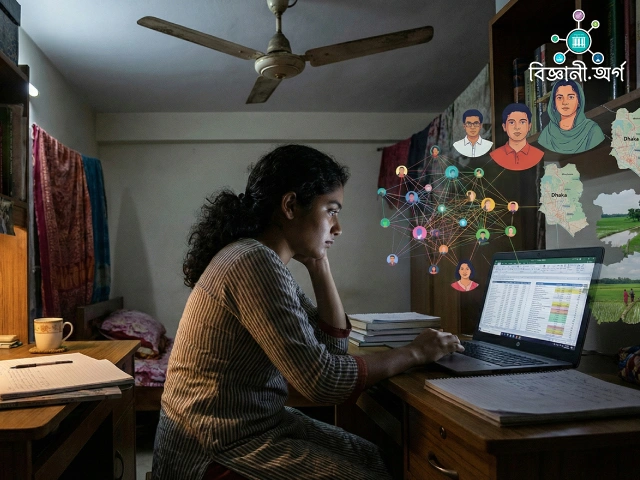
The old ceiling fan in the dormitory keeps spinning, trembling as it goes. Below, in the corner of the table, a student has been staring at her laptop screen for ages. An Excel file is open, with thousands of rows. Each row tells a human story, but all she sees are numbers. She wonders—I’m studying society, so why is there so much code, so much data, so much calculation here? Society is feelings, relationships, politics, hunger, and dreams. Can it really be confined to the cells of an Excel sheet?
This is the most important doorway for today’s young researcher. At the intersection of society and data, a new field is emerging—the application of data science in social science. From the outside, it seems technological; from the inside, it is deeply human. Today, people’s voices are captured in survey forms, mobile data, social media posts, and online shopping records. We are not just speaking with our mouths; every day, through millions of data points, we leave traces of ourselves. The question is, who is reading these traces, and how?
In the context of Bangladesh, this question becomes even more profound. Development here is not just about building roads—development means changing people’s lives. According to a recent World Bank report, over twenty million people in Bangladesh still live near the poverty line, while spending patterns among the urban middle class are changing rapidly. To understand these two realities together, interviews or questionnaires alone are not enough; we need analysis of big data. UNESCO shows that in developing countries, data-driven policy-making can improve the rate of effective decisions by up to thirty percent. That number is more than a statistic—it means better decisions, fewer mistakes, and a little less suffering.
Once, social science meant research with notebooks and pens, long interviews, walking from village to village. Today, that journey is joined by the light of servers, and libraries are connected to the cloud. But the goal hasn’t changed. The goal is still the same—to understand people. Here, data science is the tool, and social science is the compass. If the tool lacks heart, it becomes dangerous. If the heart is blind, it is weak. As a future researcher, it is your job to balance these two.
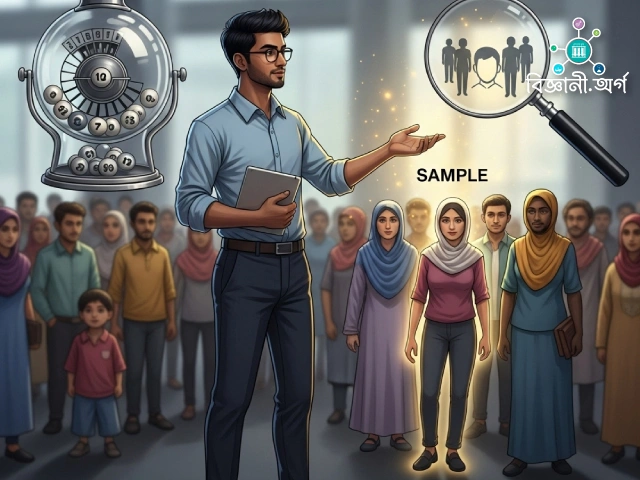
If you want to walk this path, you must first know which question about society moves you—makes you cry, angry, or restless. Poverty, educational inequality, workers’ wages, women’s safety, migration, healthcare, urbanization, climate refugees—these are the capital of your research. Then you must ask, what kinds of data roam beside these issues? Reports from the National Bureau of Statistics, DHS surveys, World Bank open data, social media trends, mobile usage statistics—they are all doors, if you look with open eyes.
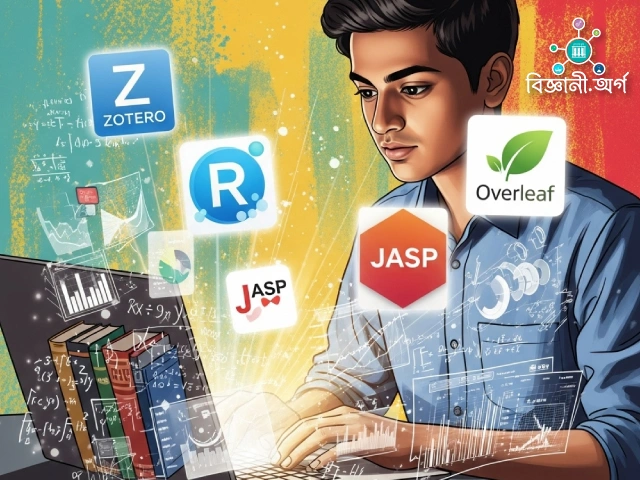
As you befriend this data, you’ll realize that code is not your enemy. Rather, Python, R, or SQL will slowly become your language, with which you’ll learn to hear the unsaid stories of people. At first, graphs might seem blurry, models may appear as puzzles. But eventually you’ll see: the loneliness of a city’s night captured in a line chart, the hunger of a village shown in a color on a map. Then you’ll realize that numbers are not cruel—they’re simply very silent.
The hardest part of data science in social science is ethics. People are hidden within this data—their names, ages, preferences, fears. An OECD guideline reminds us that even a trivial neglect in personal data usage can cause irreparable harm to people’s lives. So you must learn the meaning of consent, privacy, and respect. Research isn’t only about publications—research means earning trust. If people entrust their lives to your data, it is your duty not to use those lives without compassion.
Globally, this field is transforming the language of policy-making. In the United States, data modeling in voter behavior analysis has changed the course of electoral strategies. In Africa, analyzing mobile data helps detect the spread of epidemics early. Singapore plans urban spaces by understanding citizen movements. In Europe, changes in the labor market are read in real-time from online job ads. Just as Darwin looked for signs of evolution in nature, today’s researchers seek signs of social change in the folds of data.
But in Bangladesh, this dream collides with reality. Here, data is scattered, inconsistent, often outdated, often incomplete. Yet this very weakness is your opportunity. Where there is chaos, a researcher is needed most. If you can learn to ask questions amidst disorder, to compare, to spot mistakes—then you will be the one casting new light on the policymaker’s table.
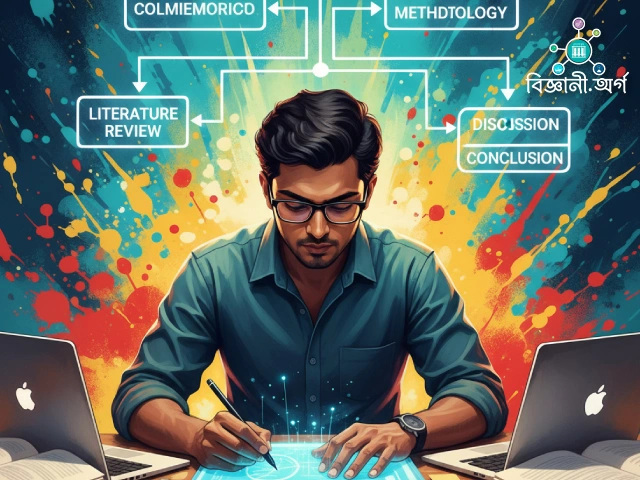
Your story of preparation, then, begins with walking a dual path. On one side: sociology, economics, political science, or anthropology. On the other: statistics, programming, and visualization. These two paths will eventually meet. Then you are not just a researcher—you become an interpreter. You will translate numbers into human language, and craft people’s pain into the language of policy.
Your path may one day lead you to an international journal, or perhaps to an NGO office, or a government desk. No matter where, the job remains the same. The job is to bring truth closer. Just as Marie Curie conveyed the idea of invisible rays to people, so must you make invisible inequalities, invisible hunger, and invisible possibilities visible.
Late at night, as you read these words, you may wonder—can I really handle these two worlds? Society on one side, data on the other. The answer is simple, though not easy. You can—if you are patient. You can—if you learn a little every day. You can—if you do not see failure as an enemy. Because every wrong code teaches you something new, every failed analysis brings you closer to the truth.
This journey has no end—only depth. And that depth is called responsibility. Responsibility says, it is not enough to only show the way like a GPS—you must hold people’s hands too. The application of data science in social science is not a luxury; it is a form of service to the nation. A country that can read its people through the numbers makes fewer mistakes and more right decisions.
If you write even one line of code today for the good of people, it is no longer just code—it becomes a piece of the future. If you open a dataset today and spot a trace of injustice, it is not just a discovery—it becomes a silent protest. Along this path is born a new kind of scientist—with a keyboard in hand, and society in the heart.
The fan keeps spinning into the night. The student looks at her screen again. This time, the numbers no longer scare her. She sees human faces in them. She realizes, she is not alone. In front of her is not just a file, but an entire country laid open. And in that country, she has begun to draw her own line—with the ink of data, and the pen of humanity.