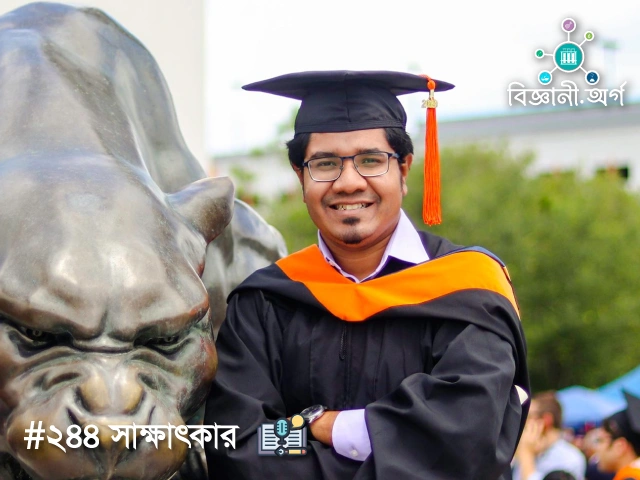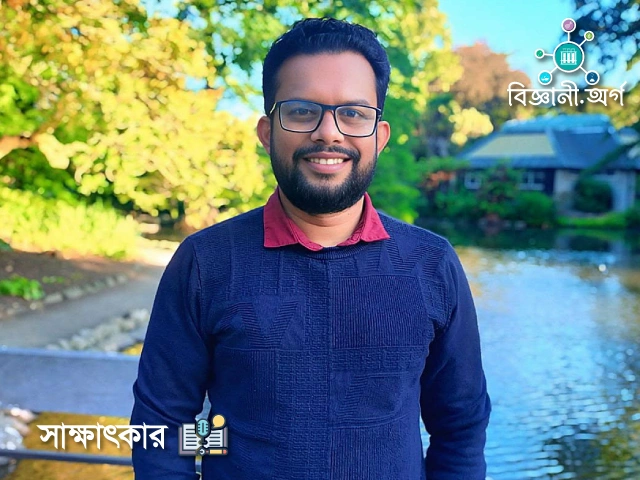
When we hold a plastic bottle, we usually think of using it once and throwing it away. But if that discarded bottle could be transformed—made stronger and more durable—wouldn’t the mountain of waste be reduced, even a little? Bangladeshi material scientist and engineer Dr. Mohammad Sagar Hossain is working to find the scientific answer to this very question. After completing his PhD in Mechanical Engineering from the University of Canterbury in New Zealand, he is now engaged in developing sustainable polymer materials in an industrial research and development environment in Australia. At the core of his work are: responsible recycling of plastics, giving materials a “second life” through modern 3D printing technologies, and developing materials that are safe for the environment and public health.
What is Materials Science—in Simple Terms
Materials Science is the study of the inner structure and behavior of all the materials we use in daily life. Why is an iron rod strong, why is glass brittle, why is plastic lightweight—all these questions are answered through material science. Dr. Sagar explains, modern materials science centers on understanding the interrelationship between: how a material is made (processing), how its molecules are arranged inside (structure), and how the material ultimately functions (properties). For example, if you cool the same plastic quickly, it becomes more transparent, but if you cool it slowly, its structure changes, making it appear cloudy. In other words, changing the manufacturing process changes the material’s characteristics.
3D Printing and Recycling: “Turning Waste into Resources”
A major part of Dr. Sagar’s PhD research was to examine the recyclability of PET plastic—particularly how the internal structure of the material changes when recycled repeatedly using additive manufacturing methods like 3D printing. Generally, we think that plastic weakens after being recycled once. In reality, it’s more subtle. Every time plastic is melted and reshaped, the length and arrangement of its molecules change; as a result, its strength, flexibility, and heat resistance all gradually shift. His research aims to measure these changes and provide guidelines such as “at what stage of recycling is the material suitable for which application.” This helps industries determine how many times recycled plastic can be used safely and effectively in various products.
Social Responsibility of Research During COVID
Dr. Sagar’s work during the COVID-19 pandemic demonstrated that laboratory research is not limited to papers alone. When masks and other protective gear became scarce, researchers wondered—could they be safely reused at home by disinfecting at specific temperatures? The big question was whether the fibers and filter layers of the masks were damaged by high temperatures. It was the responsibility of material scientists to test properties like mechanical strength, air filtration capability, and fluid resistance to ensure that safety standards remained intact after disinfection. This experience reminded Dr. Sagar that, in times of crisis, a scientist’s role is not only to create new knowledge but also to ensure people’s safety.
The Reality in Bangladesh: Why the Interest in Materials Science Is Low
Materials science is still a relatively lesser-known field in Bangladesh. Dr. Sagar observes that limited stand-alone departments and industry-focused research opportunities make students hesitant to choose this discipline. Yet in practice, proper material selection at every stage of industry—packaging, construction, garments, electronics—determines the quality and safety of products. For example, different grades of aluminum alloy have different properties for use in aircraft or cars; choosing the wrong material increases the risk of accidents. He believes that strengthening university-industry collaboration would boost student interest, as they would then be able to see real-world applications.
Multidisciplinary Study: The Balance Between Depth and Breadth
Dr. Sagar began his academic journey in Applied Chemistry and Chemical Engineering; later, he specialized in materials science within the field of mechanical engineering. In his view, depth in a subject creates expertise, while the ability to work across disciplines opens doors to new research. Today, breakthroughs are happening where chemistry meets environmental science, or where computer science converges with biology. Thus, his message to students is: instead of memorizing only one subject, build connections with neighboring fields of knowledge.
Research Culture Differences: A Lesson in Independence
During his research in Bangladesh and Korea, Dr. Sagar saw that many decisions centered around supervisors. But upon arriving in New Zealand, he encountered a research culture where the student-researcher was responsible for formulating questions, choosing methods, and structuring the work. At first, this freedom made him hesitant. Gradually, he realized that being able to frame your own questions is what defines a complete researcher. This transformation boosted his professional confidence.
Sources of Inspiration: Family, Teachers, and a Calling
Dr. Sagar’s story of inspiration is deeply human. At one point in his academic journey, his mother encouraged him to pursue research. His teachers guided him. And at an international conference in Dhaka, hearing the words “junior scientist” from a senior researcher left a lasting impression—it became a part of his identity. Sometimes, a single word can awaken the sense of self within a person.
Current Work: Compostable and Food-Safe New Polymers
Currently, in his industrial research, Dr. Sagar’s goal is to develop polymers that are compostable at home, safe for food contact, and flexible like latex when needed. Such materials may play a crucial role in creating eco-friendly alternatives for food packaging and medical equipment in the future. Alongside lab experiments, there are plans for pilot-scale production—overall, his work is an exercise in translating research into real-world industry.
Message for the Youth: Hardship Teaches Consistency
His message to the youth of Bangladesh is straightforward but powerful—work means hardship. If you fear difficulty, you can’t learn. With consistency, the path of research reveals itself. Instead of picking a subject only based on job prospects, if you value science for the needs of society and the environment, the country will benefit in the end.
Thus, Dr. Mohammad Sagar Hossain’s journey is not just a researcher’s success story—it is a lesson. Just as his research embodies the dream of turning waste into resources, it is also a quiet call to the youth of Bangladesh—to awaken their inner “junior scientist.” This journey reminds us that Bangladesh’s path to shining on the global research map begins with small steps of personal curiosity and responsibility.
The interview was conducted by Scientist Org on February 6, 2026. The hosts were Tahsin Ahmed Supti and Hasna Banu Mumu.
On behalf of Scientist Org, we thank Dr. Mohammad Sagar for giving his time to this “Interview Project,” which brings the life stories of scientists to the younger generation.
Watch the video of Dr. Mohammad Sagar Hossain’s interview on YouTube at the link below: 👇👇👇