Introduction
Critical study is not just about accepting information, but about analyzing, evaluating, and providing logical explanations of that information. When studying, conducting research, or trying to understand any complex topic, it is extremely important to analyze information properly.
In this context, the 3’D method (Divide, Describe, Discussion) serves as an effective tool. I developed this method myself in order to break down any complex information step by step and understand it in a clear and rational way. In this article, we will look at the method with a simple, everyday study example.
Example
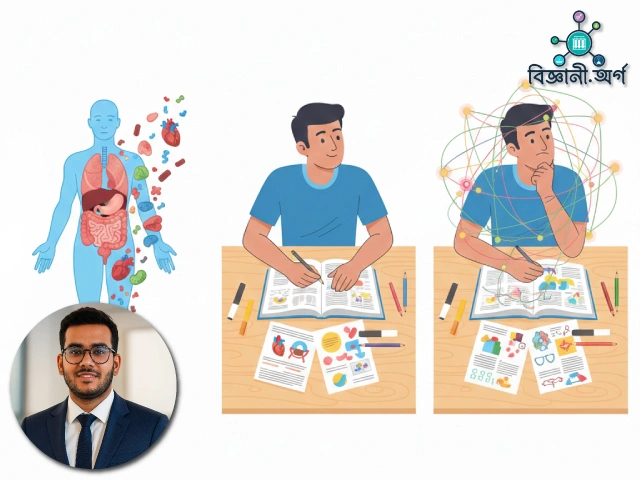
Suppose you are reading a chapter from a textbook, such as “Human Body Systems.” If you read the whole chapter at once, it may seem overwhelming and difficult to grasp. Now we will analyze it using the 3’D method.
Divide
- What: Break the topic into smaller parts. In this example, the chapter can be divided according to the different systems:
- Cardiovascular system
- Respiratory system
- Digestive system
- Why: Dividing helps to understand the information clearly and allows each part to be analyzed separately.
- How: First, use the table of contents or sub-titles of the chapter to identify sections. Then, read each system separately.
Describe
- What: Clearly highlight the main information and features of each section.
- Why: Description helps to understand the meaning and relevance of each part, providing a foundation for discussion.
- How: After reading each system, note its main functions and features. For instance, briefly write how blood circulates throughout the body in the cardiovascular system.
Discussion
- What: Provide analysis and logical explanation for each described section.
- Why: Description alone is not enough. Through discussion, you can understand the relevance, limitations, and possible interpretations of the information.
- How: For example, is the function of the heart effective enough? How efficient is the respiratory system? What are the functionality and limitations of the digestive system? Ask such questions to analyze each part. Also, look for connections between sections—for example, the interaction between cardiovascular and respiratory systems.
Conclusion
By following the 3’D method (Divide, Describe, Discussion), any study becomes more organized and fruitful. As shown in the example, by analyzing even a single chapter step by step, its depth and relevance become clear. Regularly using this method enables a student or reader to enhance their observation and analytical skills, and develop the ability to understand complex information transparently.
This method is an effective tool that elevates the quality of education, fosters logical thinking, and helps to build a strong critical perspective on information.
Source: Author’s own experience and relevant academic guidelines.
Md. Fahad Husain
Student, Department of Zoology
Shaheed Bulbul Government College, Pabna.