Although it sounds like science fiction, reality is approaching fast— as explained by former Google CEO Eric Schmidt.
In a recent interview with the US-based Special Competitive Studies Project, Eric Schmidt made a surprising and controversial prediction: “Artificial intelligence (AI) will surpass overall human intelligence by 2031.”
Schmidt stated, “Among technology leaders in San Francisco, there is now a ‘silent consensus.’ They believe that AI is currently ‘under-hyped’—in reality, its potential is much greater than what is being said.”
Timeline for the Future: How Will AI Advance?
Schmidt presented a three-phase timeline—
- By 2026: AI will replace most programmers and will be equivalent to elite mathematicians.
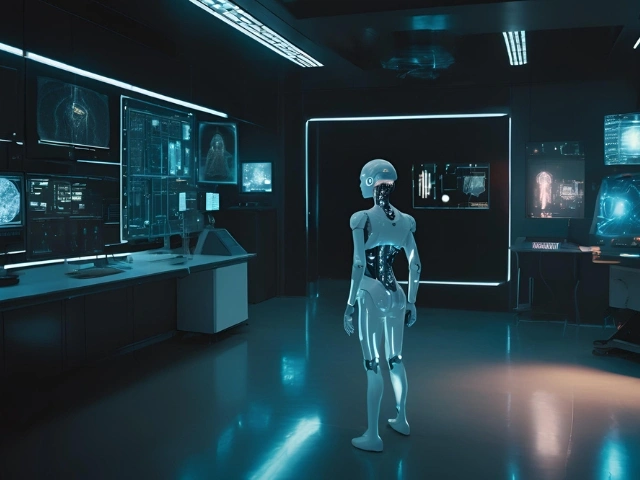
- Between 2028–2030: AI will reach Artificial General Intelligence or AGI—achieving intelligence equal to the best thinkers, artists, and scientists.
- By 2031: Artificial Superintelligence or ASI will emerge—surpassing the collective intelligence of all humanity.
He explained that this evolution will occur through “recursive self-improvement“—where AI writes its own code, learns on its own, and enhances its capabilities without human intervention.
‘San Francisco Consensus’: The Roadmap for the Future?
Schmidt calls this idea the “San Francisco Consensus“—because this strong belief is especially prevalent among San Francisco’s technology leaders, although many in other parts of the world do not agree with this view.
What Are the Risks of This Progress?
According to Eric Schmidt, governments around the world are still not prepared for this rapid technological advancement. Governance, policy, and international law are still lagging behind. He is concerned that an AI is coming that will improve itself, spread, and potentially move beyond our control.
Expert Reactions:
Schmidt’s remarks have made many people think deeply. Renowned technologist and AI expert Stuart Russell said, “While there is debate about the timeline, the main idea is very real. It is essential to start preparing now.”
What Does This Mean for Bangladesh?
Interest in AI is rapidly growing in Bangladesh as well. Several universities—including BUET, Dhaka University, and North South University—have established AI research centers. Automation has also started to enter the industrial sector. However, there is still a clear lack of definitive policies or preparation at the government level. To keep up with the AI revolution, broad plans are crucial from now on.
Conclusion:
If AI truly surpasses human intelligence, it will be a turning point in human history. We should now ask ourselves: “Are we ready for a world where machine decisions are more reliable than human ones?” For preparation, there is no alternative to policy, ethics, and international cooperation.