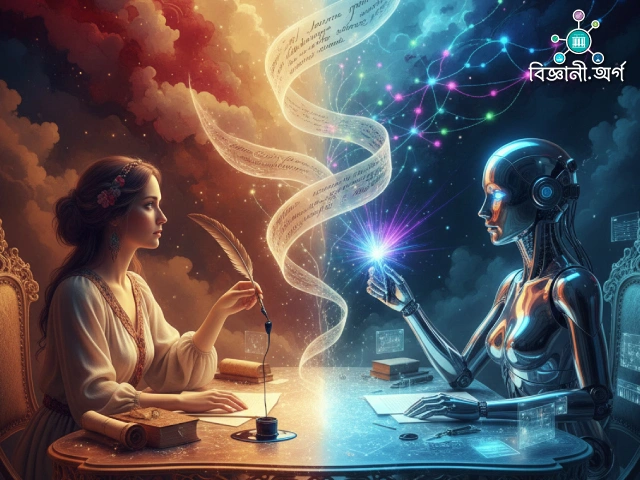
The time has come to face a question that is blurring the boundary between technology and human creativity—what happens if machines become capable of writing poetry? With today’s technological advancements, Artificial Intelligence (AI) has started to perform creative tasks just like humans, even composing literature and poetry. Once, we thought creativity—especially writing poetry—was a uniquely human trait. But now, AI technology has reached a stage where it can think, feel, and even dip into the depths of emotion much like a person. The real question, however, is—does this process truly count as creativity? Or is it merely a complex blend of data and algorithms?
Creativity, and especially literary creativity, is one of the most important and profound elements of human life. Poetry isn’t just an arrangement of words; it’s an intimate reflection of feelings, an expression of our perspectives on life and the world. It dives deep into a poet’s soul, giving new shape to their emotions, experiences, and thoughts. But in AI’s case, does it really have that “soul” or “experience”? Or is it simply functioning as a process based on language patterns?
You might not think at first that AI could write poetry, but thanks to technology’s progress, this is now a reality. For example, powerful language models like GPT-3 or GPT-4 can generate incredibly realistic and relevant poetry. They can even mimic the styles of classical poetry or challenge the conventions of modern verse to create something new. Can this technology complement human creativity, or is it simply a simulation—unable to capture true depth of feeling or soul?
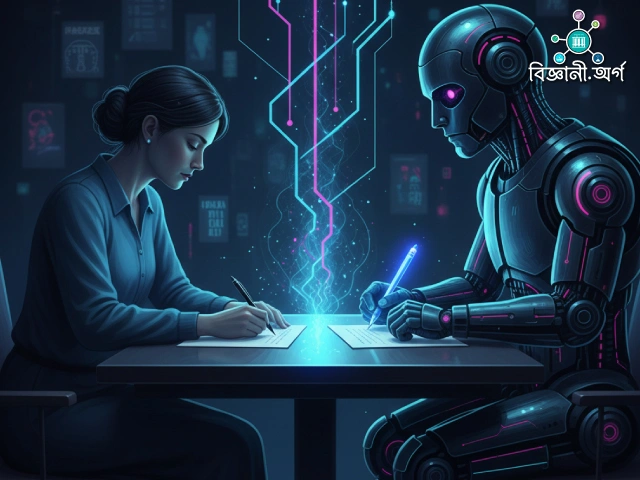
The algorithms behind AI poetry writing function by processing vast amounts of data. AI learns from a variety of literary works, poems, stories, and other writings, then uses these to generate new words, structures, and themes. Since it cannot truly access human internal feelings or experiences, what it produces is actually a statistical probability. If you ask AI to write a poem, it will generate words and sentences that generally follow poetic form. But can it truly capture the subtlety of that ineffable human feeling and experience that creates real poetry? That remains the question.
On the other hand, human creativity and the process of writing poetry is far more complex and inherent. A poet crafts their poetry from life experience, emotion, context, and perspective. In this process, they don’t just use language—they also infuse their feelings, culture, heritage, and philosophy. It’s a personal and profoundly human experience, something AI can never achieve. Human poetry is a deep reflection of the history of humanity and the human psyche.
The main part of the debate over AI-written poetry is—can it truly be “creative”? What exactly does creativity mean? Some argue that if a system can create something new, then it qualifies as creativity. Others believe that creativity isn’t only about generating patterns, but about emotions, inner thought, and engaging with the reality of life. While AI can create something that seems creative through language patterns, it can never truly comprehend the depth of human internal feeling.
However, the ability of AI to write poetry does pose a major question for us: when machines begin to think like us, will this change the very essence of human creativity and art? If a machine can sense like us and compose poetry, will the purity and depth of our own creations be lost? Or will it open new horizons for our creativity and art, marking the beginning of a new chapter in human history?
One important issue within this discussion is whether AI can truly complement our creativity. Will we one day be able to merge AI poetry and human poetry? The answer is not easy, but it certainly presents us with a new perspective while standing on the brink of today’s technology.
In short, when machines write poetry, it is not just a testament to technological progress—it challenges our very idea of what creativity means. It opens up new horizons, while also making us acknowledge our own innermost humanity. Thus, the integration of technology and creativity gives rise to new dimensions for thought, which may in the future help us understand the deeper connection between creativity and technology.