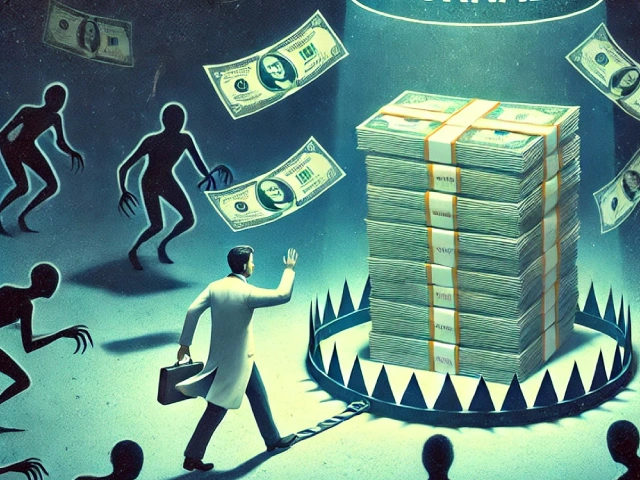
Rakib, a final year university student, has recently written his first research paper. He submitted it to a journal for publication. Within a few days, he received an email response—the paper had been accepted and would be published within just two weeks. The only condition was to pay a specified publication fee.
Although Rakib was delighted at the prospect of publishing his first research, a classmate expressed suspicion upon hearing about it. In reputable research journals, the peer review process usually takes three to six months, sometimes even longer, so how normal is it to get approval in just two weeks? Further investigation revealed that this journal is a predatory journal or a fraudulent publisher that publishes research quickly in exchange for money but fails to follow academic standards.
Every year, thousands of young researchers like Rakib fall victim to this deception. One study found that around 400,000 researches are published annually in predatory journals worldwide (source: Nature, 2023). This problem is also increasing day by day in Bangladesh. About 65 percent of Bangladeshi researchers receive offers from dubious journals at some stage of their careers (source: UGC Bangladesh, 2022).
What Are Predatory Journals and Why Are They Dangerous?
Predatory journals are publications that typically collect money from researchers in exchange for promises of rapid publication, but do not follow proper peer review processes. Most of these journals are not listed in internationally recognized research databases (such as Scopus, Web of Science, PubMed).
Publishing in a predatory journal can severely damage a researcher’s career and academic credibility. One study found that 80 percent of researchers who publish in predatory journals later fail to publish in reputable journals (source: Retraction Watch, 2022).
How to Identify Predatory Journals
It is extremely important for any researcher to be able to identify predatory journals. Here are some key characteristics—
1. Unusually rapid publication promises: It usually takes three to six months or sometimes up to a year to publish research in reputable journals. However, predatory journals promise publication within just two to three weeks.
2. No peer review of research: Quality journals have research reviewed by two or more independent experts. Predatory journals either skip this review process altogether or conduct it artificially quickly.
- No ISI or Scopus indexing: For world-class research publication, you should use journals listed in Scopus, Web of Science, or PubMed. If in doubt, it’s important to search for the journal’s name in these databases to confirm.
- Listed in Beall’s List or Cabell’s Blacklist: Scientist Jeffrey Beall maintains a list of predatory journals, known as Beall’s List. There’s also another database called Cabell’s Blacklist where dubious journals are published.
- Very high or suspicious publication fees: Open-access journals generally have publication fees ranging between $1,500 and $3,000 USD, depending on quality. However, many predatory journals offer publication for just $300 to $500, which is suspicious.
- No DOI (Digital Object Identifier) or fake DOI usage: Standard research publications use a DOI, which provides a permanent identity to the work. Many predatory journals either do not provide a DOI or, if they do, it’s not functional.
- Fake editorial board: Some journals use the names of well-known researchers on their websites, but those individuals usually have no real affiliation. If in doubt, you can contact the listed researchers directly.
What Are the Risks of Publishing in Predatory Journals?
A single wrong decision can damage a researcher’s career for life. Studies have shown—
- The academic community does not accept research published in predatory journals.
- Prospects of obtaining a PhD, postdoc, or scholarship at a reputable university are diminished.
- Future opportunities to publish in journals indexed by Scopus, Web of Science, or PubMed decrease.
- Chances of receiving academic positions or research funding drop.
- The quality of the research is called into question, and the academic community no longer values the researcher.
Conclusion
As a researcher, it is essential to ensure proper evaluation and publication of your research. Each year, over 150,000 studies published in predatory journals are canceled (source: DOAJ, 2023)—this is not just harmful to individuals but also to the entire scientific community.
Therefore, researchers should avoid publishing in suspicious journals and instead work with reputable, internationally recognized publications. Don’t let a wrong decision turn into lifelong regret.