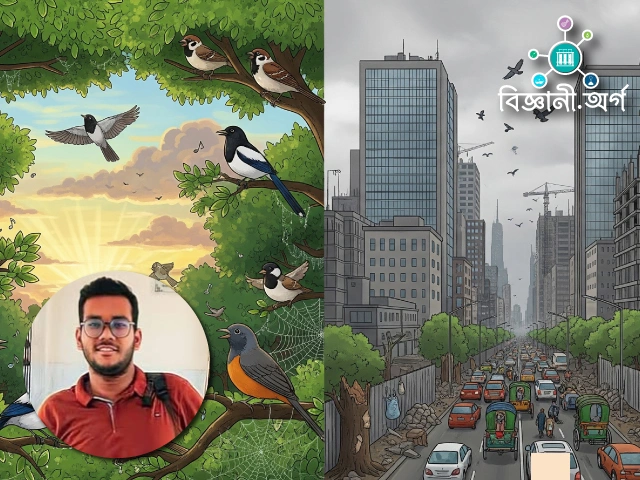
There was a time when mornings in urban Bangladesh were synonymous with the chirping of birds, the fresh scent of dew-covered leaves, and the dawn’s first light beckoning a new day. However, with rapid urbanization and environmental changes, that familiar scene has become rare. Many common bird species in the cities are now on the brink of extinction.
Birds are not just symbols of natural beauty—they are an essential part of the city’s ecosystem. Birds play a critical role in controlling insects, dispersing seeds, and maintaining the balance of the food chain. Yet, urbanization, pollution, and food shortages are threatening their existence.
Concerning statistics in the context of Bangladesh:
- According to the IUCN Bangladesh Red List (2015), a total of 1,619 bird species have been assessed in Bangladesh, of which at least 24% (about 390 species) are included in the “Threatened” category.
- According to BirdLife International (State of the World’s Birds 2022), globally about 49% of bird species are declining, only 6% are increasing in number, and 1 in every 8 bird species is at risk of extinction.
- Local observations indicate that the populations of House Sparrow, Oriental Magpie-Robin, and Common Myna have rapidly dropped in major cities like Dhaka, Chattogram, Khulna, and Sylhet over the past decade.
What are the reasons behind this?
Habitat Loss:
Cause: Rapid urbanization, the construction of high-rise buildings, roads, and industrial zones are destroying trees, shrubs, wetlands, and open fields. These used to be the main sites for birds’ breeding, resting, and feeding.
Impact:
- Losing nesting sites, birds are being forced to relocate.
- Locally resident species are becoming extinct in the cities.
Example: In Dhaka, the number of House Sparrows has dramatically decreased.
Research Source: BirdLife International states that habitat destruction in urban areas is the biggest reason for the decline in bird numbers.
Noise Pollution:
Cause: Constant noise from vehicle horns, metro trains, construction drills, and factory machinery disrupts the natural soundscape.
Impact:
- Bird calls and songs are altered, making it difficult to attract mates and mark territory.
- It becomes harder to give warning signals about predators, resulting in reduced breeding success.
Research Example: In Europe, Great Tit birds sing at higher frequencies in cities with loud noise levels, which negatively affects their reproduction.
Pesticide Use:
Cause: Excessive use of pesticides in urban gardens, rooftop gardens, and farmlands is reducing insect populations.
Impact:
- Food supply for insectivorous birds is diminishing.
- Chemicals from pesticides accumulate in birds’ bodies and thin out eggshells (as seen during the DDT era).
Research Example: Studies in the United States have shown that Neonicotinoid pesticides lead to weight loss and reduced breeding in birds.
Food Scarcity:
Cause: Loss of fruit trees, flowering plants, and grasslands has reduced the abundance of seeds, fruits, and insects.
Impact:
- Many birds are leaving cities due to food shortages.
- Rates of malnutrition and breeding failure are increasing.
Example: Food sources for Magpie-Robins, Mynas, and Sparrows in urban areas have decreased significantly from before.
Solutions:
- Habitat conservation and restoration: Create green corridors in cities, plant native trees, and preserve old trees.
- Control noise pollution: Establish quiet zones, restrict horns, and use noise-control devices during construction.
- Chemical control: Promote organic agriculture, natural pest management, and legal restrictions on pesticide use.
- Increase food sources: Plant trees in parks and rooftop gardens that provide flowers, fruits, and seeds; install bird feeders.
- Legal protection and research: Declare protected areas during breeding seasons, implement bird monitoring programs, and prohibit hunting.
- Public awareness: Establish bird clubs in schools, launch social media campaigns, and organize annual bird censuses.
Final Thoughts:
Bird conservation is not just about saving a species—it is about protecting our environment, agriculture, and mental well-being. To conserve birds in Bangladeshi cities, urban planning, law enforcement, and public engagement must work together. If we do not take action now, many familiar birds will only become history in the next decade or two.
Md. Fahad Husain
Student, Department of Zoology.
National University, Bangladesh.