Episode 1: What Does It Mean to Be a Scientist? More Than Just a Researcher, a Thinker
Starting With a Personal Story
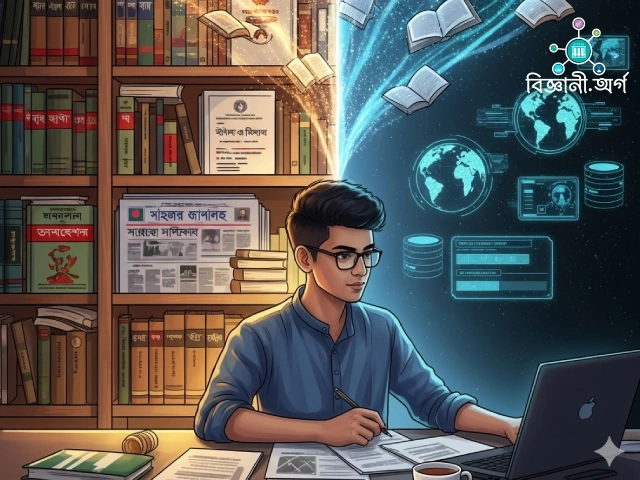
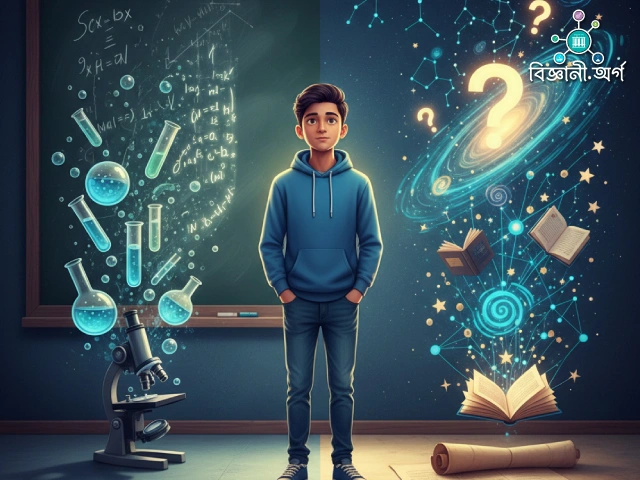
As a child, whenever I heard someone say, “He is a scientist,” I would picture a person in a white lab coat, surrounded by test tubes, microscopes, and fountains of colorful chemicals in glass bottles. If you did well in science tests at school, everyone would say, “You’ll definitely become a scientist when you grow up!” But over time, I realized—a scientist isn’t just someone who sits in a laboratory. A scientist is a thinker, an explorer who wants to understand the world, asks questions, and creates new paths for humanity.
The goal of today’s article is to widen the definition of ‘scientist’ for you all—the future youth of Bangladesh.
Scientist: Not Just Someone in a Laboratory
In our society, there is a common belief that a scientist is just someone busy with experiments in a lab. But history tells us—the greatest scientists were people who thought differently, who constantly challenged the status quo and questioned conventional wisdom.
Example 1: Einstein—From Ordinary Patent Clerk to World-Renowned Thinker
When Albert Einstein wrote his famous “Special Theory of Relativity,” he was working in a patent office. There was no lab around him, no glass bottles or chemistry—only imagination, thought, and logic.
The key to his scientific success was the originality of his thinking.
Example 2: Satyendra Nath Bose—A Questioner
Satyendra Nath Bose, the pride of Bengal, used to say—“I do not know more than what I know.” He too, not from the lab but through thought and calculation, revolutionized physics. One of his papers later led to the discovery of the particle called the “Boson,” which is indispensable to modern quantum physics.
How Do Scientists Think Differently?
So how does a scientist think? The following traits are found in a true scientist:
- Questioning: They constantly ask the world—Why is the sky blue? Why do leaves fall? Why do people get sick?
- Simplifying Complexity: Scientists break even complicated problems into small parts and look for solutions step by step.
- Evidence-Based Decisions: They do not form opinions unless there is sufficient evidence.
- Balancing Doubt and Curiosity: Scientists doubt, but are not afraid. They move forward, hand in hand with curiosity.
Pioneers of Science in Bangladesh: Our Inspiration
We often think that scientific research in Bangladesh is lagging behind. But the reality is different.
- Dr. M. Shamsher Ali, a nuclear scientist, who has worked on the fundamentals of physics and played a groundbreaking role in education.
- Dr. Feroze Ahmed, a geologist, who led the way in research on tectonic plates and earthquakes in Bangladesh.
- Dr. Zafar Iqbal, mathematician and writer, is a unique example of popularizing science among the youth.
They didn’t just do research—they thought, they reflected on the future of society, and most importantly—paved the way for younger generations.
Can I Be a Scientist?
You might be wondering—can I become a scientist? I barely know anything right now!
The answer: Yes, you can.
If you have a desire to learn, ask questions, doubt, and are eager to find new solutions, then you are already on the path to being a scientist.
Thinking deeply about any subject is the journey of a scientist. Whether it’s mathematics, literature, the environment, or technology—thinkers are needed everywhere.
The First Step to Becoming a Scientist: Cultivating the Mindset
Let your journey begin today. Awaken your power of thought. You can build these habits:
- Read a science-oriented book for just 15 minutes every day, such as Carl Sagan’s The Demon-Haunted World.
- In your diary, write down a “Question of the Day” every day: for example, “Why do people sleep?”, “Why does thunder rumble?”
- Take part in logical discussions with friends.
- Listen to science-based discussions on YouTube or podcasts, especially those featuring Bengali scientists.
- Try to learn basic programming, statistics, and research methods.
Ask Questions: Knowledge Will Come
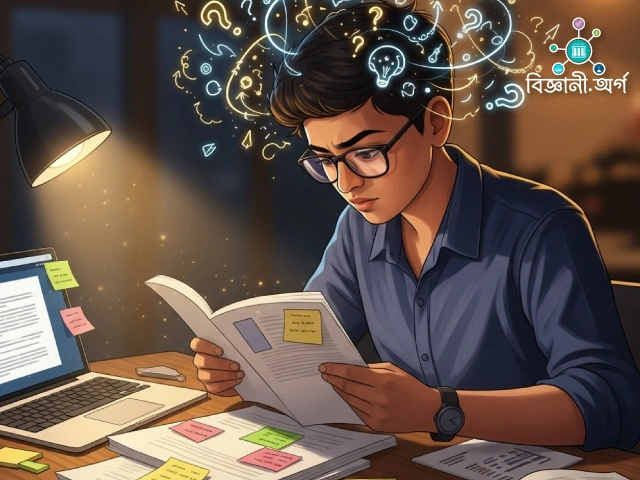
The greatest weapon of a true scientist is the question. The more you ask, the more you will know. Don’t be afraid to ask questions. The courage to ask about what you don’t know is the mark of a true thinker.
Example: Suppose a teacher says in class, “The sun rises in the east.” If you ask, “Why doesn’t it rise in the west?”—you’ve taken your first step as a thinker.
Ask Yourself
- What am I most curious about?
- What can I think about for hours without getting tired?
- How can I find a solution to this problem?
- How can I question what others accept unquestioningly?
Searching for answers to these questions is how you become a scientist.
Conclusion: The Path of a Scientist Is the Path of Thinking
If you want to become a scientist of the future, start now by learning to think. Research comes later. First, you need an active mind, a curious heart, and a brave soul.
Go to sleep every night with a question. Wake up every morning with a new thought. Remember, every great discovery in the world began with a small question.
One-Minute Action Plan
- 📘 Start reading a science-based book today
- 📝 Create your own “Question Diary”
- 🎧 Subscribe to a science podcast (for example, Science Vs)
- 📷 Once a week, post about your questions on Instagram or Facebook
- 👥 Find a friend to have regular science discussions with
You, the youth of today, are the true thinkers—the scientists of the future.
Come, let’s learn to ask questions. Let’s learn to think. And let’s forge ahead, lighting the way with knowledge.
🔗 This is the first article in the ‘Scientists of the Future: A Journey Begins’ series. Coming up next: “How Do I Find My Research Interest?”
Send us your thoughts: [email protected]