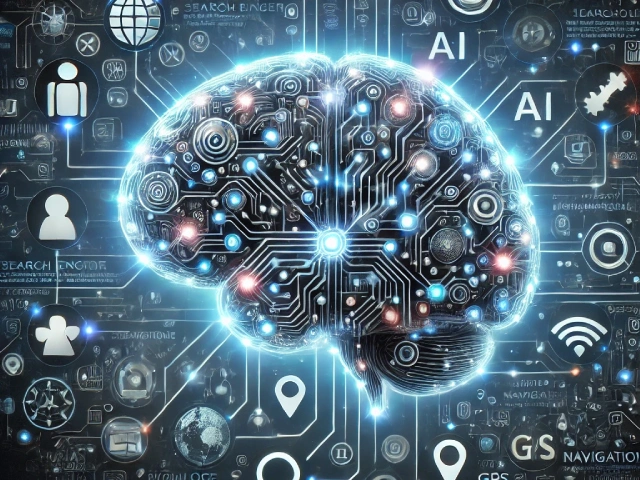
Have you ever walked into a dark room and suddenly forgotten why you went there? Or Googled something important, only to forget what you were searching for a couple of seconds later? Who hasn’t had experiences like these! Today’s story is about how technology is influencing the way our brains work, especially when it comes to these small memory lapses and forgetfulness.
The Beginning: Getting Used to a ‘Digital Memory’
Once, people preserved knowledge through memory and storytelling. Later, manuscripts, books, and libraries took over. Now, we have the Internet at our fingertips—any information in the world is just a moment away. As a result, we are remembering less ourselves, outsourcing the job of remembering to digital devices and online tools. This isn’t just an assumption; research backs it up as well.
‘Google Effect’: Remembering Where Information Is, Not What It Is
In 2011, American psychologist Betsy Sparrow and her colleagues published a study in the journal “Science.” They found that instead of remembering the information itself, people now tend to remember where they can find it—like how to search on Google to access it easily. This tendency is called the ‘Google Effect.’ Most participants in the study focused more on remembering ‘where information is’ rather than the information itself.
A Look at the Statistics
One survey found that about 60-70% of people now search Google for any unknown information.
And after searching on Google, only 20-25% of people are able to remember the information long-term.
The rest mainly remember “what to search for” or “which website the information is on”—not the actual result.
The Story of GPS and Getting Lost
It’s not just about searching for information—technology is also affecting our ability to remember roads and directions. According to psychologists, people who regularly depend on GPS often struggle to find their way on their own later. This is similar to someone who has never driven by themselves. For example, a study by McGill University in Canada found that regular GPS users have comparatively less active ‘hippocampus’ regions in their brains, which are crucial for remembering places and reading maps.
Notable Figures
Studies show that among regular GPS users, 40-50% fail to memorize routes.
In contrast, among those who rely on maps or their own sense of direction, this rate is 20-25%.
How Much Further Can AI Change Our Thinking?
Just as people feel, “I know so much,” after using tools like Google, using AI chatbots or advanced search engines is amplifying this mindset even further. A study found that when participants learned answers by using Google, they felt smarter than others—even if their actual knowledge or memory didn’t increase!
However, AI not only retrieves information but can also generate it (though sometimes incorrectly). Even if a chatbot provides false or misleading information, reading it repeatedly might eventually convince us that it’s true. This phenomenon is called ‘memory rewriting’ or the memory distortion problem caused by ‘AI-generated content.’
A Look at Recent Research
A 2023 survey reported that people who regularly rely on AI chatbots are learning false information alongside real facts.
Two-thirds of users said they assume the chatbot’s opinions are ‘true’ without verifying the information.
So, Should We Be Concerned?
Mankind has always adapted to new technology. From oral storytelling to books, from books to digital media—this is how our knowledge and understanding have evolved. AI is the latest addition to that evolution. Every medium in the past has helped us store and access knowledge. But AI can also shape that knowledge—it can ‘produce’ new information by mixing facts and fiction. So we aren’t just outsourcing our memories; we are handing over the responsibility of sorting, filtering, and even creating information without questioning it.
This creates problems beyond forgetfulness; we risk accepting incorrect or incomplete information and losing the habit of critical thinking. As active readers or learners, it is our responsibility to verify AI-dependent information, check the sources, and try to understand things on our own.
Final Thoughts: Maintain Rational Thinking
Using AI or digital tools isn’t bad—in fact, they save us time and expand our world of knowledge. But at the very least, the work of verifying and analyzing has to be done by us. After getting information, it’s important to apply our own reasoning and critical thinking. Otherwise, we run the risk of accepting whatever AI serves up as the sole ‘truth.’
So move forward with technology as your companion, but keep a firm hold on your own intelligence and rational thinking. Take a moment after learning anything to ask yourself—is this true, and where did it come from? In this digital era, artificial intelligence can be a great friend, but let’s make sure we remain in control of that friendship—and use it to enrich ourselves even more.