Author – Azizul Haque
Assistant Professor, Yeungnam University.
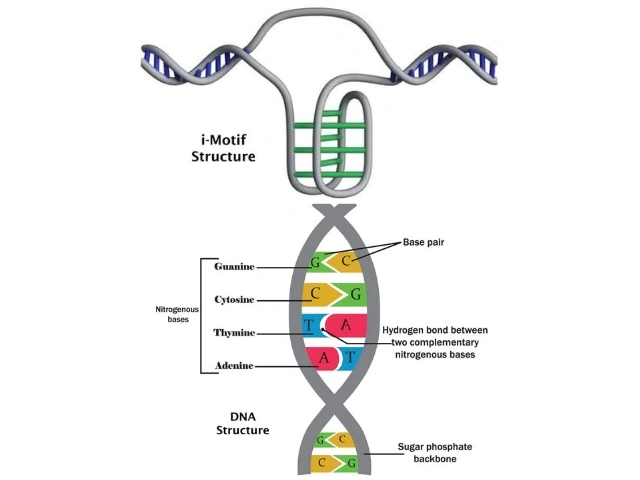
Our common understanding of DNA (Deoxyribonucleic Acid) mainly centers on its double helix structure, which was discovered by James D. Watson and Francis Crick in 1953 by analyzing the X-ray crystallography images produced by scientist Rosalind Franklin. They showed that DNA consists of two strands twisted around each other to form a spiral shape. However, a recent study has revealed a new and mysterious structure of DNA, known as the i-motif. This structure is quite different from the double helix and its discovery has opened new horizons in biology.
i-motif
The concept of the i-motif was first introduced in the 1990s. Scientists observed this while studying the structure of DNA in the laboratory. However, this structure had never been detected in living cells, leading to skepticism among scientists about whether it actually exists in vivo. It was considered too unstable, and it was thought that it could not persist under normal physiological conditions in the body. But in 2018, researchers at the Garvan Institute of Medical Research in Australia identified the i-motif in living human cells for the first time. They created a special antibody that binds only with the i-motif, allowing them to easily detect the structure inside cells. Using this antibody, they observed that the i-motif is present in various parts of human cells and plays an active role.
Differences Between i-motif and Double Helix
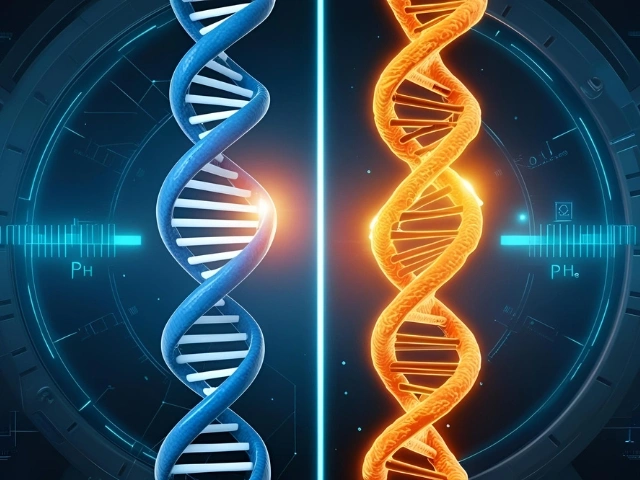
The double helix structure of DNA consists of two strands, where four types of nucleotides (Adenine, Thymine, Cytosine, and Guanine) pair according to specific rules. Adenine (A) always pairs with Thymine (T), and Cytosine (C) always pairs with Guanine (G). This arrangement is essential for DNA’s stability and data storage. In contrast, the structure of the i-motif is completely different from the double helix. Here, Cytosine (C) bases bind with each other instead of the usual G (Guanine) base. This structure appears as a tight knot, which is quite distinct compared to the straight and twisted form of the double helix. The i-motif typically forms in specific regions of DNA, especially when the DNA is in a low pH or acidic environment. Under these conditions, Cytosine bases combine to form a unique four-stranded structure. An important feature of the i-motif is its instability and variability. It forms depending on the cell’s environment and unfolds easily. When the environment is acidic, it stays folded like a knot, but when the environment returns to normal, it unfolds again. This instability sets the i-motif apart from the more permanent structure of the double helix. The double helix usually doesn’t change easily with environmental variations and remains much more stable.
The Significance of the i-motif
Why is the discovery of the i-motif so important? Because it helps us analyze DNA from a completely new perspective, challenging traditional ideas. Firstly, it proves that DNA is not limited to the double helix; its structure can be much more diverse. This new form of DNA is directly linked to gene regulation processes in living cells. The i-motif is typically found in areas that play crucial roles in gene regulation and expression. It can function like a switch, determining which genes are active or inactive. Secondly, the i-motif’s dependence on an acidic environment makes it extremely important for cellular function and development. During various cellular processes such as division and growth, and in gene regulation, pH or acidity can change. The i-motif can adapt to these changes, and may help regulate gene expression.
Future Prospects of the i-motif
The discovery of the i-motif has unveiled a new direction in DNA research. Beyond gene regulation, it may open new possibilities in disease diagnosis and medicine in the future. One possibility is the control of genetic diseases such as cancer and other hereditary disorders using the i-motif. Since it can regulate gene activity, it may become possible to directly manage gene function using this structure. For example, the switching mechanism of the i-motif could potentially be employed to stop uncontrolled growth in cancer cells. With further research, the i-motif may play a vital role in future gene therapy and genetic engineering. Scientists hope it will pave new pathways for the diagnosis and treatment of genetic diseases.
Note: Collected from Facebook:——–
https://www.facebook.com/share/p/1PJMzziHgF/