Chowdhury Fakhrul Alam,
Bangladesh Krishi Bank
Science and technology writer, gadget enthusiast, and an incredibly curious person. I love photography and traveling. It pains me to see talent go to waste, so my main goal is to spark people’s interest through my writing.
Maheen’s college is on vacation for Ramadan. He had long wished to visit Dhaka during the holidays and explore its notable landmarks. He reached Dhaka by bus, but became exasperated seeing the terrible traffic! Still, he didn’t give up. He took out his smartphone, opened Google Maps, and set Ahsan Manzil as his destination. Within seconds, the app analyzed countless possible routes and suggested the fastest one. Calling an Uber, he reached his destination on time. Thanks to technology, what could have been a complicated journey became simple.
Now imagine Maheen doesn’t have a smartphone. There are 10 possible routes from Uttara to Ahsan Manzil. To find the quickest route, he’d have to check each one himself—a tedious, impractical, and time-consuming job—or rely on someone else’s advice, which may not be reliable. But for a computer, it’s easy. Using Google’s cloud server algorithms, it can sift through thousands of roads in seconds and find the most optimal path. That’s the power of computing: solving complex problems quickly and accurately.
However, even this powerful classical computer has its limitations. Some problems are so complex that even years of processing wouldn’t be enough to solve them. This is where quantum computing comes in—opening a whole new world of possibilities.
The unit of computational power in classical computers is the bit—0 or 1. 0 means a transistor’s switch is off, 1 means it’s on. Thousands of these minute transistor switches are connected together like a spider’s web to form a chiplet, or a part of a chip. On the basis of input, these millions of switches automatically conduct millions of calculations, yielding results as output. But there are some problems that, due to the sequential nature of classical computing, could take thousands of years to solve.
For example, consider a scientist who researches atoms and subatomic particles. For the sake of research, they often need to simulate the structure, properties, and behaviors of an electron within a computer. As we know, classical computers must express every calculation in binary—absolute 0s or 1s. But according to quantum mechanics, an electron’s position isn’t fixed; it’s described by a probability distribution, encompassing countless possible values. As such, its mathematical description cannot fit into any absolute binary-based computational framework. This is because the system of calculation itself is fundamentally different.
Let me give you an example—suppose I ask you, “How far is your house from here?”
And I add, “You must answer by choosing either of two options.”
a) Yes
b) No
Will I get a correct answer?
The limitation doesn’t come from science itself, but from classical bits that can be only 0 or 1—so these quantum states cannot be properly represented. As a result, simulating quantum systems (like a hydrogen atom) with classical computers becomes impossibly time-consuming. In crucial fields such as weather forecasting, drug development, and data security, classical computers are reaching their limits.
Let’s return to Maheen’s example. Imagine there are 10 routes from Uttara to Ahsan Manzil. A classical computer would analyze them step by step to find the quickest. But a quantum computer could examine all routes simultaneously and directly pinpoint the fastest one—much quicker and more efficiently.
But building a quantum computer and operating it reliably is no easy feat. There are several major challenges ahead:
1. Qubit Stability: In quantum computers, the basic unit for storing and processing information is the qubit. Qubits are extremely sensitive and can easily lose their stored data due to environmental influences.
2. Quantum Decoherence: Maintaining a qubit’s quantum state for extended periods is difficult. They quickly revert to normal states, decreasing computational reliability.
3. Error Correction: Quantum computers are far more prone to errors. Complex technologies must be implemented for detecting and correcting such errors, a process still under development.
4. Scaling: Effective quantum computers require large numbers of qubits. Increasing the number and maintaining connections between them is a significant challenge.
5. Technological Complexity: Building and running quantum computers needs advanced tech—such as ultra-low temperatures and intricate control systems.
Now, let’s talk about Microsoft’s recent breakthrough—the Majorana-01 quantum chip. This chip was built using an entirely new approach, requiring Microsoft to discover a new kind of material property (the topological state). Years of intensive research and effort led them to utilize the properties of this novel material phase to create a type of nano-scale ring, known as a topological conductor, which acts as a qubit. This technology is several steps ahead and more effective than other contemporary qubit technologies. Now, let’s see how the world’s first Quantum Processing Unit (QPU) with a topological core addresses previous barriers—here’s a summary of how Microsoft’s “Majorana-1” tackles the challenges of quantum computing:
1. Qubit Stability:
The Majorana-1 uses “topological qubits,” which are much more stable than typical qubits. These qubits are formed using special particles called “Majorana zero modes”, which secure the data and reduce chances of error.
2. Quantum Decoherence:
Topological protection shields qubits from environmental influences, so their quantum state lasts longer—drastically reducing the problem of decoherence.
3. Error Correction:
Majorana-1’s intrinsic stability lowers the chance of errors, making error correction easier. Unlike conventional methods, fewer qubits are needed for error correction.
4. Scaling:
Microsoft claims this technology enables many more qubits to be placed on a single chip. Their aim is to scale to a million qubits—crucial for functional quantum computing.
5. Technological Complexity:
A unique material, the “topoconductor,” has been used to create and control topological qubits. Microsoft continues working to make this technology more accessible, even though it is still a complex process.
Many of Bangladesh’s major challenges could be addressed by quantum computing in the future—for example, more accurate natural disaster forecasts, more effective economic models, enhanced data security, and significant advances in medical science.
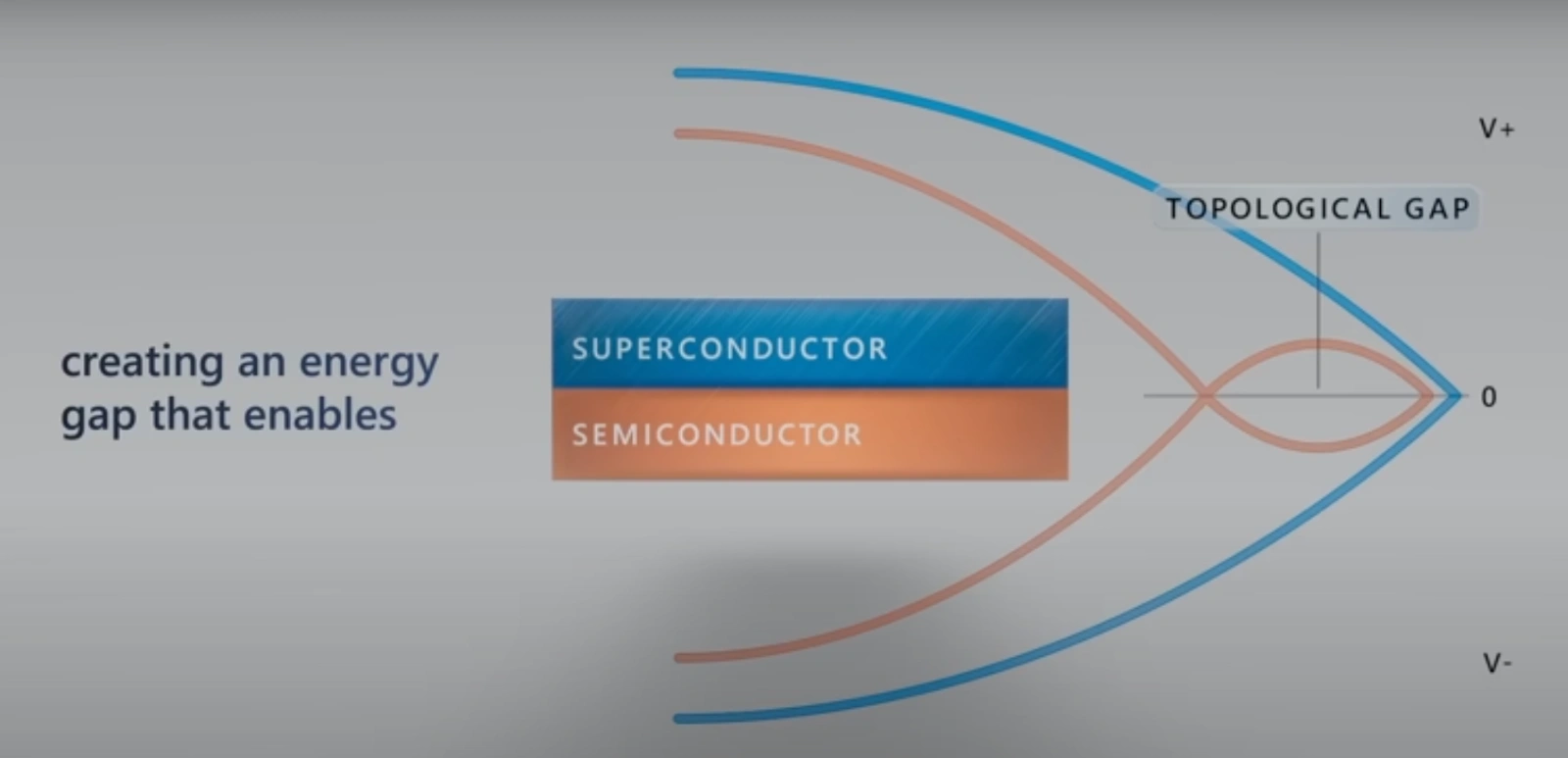
Image 1: Diagram of Topological Gap
This illustration shows the concept of the topological gap—a unique energy state formed between a superconductor and a semiconductor. The gap enhances the stability of the quantum state via Majorana zero modes, which is the technology used in Microsoft’s Majorana-1 chip.
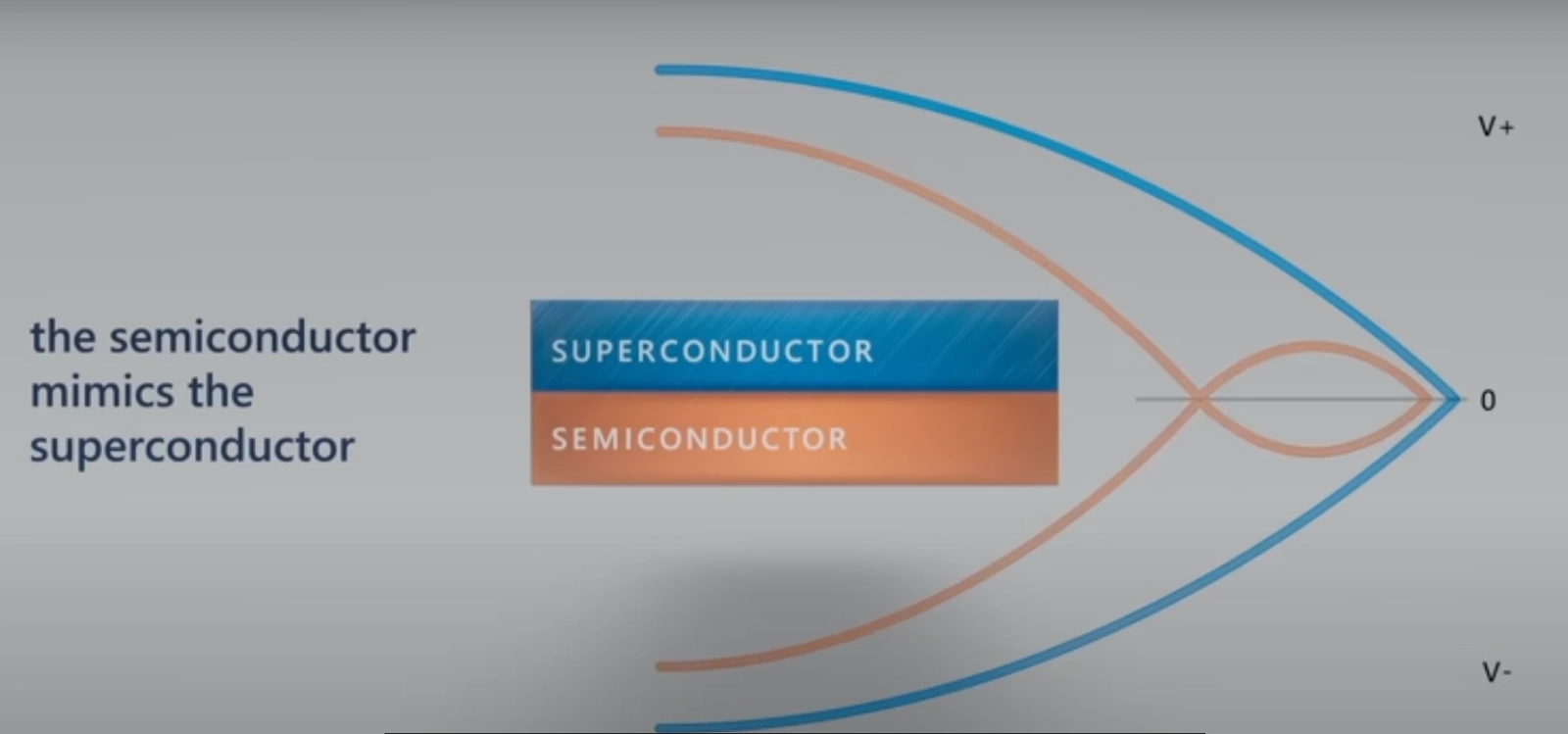
Image 2: Diagram of Semiconductor Mimicking Superconductor
By combining indium arsenide (semiconductor) and aluminum (a superconductor at -273.15°C), a hybrid material called Topoconductor is created. When exposed to extreme cold and a magnetic field, it forms a topological state where Majorana Zero Modes (MZMs) appear at the ends of nanowires. These MZMs stabilize the topological qubits in the Majorana-1 chip, protecting quantum information from environmental influences.

Image 3: Ettore Majorana (1906-1938)
Ettore Majorana, the physicist who first proposed the theory of Majorana particles. His discovery is the foundation of Microsoft’s Majorana-1 chip.
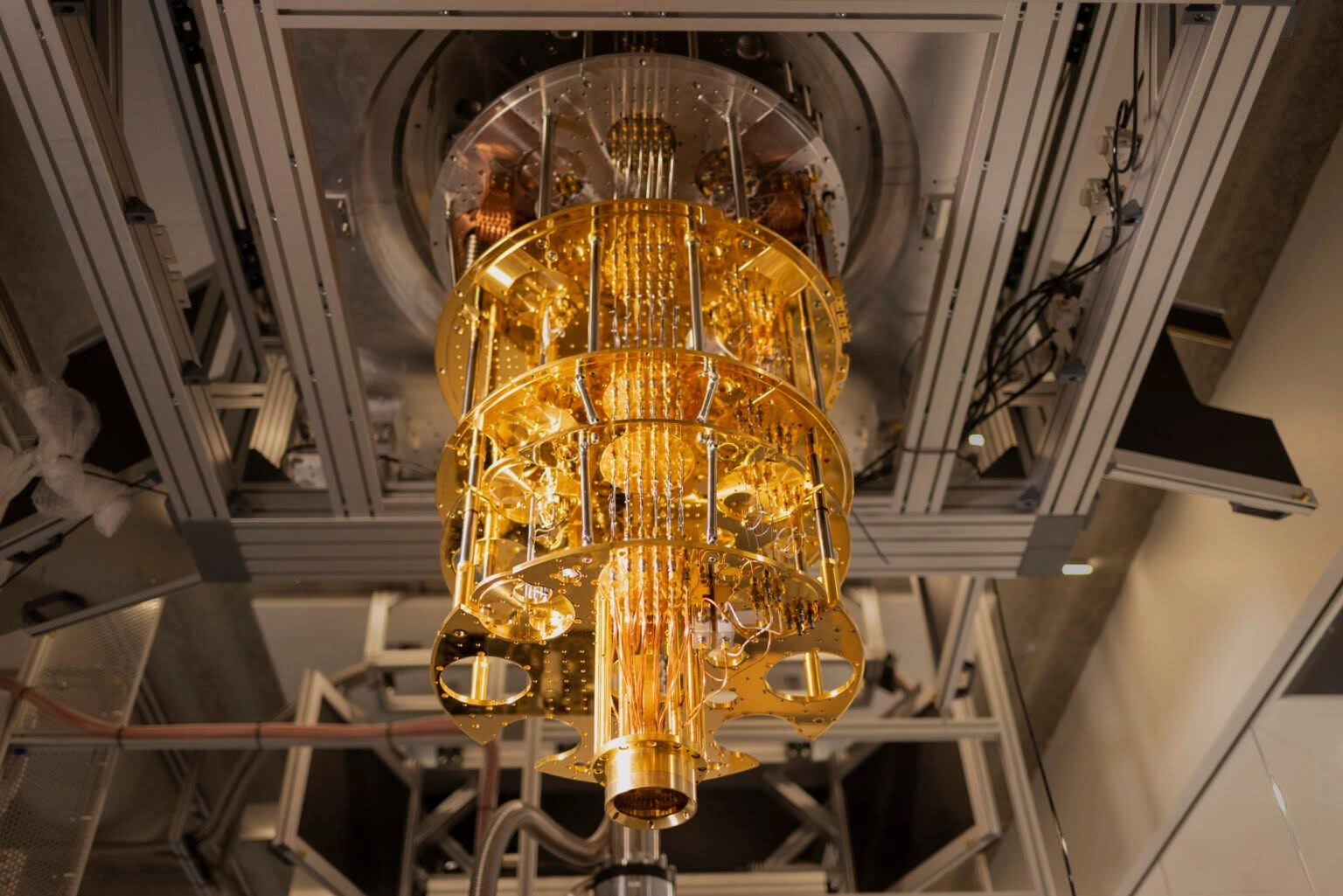
Image 4: Quantum Computer Hardware
This image shows the complex hardware of a quantum computer, where the qubits operate in superposition. Apart from the chip itself, nearly all the hardware is used to maintain the chip at ultra-cold temperatures (near -273.15°C).
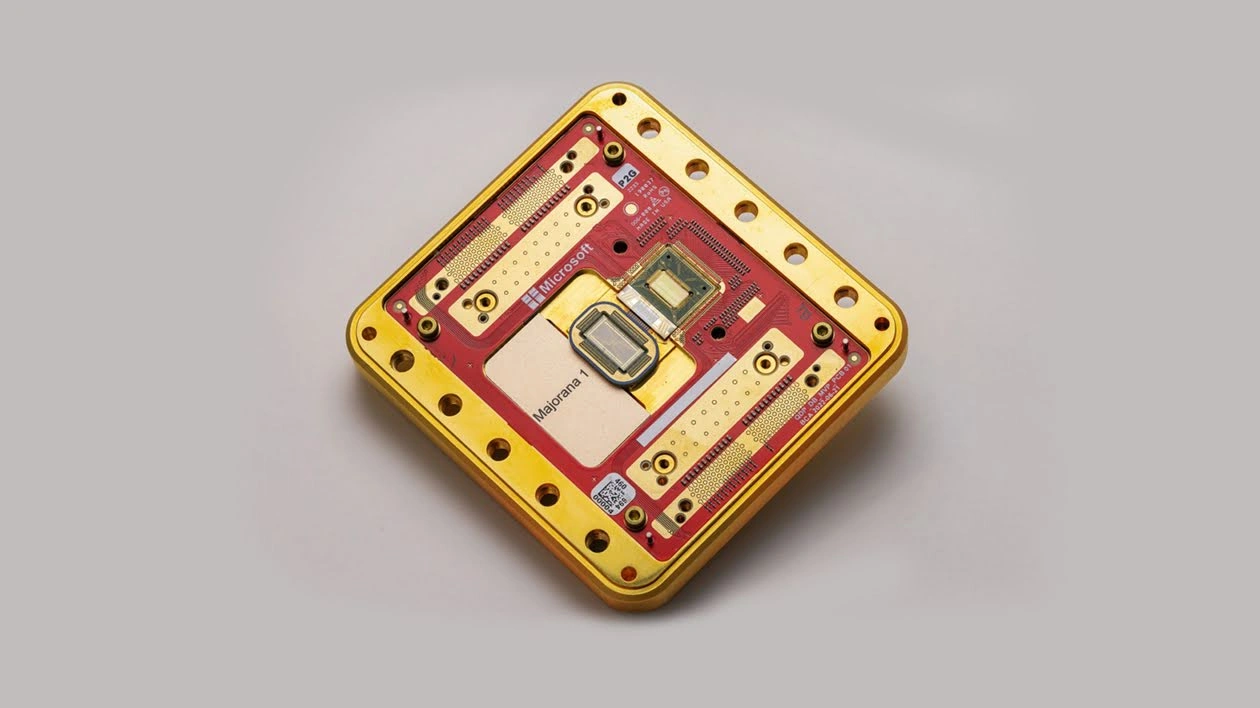
Image 5: Majorana-1 Quantum Chip