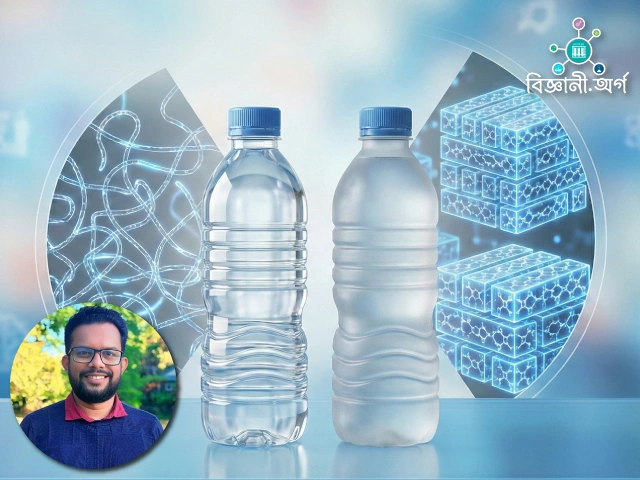
In a recent interview on biggani.org, Dr. Mohammad Sagor Hossain explained a key concept in materials science with simple examples—the processing–structure–property relationship. Although this may sound complicated at first, he showed that the essence of this concept is hidden in something as ordinary as a plastic bottle we use every day.
In the interview, he cites the example of a regular water bottle. Bottles made from the same type of plastic can sometimes appear very clear and shiny, while other times they look slightly cloudy or hazy. From the outside, it might seem like the material is identical—so why the difference? Dr. Sagor Hossain explains that the core reason lies in how the material is processed, what its internal structure is like, and how that structure influences its external properties—an intricate interplay of these three factors.
He explains that when plastic is melted at a specific temperature to make bottles, if it is cooled very quickly, the bottle becomes much clearer and more transparent. The liquid inside is easy to see. But if the same material is cooled slowly after melting, the bottle does not stay as transparent; it becomes somewhat cloudy. In other words, the same plastic, when cooled differently, forms a different internal structure, and that altered structure leads to different external properties.
Through this example, Dr. Sagor Hossain illustrates that materials science is not just about “what it’s made of,” but also “how it’s made.” At what temperature a material is melted and how quickly it is cooled—these processing differences change the internal microstructure. That microstructure, in turn, determines whether the material will be strong or weak, clear or cloudy, or how suitable it will be for a particular use.
He adds in the interview that when factories choose materials for a specific application, knowing the name of the material is not enough. How strong it needs to be, how much flexibility is required, or even what it should look like—all of these needs must be matched with the right processing method. The same material, when processed differently, can become suitable for different uses.
Through this discussion, Dr. Mohammad Sagor Hossain highlights a fundamental truth of materials science—the deep interconnection between processing, internal structure, and external properties. Ultimately, how a material is made determines what we can do with it. With his simple examples in this biggani.org interview, he makes these complex ideas accessible even to general readers.
To learn more, readers can check out the full interview with Dr. Mohammad Sagor Hossain published on biggani.org: