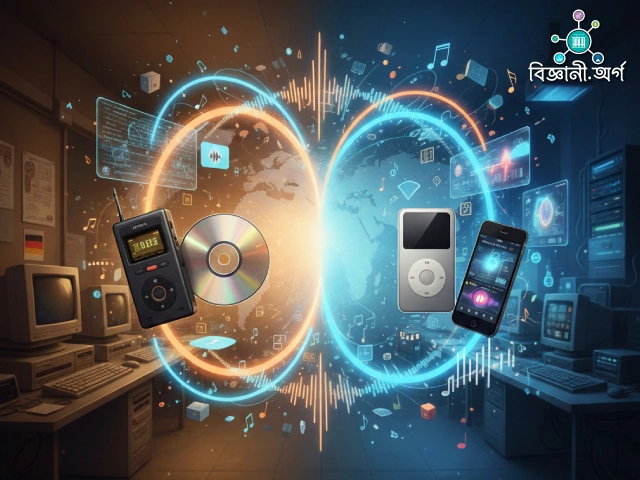
July 1995. A group of scientists in Germany chose the name for a new audio file format—through an internal email vote. The name was short, but it was a giant leap for the future: MP3. No one could have guessed at the time that these three letters would not only transform the world of music but also change our daily culture. The story that followed is a remarkable history of technological and behavioral transformation.
For those who listened to music on mobile phones or iPods in the early 2000s, MP3 brings back emotional memories. When a 16-megabyte MP3 player could hold only four songs, it was still a marvel. A few years later, Apple launched the iPod with 5 gigabytes of space, and people realized for the first time—it was possible to carry a thousand songs in a tiny device. Behind this revolution was Germany’s Fraunhofer IIS, based in Erlangen.
The researchers at Fraunhofer were trying to answer a question: how can sound be stored in a digital format so that it takes up as little space as possible, without a significant loss in quality? This idea gave birth to MPEG-1 Audio Layer 3—commonly known as MP3. Its greatest strength was ‘lossy compression’. By leveraging the limits of human hearing, unnecessary sound data was removed, making files much smaller—yet there was hardly any noticeable difference to the ear.
Once the name was chosen, it didn’t take long for the technology to become popular. The Fraunhofer team demonstrated their goal—MP3 files could be played on small, portable devices. This sparked a new era. In the late 1990s and early 2000s, MP3 players spread worldwide. Winamp, Napster, LimeWire—these names became not just software for a generation but symbols of a new culture.
Apple’s founder Steve Jobs used this technology to create the iPod, which became one of the most successful products in tech history. At the same time, platforms like Napster sparked a new wave of global music sharing. It turned music into a real example of globalization.
MP3 brought not just a technological success, but a massive economic one as well. The Fraunhofer Society earned hundreds of millions of euros from MP3 patents. They used this income to expand their research, turning Fraunhofer IIS in Erlangen into the organization’s largest research institute. After MP3’s success, they focused on developing even more advanced audio codecs—a legacy we still feel today.
Although MP3 is no longer as common today, its legacy lives on at the heart of modern audio streaming. Successor codecs like xHE-AAC are now in the hands of billions—whether in podcasts, movies, or music streaming. The clear, high-quality audio we hear on Spotify, YouTube, or Netflix in a compact size owes much to the long shadow of MP3.
A fun chapter in this technology’s history: the first song ever converted to MP3 was Suzanne Vega’s “Tom’s Diner.” This almost entirely a cappella track was perfect for testing the codec. Even more amusing, Tom’s Diner is actually a restaurant in New York City, later known as the famous “Monk’s Cafe” in the sitcom Seinfeld.
But the MP3 revolution was not always positive. This format ushered in a new era of music piracy around the world. Illegal downloading and sharing of songs caused considerable financial losses for record companies and artists. Still, in the history of technology, MP3 is a name that remains an inseparable part of both positive and negative discussions.
MP3’s arrival in Bangladesh was a story of its own. In the 2000s, urban computer shops began offering songs burned onto CDs—“one song for one taka.” Exchanging music via mobile Bluetooth or infrared was a joyful experience for youth across both villages and cities. In university dorms, village tea stalls, and city buses—MP3 was everywhere.
Today, we are moving towards AI-powered audio, 3D spatial sound, and lossless formats. Still, the roots of this technological revolution are found within MP3. What began as research in a small lab in Erlangen now forms the basis of the audio experiences of billions.
MP3 didn’t just change the way we listen to music—it transformed cultural habits, information exchange, and how we use technology. It proved just how deeply science and technology can affect our daily lives. Today’s young generation, making podcasts or producing music on YouTube, may not even realize that their creative freedom is built upon the long journey of a once-tiny file format.
On MP3’s birthday, we should remember those scientists—who dreamed of spreading music without boundaries, and made it a reality. A small file format that sparked a big revolution for the world.