Written by:
News Desk, Biggani.org |
Contact: [email protected]
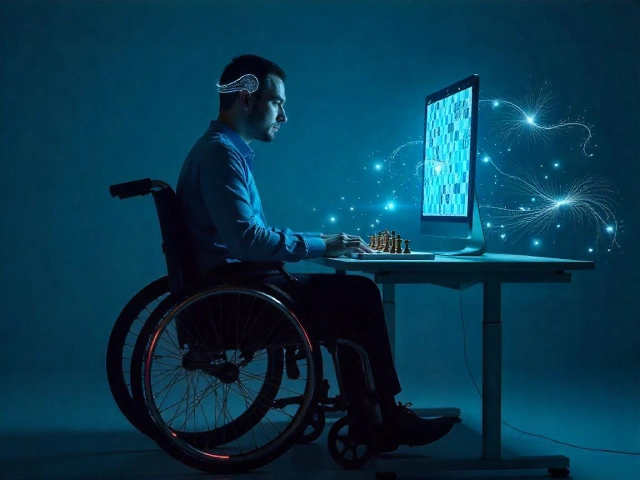
Noland Arbaugh became paralyzed at only 30 years old in a diving accident. Yet today, he plays chess and listens to music on his computer—using nothing but his thoughts. The miracle behind this reality is Elon Musk’s neurotechnology company, Neuralink.
What is Neuralink and How Does it Work?
In 2016, Elon Musk founded Neuralink—a neurotechnology company aiming to connect the human brain directly to computers. Their main innovation, the “N1 Implant,” is a cutting-edge Brain-Computer Interface (BCI) technology.
The N1 implant is placed in the brain with the help of a robot. It uses more than 1,000 ultra-thin electrodes to capture neural signals. These signals are wirelessly transmitted to a computer, allowing users to control cursors, use apps, and play games purely by thinking.
The Life-changing Moment for Noland
Noland is one of the first human participants in Neuralink’s experimental trials. Within just a few weeks of getting the implant, he stunned the world by playing chess using only his mind. One of his videos has already gone viral on YouTube, where Noland shares his extraordinary experience and unwavering mindset.
The Scientific and Social Importance of Neuralink
Neuralink is not just for those with paralysis, but could open up new doors for future technology:
- Improved quality of life for the paralyzed: Enabling independent communication and daily living.
- Advanced treatment for neurodegenerative diseases: Potential for more effective therapies for Parkinson’s, Alzheimer’s, ALS, and similar conditions.
- Mental health management: Faster diagnosis and control of mental health issues like depression, anxiety, and PTSD.
- Enhancement of human abilities: Just as smartphones have extended our memory and knowledge, Neuralink could further enhance learning ability, memory, and human intellect in the future.
- Human-machine interface: Establishing communication with machines or AI using only thought, without language.
Future Possibilities
In Elon Musk’s words, Neuralink could lay the foundation for “human-AI symbiosis.” Understanding and controlling complex brain functions could become possible, and this technology may become essential for future civilization. It could be a revolutionary milestone in the progress of humanity.
Technical and Ethical Challenges
Despite its promise, technologies like Neuralink come with certain ethical and societal challenges:
- Ensuring the privacy of brain data.
- Preventing the risk of hacking personal thoughts or memories.
- Addressing the risk of overdependence on technology.
Strict guidelines and robust monitoring systems are needed to avoid these risks.
Final Thoughts
Noland’s story is a brilliant example of human courage and determination alongside technological progress. This innovation by Neuralink will not only change the lives of people with paralysis, but could also redefine the future of technology use.
Do you think we’ll control our phones or do writing with our minds in the future?
Share your thoughts in the comments.