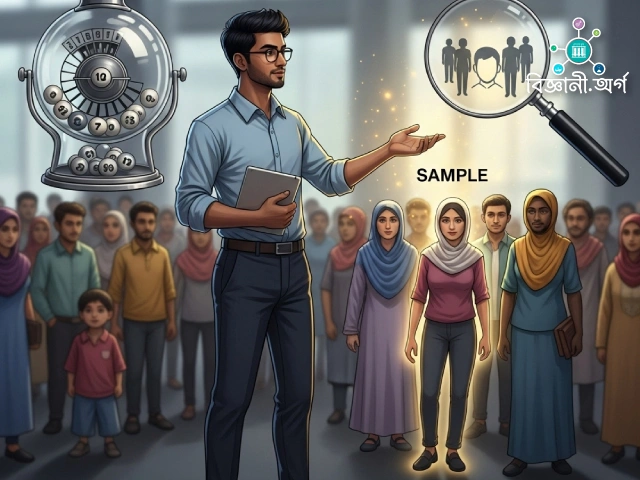
One afternoon in Dhaka, I’m standing in a university campus corridor. A student sitting nearby smiles and says, “Sir, I want to do a PhD. But to be honest, the thought of it is a bit scary.” I asked, “What is it that scares you?” He pauses for a moment and says, “Research instead of classes… working alone… What if I can’t do it?”
This isn’t just his question. Nearly every PhD aspirant faces this dilemma. A PhD isn’t just a ‘degree’—it’s a mental journey where your curiosity, patience, confidence, and ability to make friends with failure are tested. In this article, we’ll try to map out that journey—so you can get to know the path a bit before setting off into the unknown.
What Does a PhD Mean? Not Just a Degree, an Identity
A PhD isn’t just about spending four or five years in a lab or library; it means taking responsibility for pushing the boundaries of knowledge, even just a little bit. Through your work, you might provide a small solution to a problem somewhere in the world—maybe not today, but perhaps in the next decade.
Here, you will learn how to ask questions, doubt, seek evidence, and learn from mistakes. You’ll understand—a good researcher is not the one who knows everything; a good researcher is the one who knows how to find out.
Ask yourself:
- Am I truly eager to discover something new?
- Can I work alone for long periods?
- Will failure stop me, or push me even harder?
Not “Getting Into a Good Subject,” But “Finding the Right Question”—Choosing Your Topic
Choosing your topic is the heart of a PhD. A mistake here doesn’t just mean wasted time—it can mean mental exhaustion, frustration, and the risk of quitting midway.
A good topic isn’t just what’s trendy; a good topic is the combination of your interests + real-world problems + research potential.
How should you think?
- Focus on a problem that makes you think, “If this were solved, the world would be a bit better.”
- Read journals, review papers, and watch conference discussion videos.
- Map out the problems in your university, your country, and even globally.
Example: Flood management in Bangladesh, AI for dengue detection, affordable water purification technology, or NLP for local language implementation—these are not just topics, but areas that impact people’s lives.
Supervisor: Without a Guide, the Map Is Useless
In a PhD, your supervisor is not your teacher; they are your research partner. The better your understanding with them, the fewer obstacles you’ll face along the way.
There’s a misconception—having a big name supervisor is best. In reality, a good supervisor gives you time, provides feedback, guides you, and helps you build your network.
How to search:
- Look at their research papers—see what they work on.
- Talk to their current students.
- Keep your first email short, polite, and clear—state why you want to work with them.
Remember: If you’re not a good match, you’ll feel alone even in the world’s best lab.
Finances: A Scholarship Is More Than Money—It’s Self-Respect
A scholarship means you’re not unemployed; you are a professional researcher. Scholarships are available abroad, but nowadays you can also get grants in your own country—especially through industry-academia collaborations.
Understand the realities:
- Don’t evaluate the stipend based only on rent/monthly allowance—consider health insurance, conference funds, and lab resources as well.
- Living in a low-income country doesn’t mean poor research; sometimes, limitations actually spark more creativity.
Skills Toolbox: Practical Expertise Beyond Books
A PhD isn’t just theory; it’s about showing what you can do.
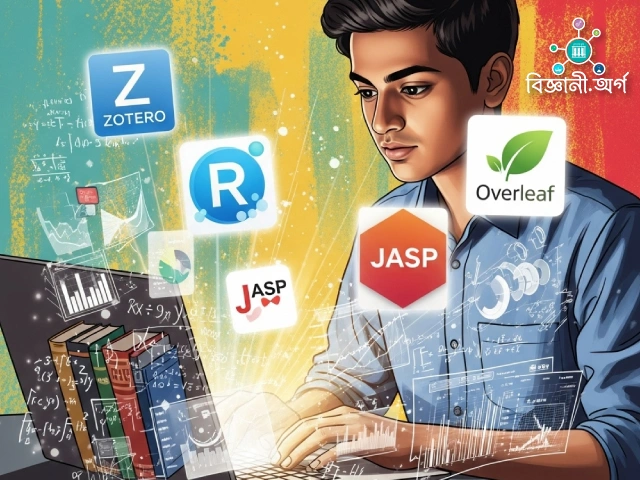
- Programming (Python/R/MATLAB)
- Data analysis
- Academic writing
- Reference management
- Presentation skills
- Open science tools
These skills will serve you not only during your PhD, but also in life afterwards.
Mental Preparation: The Biggest Battle Is in Your Mind, Not the Lab
Deadlines, rejections, the thought of “no one will ever read this”—all these will come. At times, your papers will be rejected, your projects may fail, and equipment might not work.
This isn’t a sign you’re bad; it’s a sign you’re doing science.
How to persist:
- Write regularly—keep a research diary.
- Find a mentor who isn’t your supervisor.
- Take care of your body; don’t neglect sleep, walking, or eating properly.
Networking: You’re Not Alone
Although you may start your PhD alone, you can’t finish it that way.
At conferences, workshops, and online communities, you’ll find people like yourself. That’s where friends, collaborators, and even future co-authors appear.
Bangladeshi Example: Researchers from Bangladesh working in international labs are now building bridges between academia and industry—and you can do that too.
Life After the PhD: Professor, or Something Else?
There was a time when a PhD was only seen as a path to becoming a professor. Today, post-PhD routes are diverse—industry, policy, data science, science communication, startups.
The modern world wants to see your research not just in papers—but in products, policies, and people’s lives.
Ask yourself:
- Do I want to make an impact on society?
- Do I want to work in the classroom, the factory, or in the field?
Last Words: Your Research, Your Dream
A PhD is a journey through which you will rediscover yourself. You’ll find out how resilient, how curious, and how human you are.
If you want to walk this path, start today—read papers, write questions, send emails, learn to code.
Create a small action plan today:
- Read two papers a week.
- Make a list of potential supervisors.
- Write a brief research question.
- Pick and start learning a soft skill.
- Spend 20 minutes each day visualizing your future.
Because in the next ten years, the world will change, and you can help write a line of that story—in your PhD notebook.
You can do it. You’re not just earning a degree—you’re writing a future.