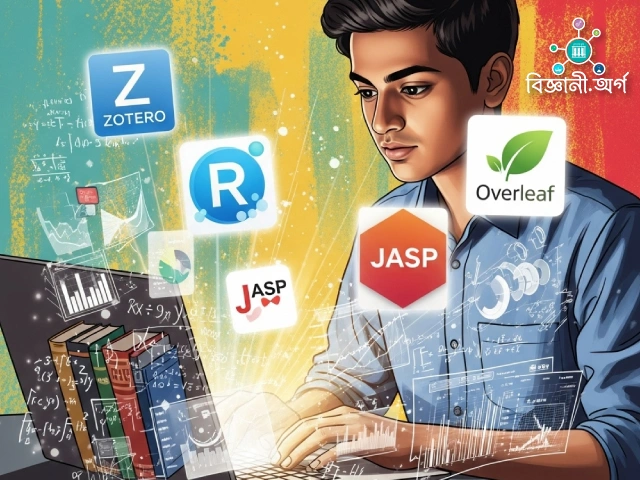
It’s 2 a.m. There are more than fifty tabs open on your laptop screen. You have a meeting with your supervisor in the morning. Suddenly, you wonder—“Where’s that important paper?” You search, open folders, dig through downloads—but it’s nowhere to be found. That’s when you realize, the biggest battle in research might not be with the data—it’s actually with your files.
This is where the need for research management arises. And Zotero, Mendeley—tools like these become your silent allies, bringing order to your messy research.
Managing Papers, Not Just Reading—The True Work of Research Management
We often say, “I need to read more papers.” But we rarely say, “I need to manage the papers I’ve read.” During your PhD or research career, you’ll accumulate thousands of PDFs, books, web links, and notes in one place. It’s impossible to keep them all in your head; recording them in notebooks is almost useless; hiding them in endless folders is risky.
A research management tool is like a digital librarian for you. It finds what you want, locates what you’ve lost, and arranges any citations you wish to use. You focus on research—the tool keeps things organized.
Zotero and Mendeley: Both Assistants, Each With Their Own Style
Zotero and Mendeley—both are reference managers. But they have distinct personalities.
Zotero is like that book-loving librarian who keeps everything neatly arranged by hand. Open source, free, easy to use. With a single click in your browser, a paper can be added straight to your library. You can tag, write notes, create folders—everything remains under your control.
Mendeley is a little different. It’s not just a library—it’s also a kind of research network. Here, you don’t just store papers; you can see who else is reading this work, who else is working in your area. However, it is now a corporate product, and some features require payment.
Essentially, both tools do the same thing—help you untangle the chaos of research. Which one should you use? The answer depends on your work style and what you’re comfortable with.
Doing a PhD Without a Reference Manager—Like a Map Without Directions
Those writing research papers for the first time often fear the reference section. Who said what, what year, what journal name—it all gets mixed up. This is where these tools work their magic.
When you want to add a citation to your paper, Zotero or Mendeley will insert it with a single click. APA, IEEE, Chicago—whatever style you need, the tool teaches you to speak that language. In the end, the reference list is generated automatically.
One important point—these tools don’t just save time, they also reduce errors. An incorrect reference means more than just losing marks—it damages your credibility.
Note-Taking Is No Longer on Paper
Zotero and Mendeley don’t just let you collect PDFs; they let you collect your thoughts within those PDFs. You can highlight a line, write notes alongside, pose questions in your own words. Later, a quick search will bring up those notes. This way, research and reading aren’t separate—they become a journey you walk together.
Cloud, Sync, and Security: The Digital Lifeline of Research
What happens to your research if your laptop breaks? There wasn’t a good answer before. Now there is. Cloud sync means your library is the same whether you open it from Dhaka or from Tokyo. Add a new paper, and it’s available on all your devices. Research is no longer trapped on a single computer. But there’s an area you need to be aware of. Keeping all your data online means you must think about security. Use strong passwords, keep backups. Your data is your asset.
The Silent Enemy of Research: Disorganization
One of the biggest problems for new researchers is disorganization. The papers are there, but the names are jumbled. The notes exist, but can’t be found. The ideas are there, but aren’t captured. A research management tool actually teaches you discipline. When you store papers properly, tag them, write notes—the more organized your mind becomes. Research stops being daunting and becomes something manageable.
Not Just a Tool, But a Mindset for Research
There’s a misconception—“Having the tool makes research easy.” The tool makes things easier, but you still have to do the research yourself. Zotero or Mendeley won’t read, think, or write for you. They only lighten your load, so you have the freedom to think. That’s the true power of research—the technology gives you time, and you use that time to build questions.
Bangladeshi Reality: The Opportunity Is Now in Your Hands
Today, Bangladeshi students have access to the same software used by Harvard researchers. Tools are no longer a limitation; if you have the internet and a laptop, you have opportunity. Those who seize this opportunity will get ahead. Those who say, “I’ll learn later”—will fall behind.
Final Words: Love Research, Make the Most of the Tools
Zotero and Mendeley—they’re not just software; they’re the languages of research. The sooner you learn this language, the sooner you’ll learn to see yourself as a true researcher. Take action today. Install a tool. Add a PDF. Write a note. Start organizing your research from today. Because a scientist’s journey begins with curiosity, but it’s sustained by discipline. And on this journey, Zotero and Mendeley will quietly walk by your side.